Fostering Innovation and Collaboration
Valerie Diele-Braun, CEO of IMCD, shares her vision for sustainability, global expansions, and strategic direction in an exclusive CHEManager International interview.


Valerie Diele-Braun, CEO of IMCD, shares her vision for sustainability, global expansions, and strategic direction in an exclusive CHEManager International interview.

John Banovetz, Chief Technology Officer at 3M, on the role of digital transformation in realizing the company's goals.
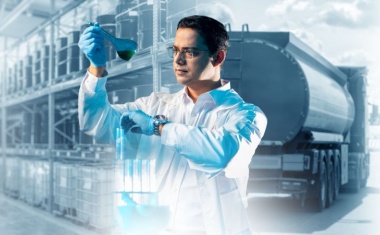
In 2024, the chemical distribution industry is at a pivotal moment, navigating both challenges and new opportunities.
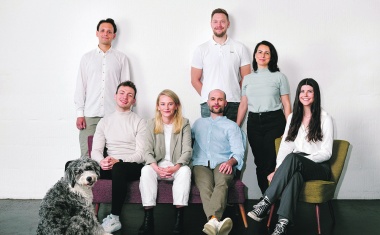
Interview with Franziska Walde and Lukas Fischer, Refinq
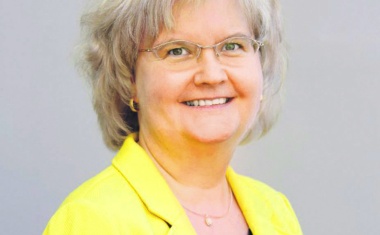
Dorothee Arns, Director General of FECC, discusses current challenges, market trends and her vision for the chemical distribution industry in Europe.
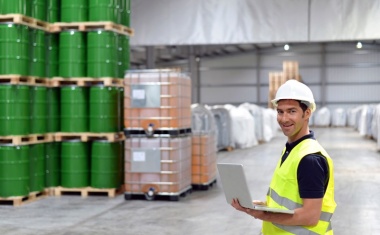
Today, economic success is defined by a different perception and practice of supply capability and supply security. This applies not only to the European trade with chemicals but to the entire chemical value chain.

Industry experts Michelangelo Canzoneri, Josef Trapl, Wolfgang Winter, Christian Woelbeling, and Thomas Zimmer – all members of ISPE’s Pharma 4.0 guide core team – explain the transformational challenges and critical success factors of the digital Pharma 4.0 journey.

The chemical industry faces acute labor shortages because the talent pool is shrinking, but the industry remains heavily reliant on manual work. Therefore, realizing labor productivity potential will be decisive for business continuity and future growth.

Cell and gene therapies (CGTs) present a revolutionary approach to the pharmaceutical industry. However, several complexities do arise on a logistical spectrum that diverge from those of traditional pharmaceuticals.

Artificial intelligence (AI) can help companies in the process industry capture, retain and access valuable historical expertise and ease the transition for new colleagues in the plant.
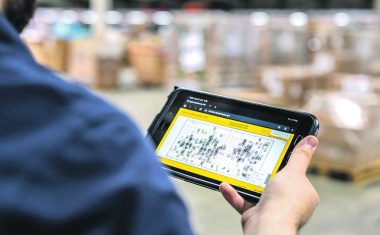
The logistics industry urgently needs digital transformation to ensure quality and to tackle challenges such as the shortage of skilled workers and sustainability.
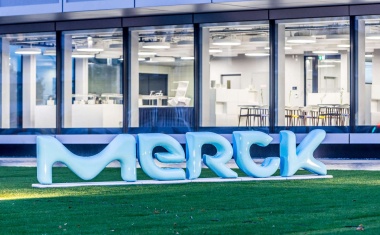
German chemicals, pharmaceuticals and life sciences group Merck has opened a digital hub in Singapore, the first outside of the US and Europe for its digital business.
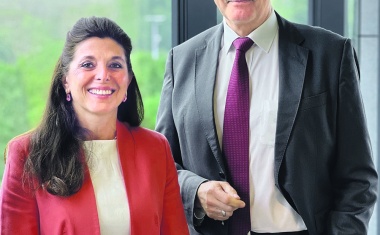
On January 1, 2024, Anna Bertona will take on the role of Group CEO, succeeding Hans Joachim Müller, who will retire after serving more than 11 years in that role. Ralf Kempf asked Müller and Bertona about the foundations for the group's continued success and plans for its future strategic direction.
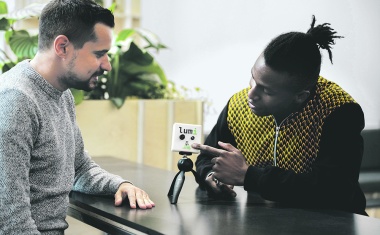
Manual experiment monitoring and data capture is still the status quo in most biotech and pharma labs, compromising efficiency and project timescales. But there is a better way.
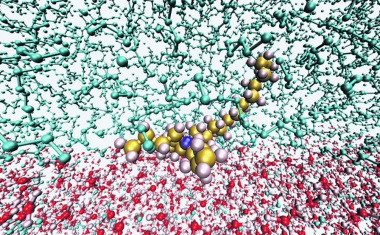
The Spanish computational chemistry start-up Nextmol (Bytelab Solutions), a spin-off from the Barcelona Supercomputing Centre, offers a software-as-a-service (SaaS) platform that accelerates research and innovation in sustainable specialty chemicals through “in silico” experiments using molecular modeling and artificial intelligence (AI).
Many life science companies generate large swathes of data.
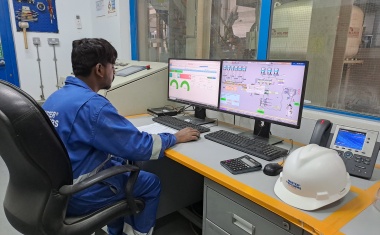
Achieving sustainability targets and productivity improvements are primary levers that make operations teams successful. At MBCC Group, one of the leading construction chemicals players, Wayne Towell, Vice President of Operations has been driving various initiatives to track, monitor and enhance productivity of their plants across the globe.
As a global specialty chemicals company, Altana develops innovative technologies, solutions, and products with a clear customer focus. The company aims to strengthen and expand this position in the long term. The topic of digital transformation plays a key role.
As a global specialty chemicals company, Altana develops innovative technologies, solutions, and products with a clear customer focus. The company aims to strengthen and expand this position in the long term. The topic of digital transformation plays a key role.

Toward achieving cost savings in the double-digit million euro range, Germany’s OQ Chemicals, part of the Oman-based OQ energy group, has announced a cost-cutting scheme that will see it cut 10% of the workforce.


Numerous crises such as climate change, energy shortages, raw material shortages, war in Ukraine and the consequences of the pandemic are putting value chains worldwide to the test.

Many chemical executives say their companies have made significant progress in their digitalization efforts in the last two years – and they are even more excited about it now.

Many chemical executives say their companies have made significant progress in their digitalization efforts in the last two years – and they are even more excited about it now.
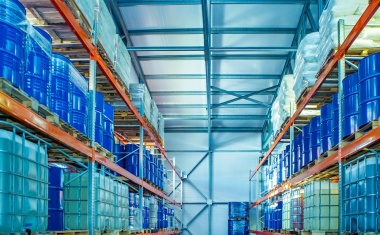
Dorothee Arns, Director General of FECC, discusses current challenges, market trends and her vision for the chemical distribution industry in Europe. The interview was conducted by Michael Reubold and Ralf Kempf.
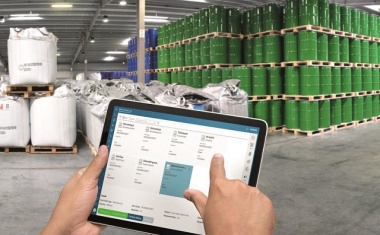
For many years, fine and specialty chemicals markets were on a robust growth path.

For its annual report "Value Creation in Chemicals 2021 – Ten Years of Steady Growth – and a Few Superstars," the strategy consultancy Boston Consulting Group examined the performance of leading international chemical companies from 2011 to 2020. The long-term perspective shows that the industry has mastered serious market downturns with astonishing confidence.

ISPE and its members are developing the roadmap to introduce Industry 4.0, also called the Smart Factory, at the pharmaceutical industry as Pharma 4.0 – an operating model that is interconnected, meaning that the digital tools allow for a fully connected network to enable direct communication between all levels in an organization.
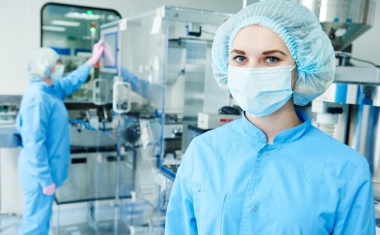
Porsche Consulting presents a vision of a high-end smart biopharmaceutical production unit and a corresponding operating model.

Cloud-based web applications offer substantial benefits for the digital transformation of the chemical industry.

Industry experts Josef Trapl, Wolfgang Winter, Christian Woelbeling, and Thomas Zimmer – all members of ISPE’s Pharma 4.0 group – talk about the idea behind ISPE’s Pharma 4.0 initiative and the challenges on the way to realize the digital transformation of the pharmaceutical industry.
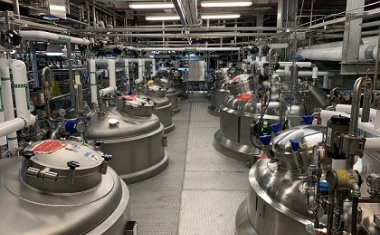
Within a $32 million project to upgrade a drug production plant, Bentley Systems Synchro 4D digitalized the construction monitoring to reduce project delivery time.
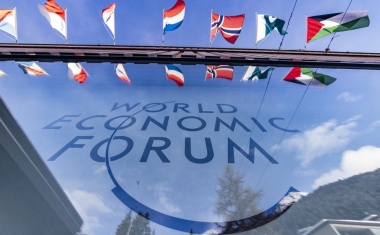
Fernando J. Gómez, head of the Chemical and Advanced Materials Industry at the World Economic Forum (WEF), discusses the chemical-industry-related topics that are high on the WEF’s agenda.

Besides digitalization, sustainability and the circular economy are the key issues facing the chemical industry at present and in the coming decades.

The IIoT continues to evolve, with countless solutions touting end-to-end process automation. However, one of the most important elements of IIoT — the human element — has taken a back burner in this hype cycle.