BASF and Eni to Develop Bio-based Propanol
BASF and Eni have agreed to jointly develop new technology to produce bio-propanol from glycerin, a byproduct from the production of industrial biodiesel, or fatty acid methyl ester (FAME).

BASF and Eni have agreed to jointly develop new technology to produce bio-propanol from glycerin, a byproduct from the production of industrial biodiesel, or fatty acid methyl ester (FAME).

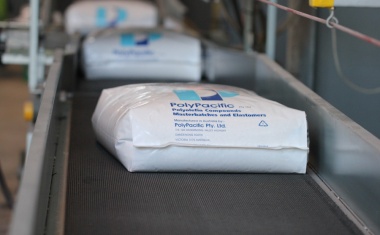
LyondellBasell has taken over 100% of PolyPacific Polymers (PPM), a compounder based at Port Klang, Malaysia. The Malaysian production facility, which has capacity to produce 25,000 t/y of reinforced and modified polyolefin compounds, will be rebranded as LyondellBasell. All employees will transfer.
Building on the Green Deal it rolled out at the end of 2019 and the European Climate Law that goes into effect this month, the European Commission on Jul. 14, concretized its long anticipated targets toward putting the EU at the forefront of political blocs dealing with climate change.

With an eye toward the growing electric vehicle market, BASF has announced it will build a battery recycling prototype plant at the site of its cathode active materials (CAM) production facility in Schwarzheide, Germany.

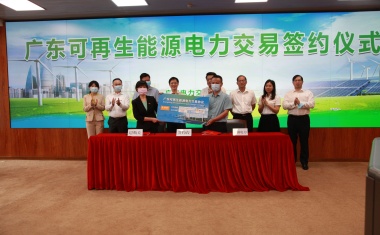
In what it called another “significant milestone” along the route to greener production globally, BASF has agreed to buy renewable electricity for its Zhanjiang integrated site in China from China Resources Power. The purchase transacted through the Guangdong Power Exchange Center was made possible by new government rules established in April, and BASF will be the first company to benefit.

An initial public offering for Wintershall Dea, the oil and gas producer owned by BASF and Letter One – last planned for the second half of 2021 – will not take place this year, the partners announced on Jun. 16, citing an uncertain market.

BASF is forming a majority-owned 51:49 joint venture with Hunan Shanshan Energy to make cathode active materials (CAM) and their precursors (PCAM) in China, the world’s the largest battery materials market. The chemicals are a key component of lithium-ion batteries, which are in strong demand, thanks to the growing market for electric vehicles.

The EU Commission’s ambitious plan for a European Green Deal, launched shortly before the pandemic struck in early 2020, aims to make the continent the world’s first climate-neutral region by 2050. The goals spelled out in January last year call for reduction of greenhouse gas emissions by at least 50% up to 2030, compared with 1990 levels.

BASF has wrapped up the sale of its Kankakee, Illinois production site for an undisclosed sum to an affiliate of US private equity group One Rock Capital Partners. The sale also includes the associated businesses of vegetable-oil-based raw material sterols and natural vitamin E, anionic surfactants and esters produced at the site, which are being rebranded as Kensing.

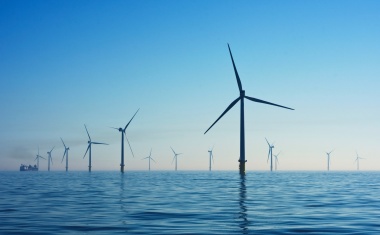
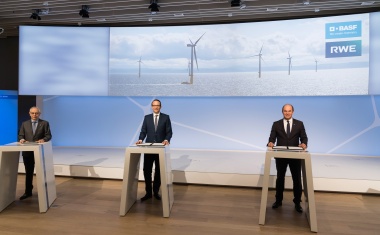
BASF and major German utility company RWE have signed a letter of intent to create a €4 billion, 2 gigawatt, wind farm at an undisclosed offshore location on the German North Sea coast by 2030. The chemical group, which will own 49% of the project to RWE’s 51%, will take four-fifths of the output, feeding energy mainly to its Ludwigshafen headquarters. The wind park is calculated to satisfy about a quarter of the site’s power needs.

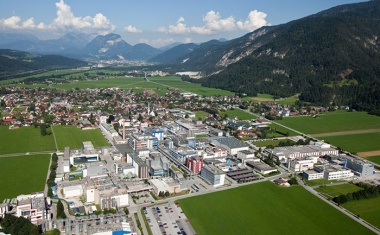
BASF is investing in its enzymes business at the Novartis Kundl/Schaftenau Campus in Austria. The German chemical giant said the agreement with the Swiss group – for which financial details were not disclosed – will enable it to develop a world-scale operation for bacterial enzymes and biotechnology products.
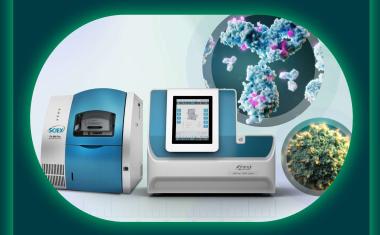
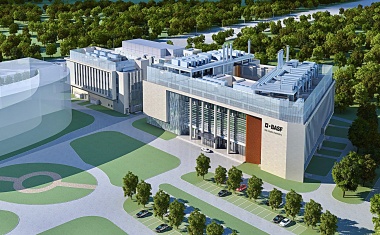
BASF has broken ground for the third phase of its new Innovation Campus Shanghai. Construction work on the expansion, which will add a further research and development building and a new R&D workshop building to the campus, is expected to be completed by the end of 2022 and bring its total investment in the Chinese technology showcase to around €280 million.

BASF, SABIC and Linde have signed a joint agreement to develop and demonstrate solutions for electrically heated steam cracker furnaces and are evaluating the construction of a multi-megawatt demonstration plant at BASF’s Ludwigshafen site in Germany, to start up in 2023.

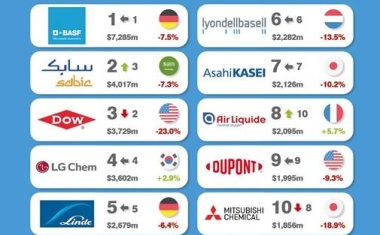
A coalescing of factors has led to arrested growth across the chemicals sector this year, with the brand value of the top 25 most valuable chemicals brands contracting by 8% on average, according to the latest report by Brand Finance, an independent brand valuation consultancy.

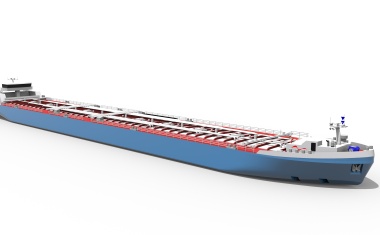
To facilitate shipping on the Rhine River at extremely low water levels, BASF has commissioned a special tanker, which is currently being built by Stolt Tankers. Scheduled for delivery in late 2022, it will be operated exclusively for the German chemical group.

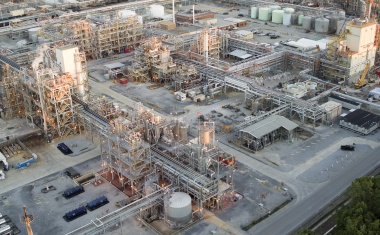
BASF has completed the first phase of an MDI expansion at its Geismar, Louisiana, complex in the US and taken an older MDI plant off stream. When the next phase is concluded, in the second half of 2021, the group’s MDI capacity by will rise by about a third.

BASF has created ZoomLab, a virtual formulation prediction and optimization tool, to help address the challenges of drug product development.

Following completion of a comprehensive feasibility study, tentative plans for a major petrochemical complex in India have been shelved for now, due to what the prospective international project partners said were global economic uncertainties caused by the Covid-19 pandemic.

BASF has announced it will close two herbicide plants by 2022 as it seeks to strengthen its competitive position. The facilities are located in Knapsack, Germany, where the company currently operates three plants, and Muskegon, Michigan, USA. The closures will affect about 100 workers.

Martin Brudermüller, CEO of BASF, has been elected president of the European Chemical Industry Council (CEFIC) for a two-year term. In the rotating position, the 59-year-old German national, a native of Stuttgart, succeeds Daniele Ferrari, CEO of Versalis, who has held the position since October 2018.


BASF completed the sale of its construction chemicals business to an affiliate of private equity investor Lone Star on the last day of September and the 2020 third quarter. Selling price was €3.17 billion.

Evonik and Siemens Energy have commissioned a pilot plant that uses carbon dioxide (CO2) and water to produce chemicals. The plant is the culmination of two years’ work under the Rheticus I and II research projects to develop a technically feasible foundation for artificial photosynthesis using a bioreactor and electrolyzers.

BASF, in mutual agreement with partner Idemitsu Kosan, has decided to end its joint-venture 1,4-butanediol (BDO) in Japan. Consequently, BASF Idemitsu’s BDO plant at Chiba, Japan, will close in December 2020. All 21 people employed at the plant will be offered alternative employment at either BASF or Idemitsu in Japan.

BASF has announced plans to double global capacity for its Uvinul A Plus-branded UV filters with a new line at its Kaohsiung site in Taiwan. Up to now, it has produced the filters solely at its headquarters site in Ludwigshafen, Germany.

Why BASF Venture Capital is investing in SmartAHC, a supplier of digitalization solutions for pig farming on the Chinese market.

Through an acquisition dating back 14 years, BASF is embroiled in the same type of litigation trap as compatriot Bayer currently faces. The Ludwigshafen group’s US catalyst subsidiary formerly known as Engelhard, in conjunction with the New Jersey company’s former law firm, has just reached an out-of-court settlement of lawsuits alleging its talc was contaminated with asbestos.

BASF and Thyssenkrupp have signed a joint development agreement to expand their cooperation on the Thyssenkrupp’s Steam Active Reforming (STAR process). The engineering group’s proprietary dehydrogenation process is used to produce propylene from propane feedstocks or iso-butylene from iso-butane feedstocks, using an exceptionally stable catalyst.

Kurt Bock has been elected as new chairman of the BASF supervisory Board, succeeding Jürgen Hambrecht. His term will run until the end of the annual shareholders’ meeting in 2024.

BASF is starting pilot tests on a chemical recycling process for used PU mattresses at its Schwarzheide site in the German state of Brandenburg.

The chemical industry is on the threshold of a new era – the age of circularity. We asked industry experts to share their opinions on this transformational topic.


BASF has signed a new agreement for its headquarters site at Ludwigshafen, Germany, covering wages and working conditions for the 34,000 employees who work there.