

Modular Automation Moves from Vision to GMP Reality
A pharma project demonstrates how MTP can accelerate integration while reducing validation effort.
Pharmaceutical manufacturers need production facilities that can adapt quickly to new therapies, shorter product lifecycles, and fluctuating demand. Modular automation concepts address this need by making equipment easier to integrate, expand, and operate across flexible manufacturing environments.
A key enabler is the Module Type Package (MTP). It standardizes the integration of process equipment into higher-level automation systems through defined services and interfaces. This creates the basis for plug-and-produce scenarios in which modules from different suppliers can be connected more rapidly within a common orchestration framework.
For pharmaceutical production, the benefits are substantial: simplified plant expansion, consistent user interfaces, standardized links to MES or historian systems, and reduced engineering dependencies between individual systems.
Bridging the Gap Between Standards and Practice
In GMP-regulated environments, however, MTP implementation is still demanding. Evolving standards, adapted qualification concepts, and clearly defined responsibilities between vendors require close cooperation between automation suppliers, software providers, and end users.
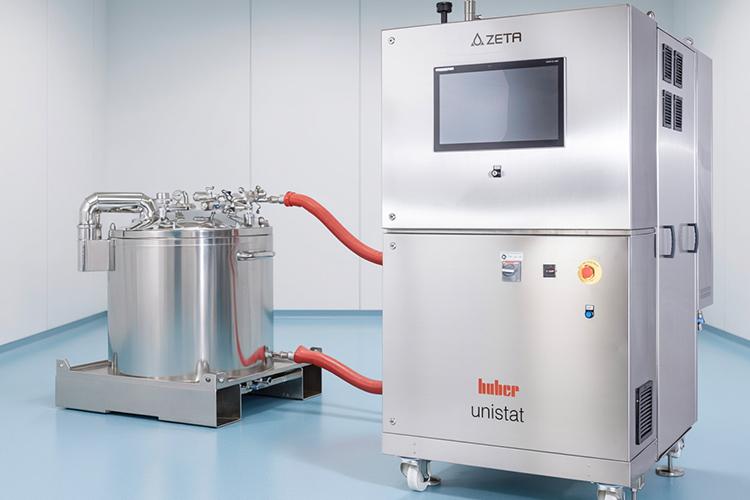
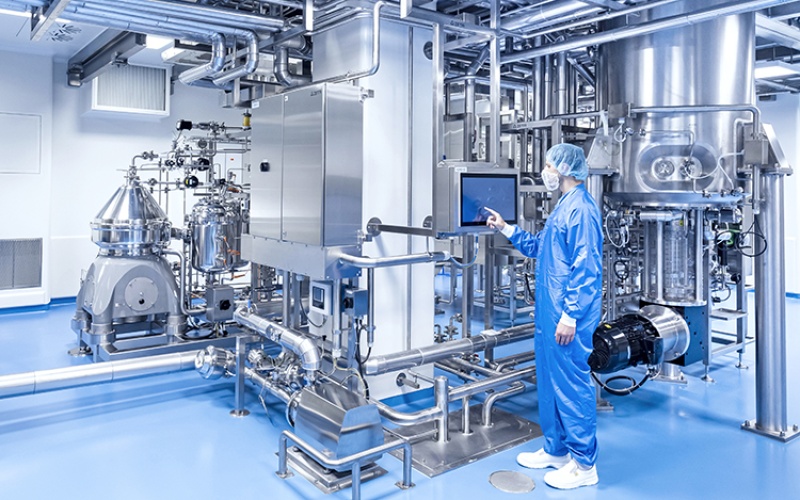
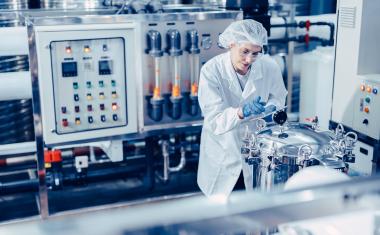
A recent biopharmaceutical facility project shows how these challenges can be solved in practice. The project involved integrating a Freeze & Thaw unit into a new production environment based on a Process Orchestration Layer. The goal was to implement the system as an MTP-compliant Process Equipment Assembly (PEA) while ensuring GMP compliance and long-term scalability.
ZETA developed and implemented the automation solution, covering process engineering, software development, commissioning, and qualification support. The FreezeController was designed as a modular unit with a CODESYS-based control system, standardized MTP interfaces, OPC UA communication, and ISA S88-based process logic for batch-oriented manufacturing.
Collaboration as a Critical Success Factor
The project also highlighted the value of strong partner collaboration. Turck provided a validated GMP-compliant control and function block library, while COPA-DATA supported orchestration and MTP validation via zenon. Together, the partners translated an evolving standard into a robust, compliant architecture.
A decisive factor was the qualification strategy. Instead of validating a largely customized automation application, the team used standardized, prevalidated building blocks and tested the solution in advance within an orchestration environment. This supported classification as GAMP 5 Category 3 rather than Category 5, reducing qualification complexity and effort.
Measurable Benefits
The results were measurable. Module integration into the orchestration environment was completed in about one hour, while overall integration effort was reduced by up to 80%. Operators also gained a harmonized interface, simplifying training and daily operation.
The project demonstrates that MTP is moving from concept to GMP reality. With standardized automation components, a structured qualification approach, and close collaboration between technology partners, modular automation can improve project execution and operational flexibility in pharmaceutical manufacturing.



most read

Q1 2025 Chemical Industry: Diverging Trends
The first quarter of 2025 highlights a continued divergence between the European and US chemical industries.
20 Years of CHEManager International
Incredible but true: CHEManager International is celebrating its 20th anniversary!

Pharma 4.0 – the Key Enabler for Successful Digital Transformation in Pharma
Part 1: Building a Business Case for Pharma 4.0

Relocation of Chemicals Production Footprint in Full Swing
A new Horváth study based on interviews with CxOs of Europe’s top chemical corporations reveals: The majority of board members expects no or only weak growth for the current year.

Pharma 4.0—the Key Enabler for Successful Digital Transformation in Pharma
Part 3: Seven Theses for successful Digitalization in Pharma