Challenges Facing Pharmaceutical Manufacturing
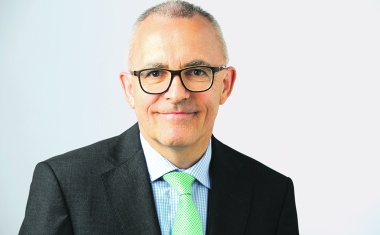
Sean Diver, president of DCAT speaks about the pharmaceutical industry’s role during the Covid-19 pandemic, trends in drug manufacturing, and key issues for the EU pharmaceutical industry.


Sean Diver, president of DCAT speaks about the pharmaceutical industry’s role during the Covid-19 pandemic, trends in drug manufacturing, and key issues for the EU pharmaceutical industry.

The coronavirus crisis caused by the Covid-19 pandemic has uncovered problems that have been smoldering beneath the surface of the pharmaceutical industry — including CMOs/CDMOs and CROs — and need to be addressed. That supply chains are vulnerable to disruption when major development, production and transportation hubs are blocked or shut down has become painfully obvious.

So far, the pharmaceutical industry — including CMOs/CDMOs and CROs — has responded well to the outbreak of the Covid-19 pandemic. However, the coronavirus crisis has uncovered problems that have been smoldering beneath the surface and need to be addressed. That supply chains are vulnerable to disruption when major development, production and transportation hubs are blocked or shut down has become painfully obvious.

So far, the pharmaceutical industry — including CMOs/CDMOs and CROs — has responded well to the outbreak of the Covid-19 pandemic. However, the coronavirus crisis has uncovered problems that have been smoldering beneath the surface and need to be addressed. That supply chains are vulnerable to disruption when major development, production and transportation hubs are blocked or shut down has become painfully obvious.

So far, the pharmaceutical industry — including CMOs/CDMOs and CROs — has responded well to the outbreak of the Covid-19 pandemic. However, the coronavirus crisis has uncovered problems that have been smoldering beneath the surface and need to be addressed. That supply chains are vulnerable to disruption when major development, production and transportation hubs are blocked or shut down has become painfully obvious.

So far, the pharmaceutical industry — including CMOs/CDMOs and CROs — has responded well to the outbreak of the Covid-19 pandemic. However, the coronavirus crisis has uncovered problems that have been smoldering beneath the surface and need to be addressed. That supply chains are vulnerable to disruption when major development, production and transportation hubs are blocked or shut down has become painfully obvious.

So far, the pharmaceutical industry — including CMOs/CDMOs and CROs — has responded well to the outbreak of the Covid-19 pandemic. However, the coronavirus crisis has uncovered problems that have been smoldering beneath the surface and need to be addressed. That supply chains are vulnerable to disruption when major development, production and transportation hubs are blocked or shut down has become painfully obvious.

So far, the pharmaceutical industry — including CMOs/CDMOs and CROs — has responded well to the outbreak of the Covid-19 pandemic. However, the coronavirus crisis has uncovered problems that have been smoldering beneath the surface and need to be addressed. That supply chains are vulnerable to disruption when major development, production and transportation hubs are blocked or shut down has become painfully obvious.

So far, the pharmaceutical industry — including CMOs/CDMOs and CROs — has responded well to the outbreak of the Covid-19 pandemic. However, the coronavirus crisis has uncovered problems that have been smoldering beneath the surface and need to be addressed. That supply chains are vulnerable to disruption when major development, production and transportation hubs are blocked or shut down has become painfully obvious.

So far, the pharmaceutical industry — including CMOs/CDMOs and CROs — has responded well to the outbreak of the Covid-19 pandemic. However, the coronavirus crisis has uncovered problems that have been smoldering beneath the surface and need to be addressed. That supply chains are vulnerable to disruption when major development, production and transportation hubs are blocked or shut down has become painfully obvious.

So far, the pharmaceutical industry — including CMOs/CDMOs and CROs — has responded well to the outbreak of the Covid-19 pandemic. However, the coronavirus crisis has uncovered problems that have been smoldering beneath the surface and need to be addressed. That supply chains are vulnerable to disruption when major development, production and transportation hubs are blocked or shut down has become painfully obvious.

So far, the pharmaceutical industry — including CMOs/CDMOs and CROs — has responded well to the outbreak of the Covid-19 pandemic. However, the coronavirus crisis has uncovered problems that have been smoldering beneath the surface and need to be addressed. That supply chains are vulnerable to disruption when major development, production and transportation hubs are blocked or shut down has become painfully obvious.
So far, the pharmaceutical industry — including CMOs/CDMOs and CROs — has responded well to the outbreak of the Covid-19 pandemic. However, the coronavirus crisis has uncovered problems that have been smoldering beneath the surface and need to be addressed. That supply chains are vulnerable to disruption when major development, production and transportation hubs are blocked or shut down has become painfully obvious.

Spanish contract laboratory company Kymos has boosted its European presence with the takeover of Germany’s Prolytic. Financial details were not disclosed.

Without products based directly or indirectly on chemicals, life as we know it would be unsustainable. According to various sources, more than 95% of the products around us are either made by the chemical industry or involve at least one chemical process step in their manufacture.
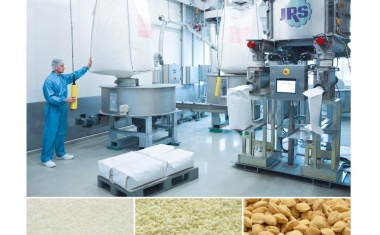
As a production and innovation partner, JRS Contract Manufacturing supports those involved in special projects in product development, series start-ups, implementation of marketing-relevant product features, process optimization or capacity expansion.
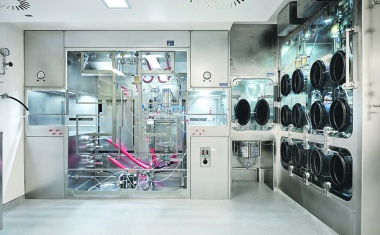
For biopharma leaders it is more critical than ever to secure the capabilities to contain, handle, develop and manufacture highly potent APIs.

Jean-Luc Herbeaux has been appointed as Chief Operating Officer (COO) of Hovione, effective May 1, 2020.


The fate of the agrochemical innovation, development, product launch and production are strongly linked to the parallel development of the fine chemicals and custom manufacturing industry.

German biopharmaceuticals contract development and manufacturing organization Rentschler Biopharma is extending and deepening its existing collaboration in Japan with Summit Pharmaceuticals International (SPI), a wholly owned subsidiary of Sumitomo.

Outsourcing product development and manufacturing has become for many pharmaceutical and biotech companies a strategic activity and an integral part of their business model.
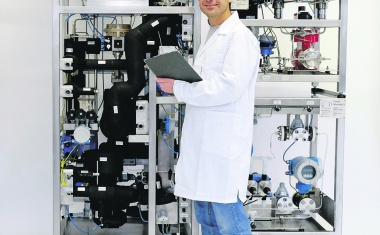

The pharmaceutical industry continues to grow and is estimated to be worth $1.5 trillion by 2021.




With this acquisition, Olon said it has successfully finalized its three-year development plan and will now move to its next target, which is to play an important role in manufacturing biologics APIs.