Albert Raises $55M to Scale Chemistry-Native AI
Albert, developer of the first chemistry-native AI operating system for R&D, announced a $55 million Series B funding.


Albert, developer of the first chemistry-native AI operating system for R&D, announced a $55 million Series B funding.

Webinar: Defensible AI Answers for Regulated Decisions

Chemicals firms face sustainability, supply-chain, and R&D pressures beyond slow trial-and-error. AI materials informatics, like Citrine Informatics, helps speed discovery. CEO Greg Mulholland on the market's evolution.

In AI-driven biopharma R&D, success means spotting outside innovation. CSL's Nishtha Jain on building AI platforms for external innovation, keeping human judgment central, and evolving leadership amid AI and ethics.

Chemical companies face rising volatility, weak demand and structural challenges. AI-powered reinvention can offer a path to faster growth, lower costs and greater competitiveness by transforming how work gets done.

Kimia codifies chemical experts’ unwritten knowledge into AI-ready answers. CEO Farid Mirmohseni explains how the startup turns scarce expertise into scalable growth.
Albert recently announced Ask Albert, agentic chemistry-native AI built for enterprise R&D, designed to surface scientific knowledge and execute research tasks with accuracy and security.
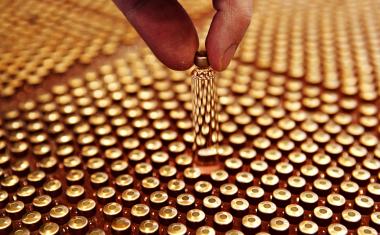
Novo Nordisk and Amazon Web Services (AWS) have partnered to accelerate drug discovery with AI. A co-innovation hub in London will facilitate efforts to reduce the time to market for future medicines.
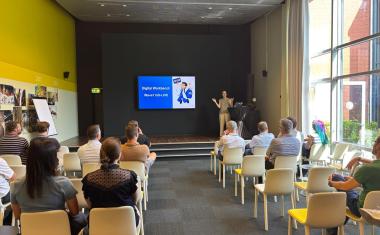
AkzoNobel, a global leader in paints and coatings, and Albert Invent, who is building the future of chemistry R&D, recently announced an AI transformation partnership with AkzoNobel’s global R&D organization.
New capabilities help product development teams move from product goals to suggested experiments in minutes, with stronger predictive models behind the workflow.

Bayer and Iambic Therapeutics are collaborating to research new drugs using Iambic's AI-based platform. The collaboration focuses on the discovery of small molecules.
Advanced Polymer Coatings (APC), a global leader in polymer coatings, is making major strides in product development with chemistry AI company Albert Invent to advance and scale its modern R&D infrastructure.

AI in pharma has moved past the hype cycle and into implementation. The organizations that pull ahead won't have the most sophisticated models — they'll have the strongest evidence foundation underneath them.

Drug discovery generates enormous amounts of data, but turning it into meaningful insight is a major challenge.

Pharma 4.0 is high on every strategic agenda. Yet many struggle to turn digital ambitions into measurable results. Projects stall, systems don’t align, and valuable insights remain locked in fragmented data structures.

Smart Experimentation - why the combination of Design of Experiments and Bayesian Optimization with intuitive analytics is the most important productivity lever your R&D organization isn't using
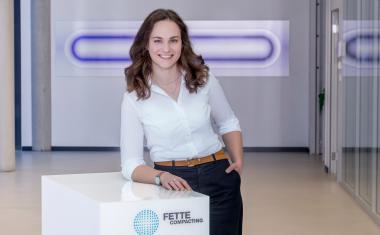
Shorter development cycles and complex active ingredients are demanding integrated solutions. Guided by the principle "Together – from lab to production," Fette Compacting positions its R&D Solutions as a partnership.

How Artificial Intelligence is transforming the work of biotech and pharma companies.
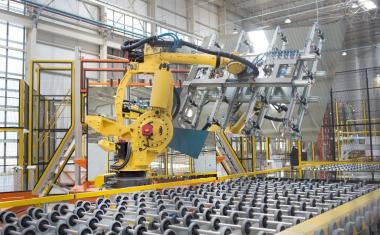
Siemens and HighByte have joined forces to solve industrial data fragmentation. HighByte's Intelligence Hub connects OT and IT data sources to help manufacturers build and scale industrial AI applications.
INX International Ink, a leading global manufacturer of inks and coatings, and chemistry AI company Albert Invent recently announced a strategic collaboration to digitally transform INX’s R&D.
Sygnature Discovery has partnered with AI firm DaltonTx to sharpen its drug discovery pipeline, bringing faster medicinal chemistry decisions and tighter data privacy to its CRO offering.
On-Demand | Explore how AI-driven materials informatics is reshaping polymer development, as industry leaders reveal practical strategies for scaling digital platforms and accelerating innovation.
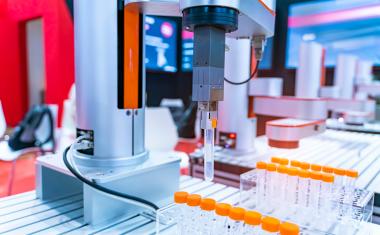
As discovery accelerates and throughput rises, digital transformation is becoming essential for chemistry labs. AI, robotics, and data growth must be orchestrated to boost productivity—rather than overwhelm the lab.

AI and evolving regulations set to transform biopharma operations in drug development and quality.

Entalpic replaces trial‑and‑error materials R&D with a closed‑loop AI platform combining simulation and lab validation.
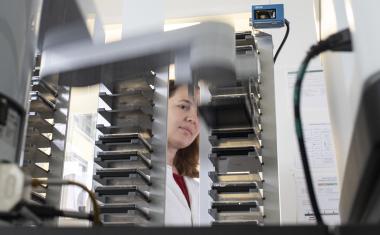
From In Silico Design to In Vitro Impact

New $130 million facility in Jealott’s Hill, UK, to focus on next-generation, sustainable solutions for farming.
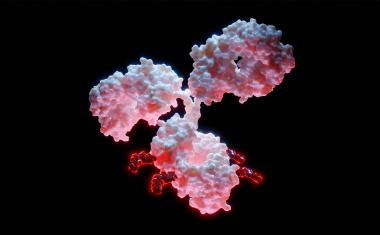
Explore how antibody-drug conjugates are reshaping precision cancer therapy and discover what it takes to successfully develop, manufacture, and scale these complex biologics.
Inventory, significance and solutions for the process and chemical industry

Strong Supply Chains, Efficiency, Digitalization, and Talent Development are Crucial for Chemical Distributors

Dunia Innovations Merges AI and Robotics to Accelerate Real-World Materials Discovery
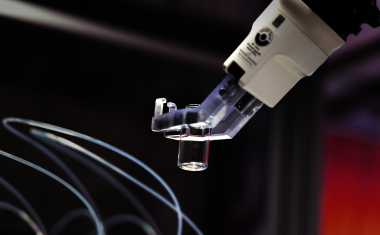
How AI and Robotics are reshaping the race for materials discovery.
Discover how digitalization is revolutionizing energy and resource efficiency in plant operation in the chemical industry.
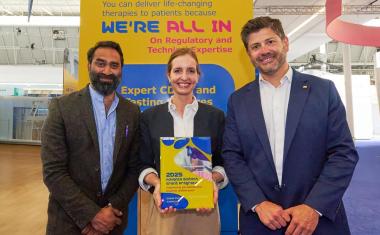
The award winner will receive access to Merck's technologies and expertise to expand its AI-based genome editing platform.