Honeywell Optimizes Kuwait Paraxylene

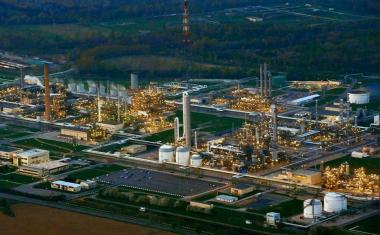
Kuwait Paraxylene Production Co. (KPPC), a wholly owned subsidiary of Kuwait Aromatics, will use Honeywell’s services to improve and optimize production at its Shuaiba petrochemical facility in Safat, Kuwait.
Honeywell will supply two services from its Connected Plant portfolio: Process Reliability Advisor and Process Optimization Advisor. The first will be deployed for ongoing monitoring, early event detection and mitigation of performance issues before they become costly. The latter continuously monitors streaming plant data and applies Honeywell UOP process models to determine the most economical mode of operation, which can significantly improve plant profitability.
Honeywell said the combination of its expertise, software and digital technologies can find problems that hamper production and thus prevent unplanned shutdowns that would deprive plant operators of millions of dollars per year in lost productivity.
“Both of these services combine plant process data with Honeywell UOP expertise and powerful software to enable our customers to run more reliably and at the top of their plant capabilities,” said Zak Alzein, vice president for the US company’s Connected Performance Services business.
KPPC’s aromatics complex produces 780,000 t/y of PX, which is marketed by Petrochemical Industries Co. (PIC), and 370,000 t/y of benzene, used locally by Kuwait Styrene for styrene production.