Turning Current Fragmentation into Future Success
Having chosen “Turning Current Fragmentation into Future Success” as the motto of FECC’s Annual Congress 2026, taking place in Austria’s capital Vienna in mid-September, the European Association of Chemical Distributors (FECC) is emphasizing what in their view is also the overall goal for Europe’s industrial supply chains.
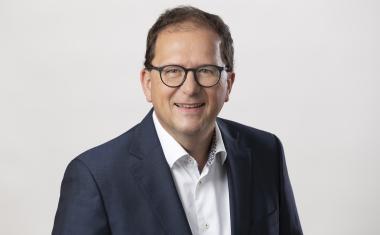
Dorothee Arns, Director General, European Association of Chemical Distributors (FECC)
In case there were still any doubts left beforehand, one thing has become glass clear over the past year for the chemical industry in Europe: we will not get the pre-COVID times back. And the latest wave of supply chain disruptions, caused by the Iran war and the structural blockade of the Strait of Hormuz, showed more than clearly that we have been catapulted into an era of weaponizing energy and raw material streams as well as critical infrastructure more than ever before. Geopolitics determine an ever-growing part of every country’s economic life – something which has not been existing in this dimension over the past decades. While in the Middle East energy installations became targets of missile or drone attacks in midst of military activities, it is more about sabotage acts on energy transmitters, grid hubs or undersea cables in Europe.
Vulnerabilities of Global Supply Chains
Since March 1, 2026, the vulnerabilities of global supply chains – and underlying economies - became more visible than ever before. And not only for Europe, but world-wide: (1) (energy) infrastructure, built up in the past to support the industry, in an alleged safe way (2) rare earths & critical minerals, building blocks for modern products, such as smartphones, semiconductors, defense systems, plus (3) the concentration of global trade flows around only 8 choke points world-wide.
What happens to the international waters of the Strait of Hormuz can set a dangerous precedent for the other seven trade choke points globally, in the sense that regimes in the vicinity of crucial waterways start to collect tolls in return for granting free passage. Unimaginable until very recently. The Hormuz example also shows how much the previous world and trade order has been demolished in the meantime, and US tariffs as industrial policy instruments instead of trade defense measures add another living example to this perception.
Answers to New Realities
Time is pressing for Europe to rethink its political processes and for chemical companies to review their business models. In both cases it is evident that what has worked well in the past under previous conditions has meanwhile become largely overturned by the new realities. Where in former times the level of integration, a volume-driven approach or mere size were competitive advantages, today agility, adaptability to ever-changing conditions and resilience have emerged as new key competences for strong companies and - by the way - also for robust economies.
As a consequence, organizational structures and processes have to be built around these strategic qualities. For the EU economy this implies defining critical value chains and ensuring that Europe is self-sufficient in these crucial supplies. For companies, it is about mapping out and analyzing critical exposures, diversification options of all kinds (geographical/segmental/sourcing/selling/logistics) to enhance their robustness with the target to future-proofing their areas of responsibility.
Lessons for a Solid Future
It shall not be forgotten that Europe has a lot of strengths to build on, too. Just now it is high time to use them differently than in the past and to turn the learnings from the current crisis instantly into a winning strategy for the future.
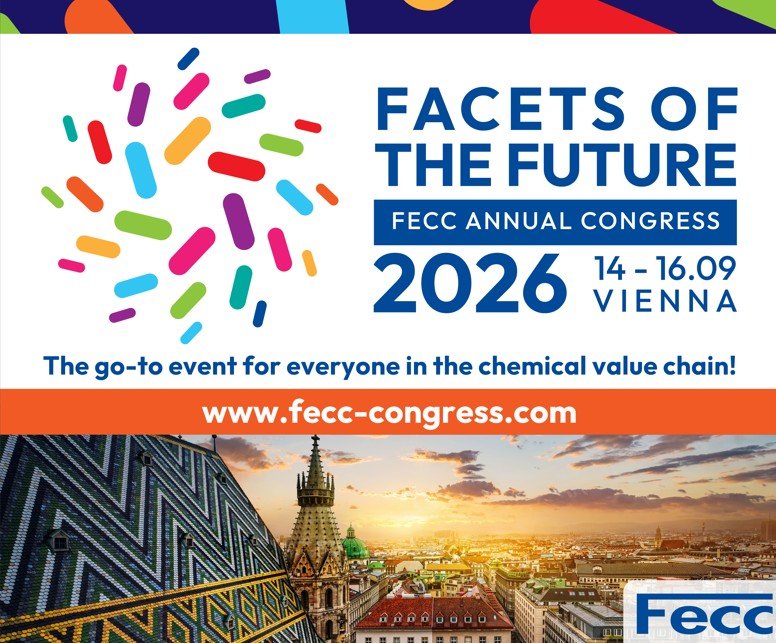
All these topics will be discussed at our upcoming FECC Congress, which brings the whole chemical value chain together to benefit from all perspectives in an almost 360-degree style. In fact, the upcoming Congress is the most international edition FECC has ever hosted, combining top-level speakers with profound expertise and very diverse backgrounds from all parts of the value chain from Europe, Asia, the USA and the Middle East in thought-provoking panels.
Some of the topics which they will discuss, amongst many other aspects, comprise the questions what resilient supply chains could look like, what the overall 2025/2026 economic implications mean for the future of Europe’s critical value chains ( for example food, pharmaceuticals and batteries), how companies can build their individual resilience despite the global turbulences and how chemical innovations could be commercialized more quickly to reinvigorate Europe’s industry.
It has already become evident that especially 2026 will leave a lasting mark on all supply chains world-wide, not only on the chemical industry, and that drawing the right conclusions from the multi-crises these days is crucial to pave the way for an economically sound future. This applies to companies, industrial eco-systems and even whole countries or continents alike.
Current and Future Challenges
Our own FECC Pulse Check Chemical Distribution, which we had conducted in close cooperation with the Boston Consulting Group (BCG) a couple of months before the Iran war broke out, had shown – already at that time - somewhat tectonic shifts evolving inside the chemical value chain. The significant, ever-mounting cost pressures for chemical manufacturers and customers, coupled with accumulating supply chain disruptions of all kinds, had noticeably led to a flexibilization and partial “migration” of traditional roles and responsibilities to new structures and processes, as first-mover companies had already begun to overthink and to remodel their business models.
Now, with the ongoing Iran war, this trend can be expected to accelerate and to expand further.
Over the recent weeks, FECC and BCG have conducted the 2026 edition of the Pulse Check Chemical Distribution. One of the big topic blocks of this new, representative survey focused on measuring the impacts of the Iran war on the chemical value chain in Europe in general and on the European chemical distribution landscape in particular.
The results of this very actual study, which are currently in the process of being compiled and analyzed, will also be presented at the FECC Annual Congress in Vienna. It will be interesting to see what the major developments look like today and how the previous trends evolved against the backdrop of the new realities. There is good reason to assume that certain developments have been cementing themselves:
Changes in Success Factors
Critical success parameters of the past, such as company size, volumes, price or global presence are losing importance in view of the new realities, as compared to agility, adaptability, diversification, and especially the ability to offer more for less and to manage existing and increasing complexities for one’s customers. In this context an active and strategic engagement in partnerships with value chain partners of all kinds can be taken as a resilience-improving measure to offset own company vulnerabilities or strategic weaknesses.
What will obviously not change is that for distributors supply chain excellence, agility, vast networks and customer centricity are key pillars of their business model. So, they are naturally prepared to further engage in close partnerships with their customers and suppliers to stabilize all supply chains in very turbulent times. Consequently, for distribution the current crisis could also be business opportunity, and we as FECC stay absolutely committed to pave the way for the sustainable success of our members.

Dorothée Arns
Director General,European Association of Chemical Distributors (FECC), Brussels, Belgium
Company