Unlocking the value of plastic waste with pyrolysis oil
Pyrolysis oil is helping create new possibilities for circular plastics. Evonik’s Nirav Shah explores its role in a more sustainable value chain.
Nirav Shah, Global Director (Growth Fields, Re-refining, LNG/Gas processing) at Evonik Catalysts

Mr. Shah, Why has pyrolysis oil become such an important topic for the refining and petrochemical industries?
Nirav Shah: Sustainability has shifted from being a long-term ambition to an immediate business priority. Refiners and petrochemical producers are under increasing pressure to reduce emissions, lower dependence on fossil resources and make better use of waste materials – and pyrolysis oil is here to support all three of those objectives.
Produced from end-of-life plastic waste through chemical recycling, pyrolysis oil can replace a portion of conventional fossil-derived feedstocks in refining and petrochemical processes. It also helps keep plastics in circulation by converting difficult-to-recycle waste into a valuable raw material for new chemical production. While adoption is still at an early stage, investment across the value chain continues to grow as companies work towards more circular operations, with its current market value standing at USD 1.75 Billion.
If the opportunity is so significant, what is currently limiting wider adoption?
N. Shah: When it comes to pyrolysis oil, the biggest challenge is consistency. Unlike conventional feedstocks, pyrolysis oil varies depending on the plastic waste entering the process and the operating conditions used to produce it.
This variability can introduce contaminants such as organic chlorides, silicon, nitrogen, metals, and compounds that affect stability. Left untreated, these impurities may contribute to corrosion, catalyst deactivation, fouling, and operational inefficiencies in downstream units. If you take steam crackers as an example, they have very strict feed specifications, so effective purification is essential before pyrolysis oil can be processed at larger scale.
Beyond the technical aspects, wider deployment also depends on reliable waste collection, improved sorting infrastructure, and a consistent supply of suitable plastic feedstock.
How can these technical barriers be addressed?
N. Shah: Purification and upgrading technologies are central to making pyrolysis oil suitable and scalable for industrial use. Two established approaches are adsorbent-based purification and hydrotreating.
At Evonik Catalysts, much of our work is focused on advancing these purification technologies, developing adsorbents, catalysts and integrated pretreatment solutions that help petrochemical/refinery plants process pyrolysis oil more reliably while meeting increasingly stringent feedstock specifications.
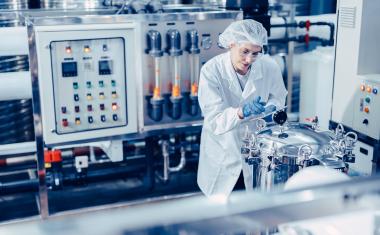
Adsorbent systems selectively remove contaminants including chlorides, silicon, and metals, while hydrotreating uses hydrogen and catalysts to remove impurities and improve oil stability. Depending on petrochemical/refinery plant requirements, these technologies can also be combined within modular skid/pretreatment systems that prepare pyrolysis oil before it enters the main processing units.
This is an area where we continue to invest heavily in innovation. For example, new generations of adsorbents have demonstrated substantially higher chloride removal than conventional alternatives, helping petrochemical/refinery plants meet increasingly demanding feedstock specifications. Additionally, our adsorbent technology also allows them to reduce silicon content significantly without requiring hydrotreating. Some of our adsorbents are circular in nature as they can be regenerated for multiple cycles in our modular skid set-up.
What role does innovation play in accelerating the circular economy?
N. Shah: Innovation is what allows promising technologies to become commercially practical. As pyrolysis capacity expands, the industry needs solutions that improve product quality while reducing operational complexity and environmental impact.
Across Evonik Catalysts, we see how continued investment in catalysts, regenerable adsorbents, and integrated purification technologies are helping achieve this balance. These innovations support higher-quality recycled feedstocks, improve process reliability, and enable more efficient use of plastic waste that would otherwise be difficult to recycle.
At the same time, collaboration across the value chain, from waste collection and recycling through to refining and petrochemical production, will be equally important in scaling circular solutions.
Looking ahead, what will determine the success of pyrolysis oil?
N. Shah: The technology has already demonstrated its potential, so the next phase will depend on scale. As collection systems improve, purification technologies continue to advance, and commercial capacity increases, pyrolysis oil will undoubtedly become a more widely available feedstock for refining and petrochemical applications.
The objective is not simply to replace fossil feedstocks, but to build a more resilient and circular value chain where plastic waste becomes a resource rather than a disposal challenge. Achieving that will require continued investment, technological progress and cooperation across the industry, but the direction of travel is clear if we take it one drop at a time.