"In the Region, For the Region"
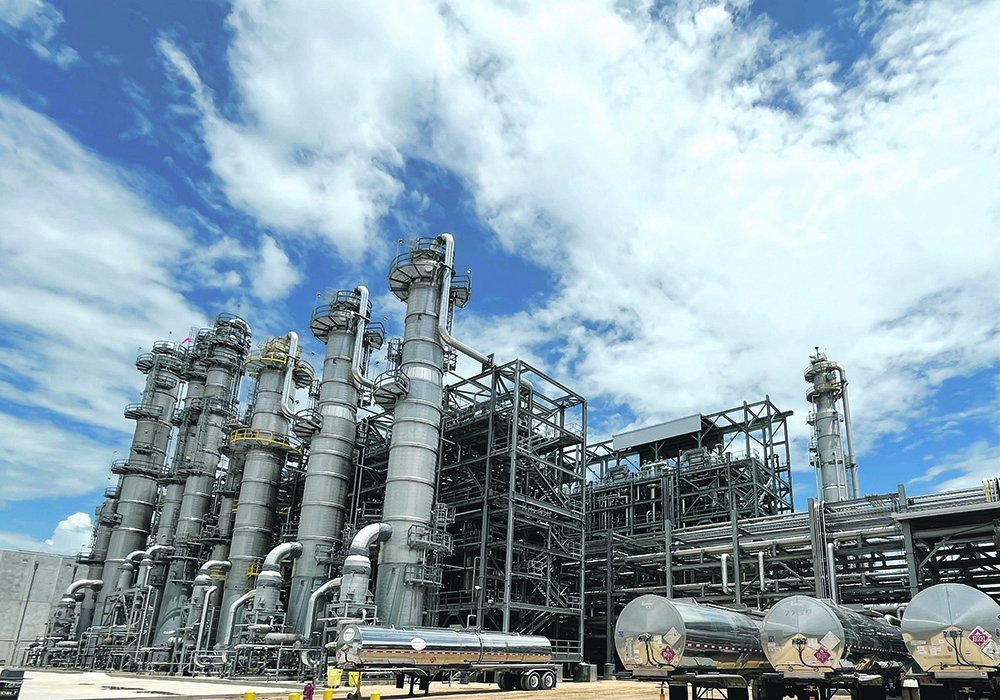
In 2019, Advent’s acquisition of the methacrylates business resulted in the formation of an independent company formerly owned by Evonik. The investor’s stated goal is to develop the company—which now operates once again under the time-honored name Röhm—into the global market and technology leader in methacrylate chemistry. Today, the Darmstadt-based company produces over 1 Mio. t of chemical products at eight locations in Germany, China, and the U.S. Last year, Röhm commissioned a new production facility in Texas, which it officially opened in early June. Michael Reubold spoke on site with Ronald Ayles, Managing Partner at Advent, and Hans Bohnen, CEO of Röhm, about the international growth strategy of the inventor of Plexiglas and the methacrylate specialist.
CHEManager: Mr. Bohnen, how significant is the commissioning of the MMA plant in Bay City for Röhm’s competitive position in North America?
Hans Bohnen: For Röhm, the start-up of the methyl methacrylate plant in Bay City is a significant milestone. Following a structured ramp-up phase, it has reached full production capacity in recent months. This plant exemplifies our commitment to securing a leading market position through innovative technology and long-term investments . As the only global supplier of methyl methacrylate and polymethyl methacrylate with production sites in Europe, Asia, and North America, we are in a unique position to reliably supply our customers worldwide with leading technology on a local basis.
How does the plant in Texas support your “In the Region, For the Region” strategy?
H. Bohnen: The plant in Bay City primarily improves supply security for North American customers due to its proximity to end markets and its immediate access to raw materials such as ethylene, natural gas, and methanol, which are readily available on the U.S. Gulf Coast.
The U.S. is an import market for methyl methacrylate and is structurally undersupplied, so the region benefits from additional local capacity with significant locational advantages such as low energy costs and a reliable supply of raw materials.
In addition, we are strengthening customer proximity through a tailored supply chain network with multiple tank and transloading terminals.
The MMA produced is distributed via a multimodal logistics system combining truck, rail, and inland waterway transport. The newly designed supply network reduces long-distance truck transport and increases supply security via rail. This, in turn, strengthens Röhm’s position as the preferred MMA supplier. We are thus sending a clear signal to our customers: Röhm stands for reliability and quality.
Mr. Ayles, when Advent acquired Evonik’s methacrylate business, the project was in the pilot phase. Why was Advent willing to take on the investment risk when Evonik was reluctant to do so?
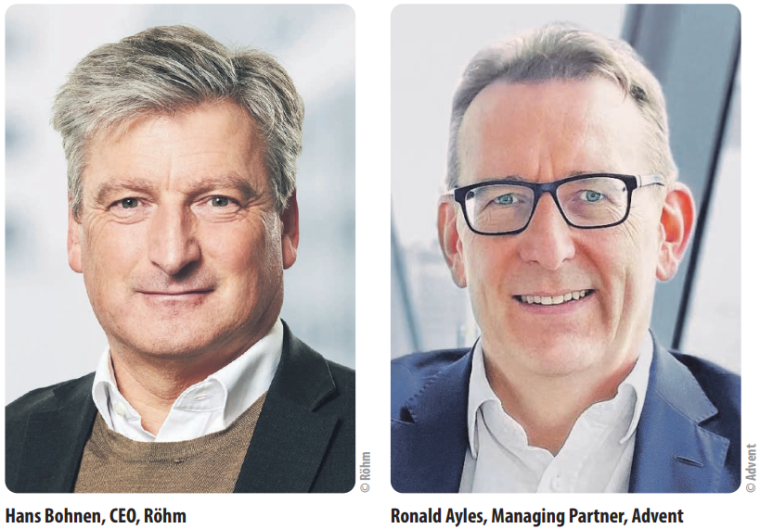
Ronald Ayles: As investors, we pay close attention to companies’ ability to transform and to how we can successfully help them evolve. In Röhm’s case, it was precisely this innovative C2 technology for producing MMA that convinced us. Advent has invested approximately 1.5 billion euros in Röhm to, among other things, scale up the technology—developed over many years in Germany—from the pilot plant in Darmstadt to industrial scale, thereby driving innovation and sustainable growth. This was by no means an easy investment decision, but we were convinced that it would work. This investment was therefore not just a “normal buyout” but also a venture capital investment—a combination of two very different investment and risk profiles. If we look at the numbers objectively, the equity investment required to acquire the established company Röhm was actually lower than the capital investment in the new technology, which carried a correspondingly much higher venture capital risk.
A scale-up of this magnitude always involves entrepreneurial risks. Those unwilling to take on such risks should not make these kinds of investments. We had factored into our risk analysis that the project would ultimately end up being somewhat more expensive and take longer. On top of that, we entered a phase of rising inflation and new U.S. tariff policies. But in hindsight, these factors actually improved economic conditions because the focus shifted increasingly toward local production. High inflation has also significantly raised barriers to entry, and the likelihood that a competitor will build another such capital-intensive facility in the U.S. has dropped considerably. It’s already clear that the investment in Röhm and in the new technology has paid off. In my view, such a corporate transformation can be implemented much more effectively in a private setting with a little patience than in a publicly traded corporation.
LiMA stands for “Leading in Methacrylates.” What strategic significance does the LiMA technology developed by Evonik and Röhm have for your goal of becoming the technology leader in methacrylates?
H. Bohnen: MMA is a key component for applications in the automotive industry, construction, electronics, and medical technology. Our plant in Bay City is the world’s most advanced C2-based MMA production facility and the first of its kind in North America—a significant contribution to strengthening regional supply chains for these applications and expanding local production capacity.
The plant is specifically designed to achieve maximum yield while minimizing raw material consumption. A highly efficient catalyst ensures an overall yield of more than 90 %. Both the process and the catalyst are patent-protected.
In addition, the plant relies on state-of-the-art automation technology and modern digital technologies, including a digital twin that fully replicates the plant’s structure, production processes, and control system. And the sustainability measures extend far beyond the production process: Wetlands created around the site for biological water treatment form a nearly closed-loop water circulation system that treats process and cooling water in an environmentally friendly manner.
It is no longer common in the process industry for fundamentally new processes to be developed. What advantages does LiMA technology offer over conventional production processes?
H. Bohnen: The Bay City facility consistently supports our commitment to resource efficiency and environmental responsibility in all areas of planning and operations, and—with the best CO₂ footprint in its class—sets a new standard for MMA and downstream products. It helps our customers achieve their climate goals and significantly reduce CO₂ emissions. LiMA technology not only represents a technological quantum leap but is a true game-changer for the methacrylate industry. The plant in Bay City impressively demonstrates that this process is viable on an industrial scale while offering both efficiency and environmental benefits. Compared to conventional manufacturing processes, LiMA technology lowers energy and water consumption and reduces CO₂ emissions by up to 42 %.
In a sense, history is repeating itself. In 1927, Otto Röhm essentially invented methacrylate chemistry. And now, a good 100 years later, we have essentially reinvented the chemistry. We owe much of this achievement to our colleague Steffen Krill, who as the inventor of the process never stopped believing in its potential and convinced us of its value.
R Ayles: The fact that our patented LiMA technology is so competitive—and that our competitors produce using significantly more expensive processes in older plants—gives Röhm a considerable advantage. We have a process that is technologically and economically superior to the competition. This opens up additional opportunities to further increase our market share. Such a situation is very rare in the chemical industry.
Another advantage lies in the plant’s modular design, which facilitates future expansions. The current annual capacity of 250,000 t replaces the 100,000-t plant in Louisiana, which we closed last July because it was no longer viable for the future due to its conventional technology and location. In addition, we have now created 150,000 t of additional capacity. Due to the structural undersupply in North America, the plant is already operating at full capacity.

What other growth opportunities do you see for Röhm following the successful launch of the plant in the U.S., as well as internationally?
H. Bohnen: We want to continue growing along with the market. That means we’ll be looking very soon into ways to remove bottlenecks so we can initially squeeze an additional 10 to 15 % out of the existing plant without major expansions. But as I said, the facility is designed to be flexible enough to allow for modular expansion when it makes economic sense. This enables us to expand capacity within the existing platform, which is attractive for investors because the infrastructure and many assets are already in place.
R Ayles: Bay City’s strategically excellent location also enables Röhm to use Texas as a hub for other regions and to efficiently serve global markets from the facility. We have excellent access to Latin America and Southeast Asia via the Gulf. Depending on how the markets develop, this could be attractive. You can be sure: We aim to make maximum use of the flexibility the facility offers us in order to continue growing profitably. That is our ambition.
You also opened a new technology center in the U.S. in 2022. How does it contribute to your growth strategy?
H. Bohnen: Our technology center in Connecticut supports the research and development activities of our two largest segments in the Americas region: Medical and Automotive. Among other things, the goal is to develop new material solutions for customers in the medical technology industry, such as for applications in infusion therapy, blood management, or diagnostics.
The technology center’s activities also include application development, design, and processing support for automotive applications—such as body components, signal lighting, and interior lighting—in other words, wherever the use of Plexiglas molding compounds serves as a key differentiator for automakers.
Here, too, our strategy “In the region, for the region” applies. Innovations must be developed within the respective region. Today, innovation for North America or China can no longer be driven solely from Germany. Each region has specific customer requirements, a different regulatory environment, and varying expectations regarding the speed of implementation for new developments. Our global footprint takes this market development into account.
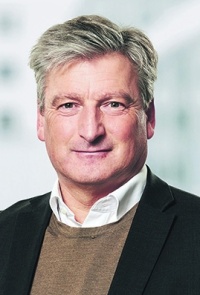
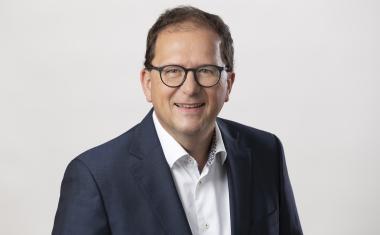
Hans Bohnen
Hans Bohnen has been CEO of Röhm since February 2024. Until 2023, Bohnen worked for Clariant, most recently as a member of the Executive Board. Before joining the Swiss chemical company in 2009, he held various leadership positions in Europe and North America at the SGL Group, Celanese, and Hoechst, and worked in strategic management consulting at Booz Allen Hamilton. Bohnen studied chemistry at the University of Duisburg-Essen, earned his Ph.D. from the University of Tübingen, and holds an MBA from Aston Business School.
| Image: © Röhm
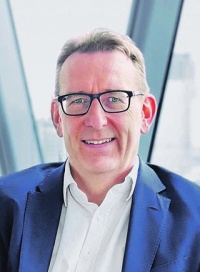
Ronald Ayles
Ronald Ayles is a managing partner at Advent. At the global private equity firm, he is responsible for the global chemicals division and serves on the European Investment Advisory Committee. Before joining Advent, Ayles worked for 3i, where he built up the investor’s chemicals division. Prior to that, he spent ten years in the chemical industry at Degussa (now Evonik). He holds an MBA from the JL Kellogg Graduate School of Management and WHU Koblenz.
| Image: © Advent
This article appeared in CHEManager 5/2026.
Read more! The latest news, thought-provoking interviews, detailed market reports, and in-depth articles give CHEManager readers a decisive information advantage!
About the CHEManager Issue