Repsol Joins Ecoplanta Waste-to-Chemicals Project
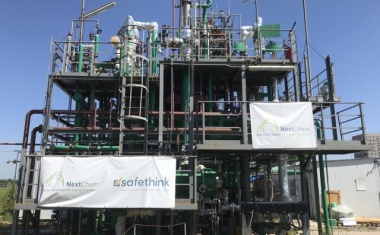
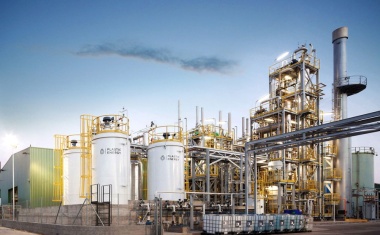
Spanish energy group Repsol is joining the Ecoplanta project that will build a waste-to-chemicals plant in Tarragona.

Spanish energy group Repsol is joining the Ecoplanta project that will build a waste-to-chemicals plant in Tarragona.

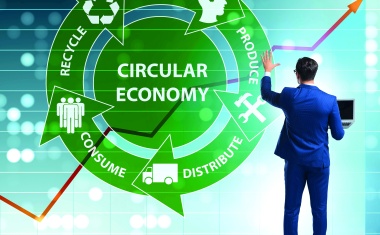
Besides digitalization, sustainability and the circular economy are the key issues facing the chemical industry at present and in the coming decades.
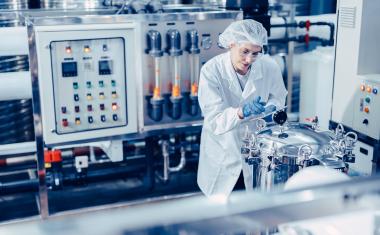
NextChem, the green chemistry arm of Italian engineering contractor Maire Tecnimont, has signed a Memorandum of Understanding (MoU) with IndianOil to develop industrial projects using NextChem technologies.

US process licensor Lummus Technology has established a new business called Green Circle that will expand its capabilities and capture new opportunities in the energy transition and circular economy.

Without products based directly or indirectly on chemicals, life as we know it would be unsustainable. According to various sources, more than 95% of the products around us are either made by the chemical industry or involve at least one chemical process step in their manufacture.

Chemicals are a critical, but often overlooked, factor of success for a circular economy. 96% of all products on European markets, from food to medical treatments, from buildings to consumer electronics, rely on chemicals, so this shouldn’t come as a surprise. But what does circularity mean for the future of the chemicals industry? Should it embrace circular systems or resist them?

Designed for their performance and durability, synthetic plastics have become indispensable as “materials of every-day use”. However, their characteristic long life span and indiscriminate disposal have led to an acute problem of plastic pollution. In order to address this issue, the European Union is not only trying to adopt a circular system to reuse, repair and recycle plastics (circular economy) but it also aims to produce plastics out of renewable resources (biobased plastics).


The chemical industry is on the threshold of a new era – the age of circularity. We asked industry experts to share their opinions on this transformational topic.

Cellugy was founded two years ago by a diverse team of young academics and professionals from Spain, Indonesia, Albania, and Denmark. Working together at Aarhus University in Denmark, the idea of developing a material based on nanocellulose as an alternative to plastic barrier coatings arose and grew into a start-up and a first product. Co-founders Isabel Alvarez-Martos and Deby Fapyane talk about their motivation and vision.


The shift to a circular economy requires intensive cooperation along the chemical value chain and across industries.


Plastics manufacturer Sekisui Chemical and the Innovation Network Corporation of Japan (INCJ) have formed a joint venture to verify and commercialize combustible waste-to-ethanol technology.

Ineos has joined forces with Plastic Energy to help promote and employ chemical recycling.


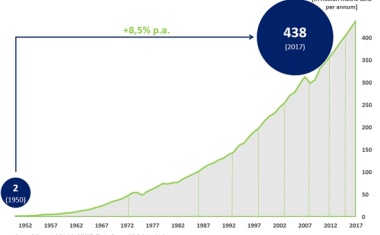
Since their invention after the World War II, plastics started to grow faster than any other standard material.


Times are changing, and we are changing in them. An old saying that goes back to Ovid - but still true today. The business world has become more VUCA (volatile, uncertain, complex, ambiguous) than ever.