

Engineering Put to the Test: Studies at the 50,000-Liter Scale
Zeta’s new 50,000-liter test setup brings experimental insights to large-scale upstream engineering.
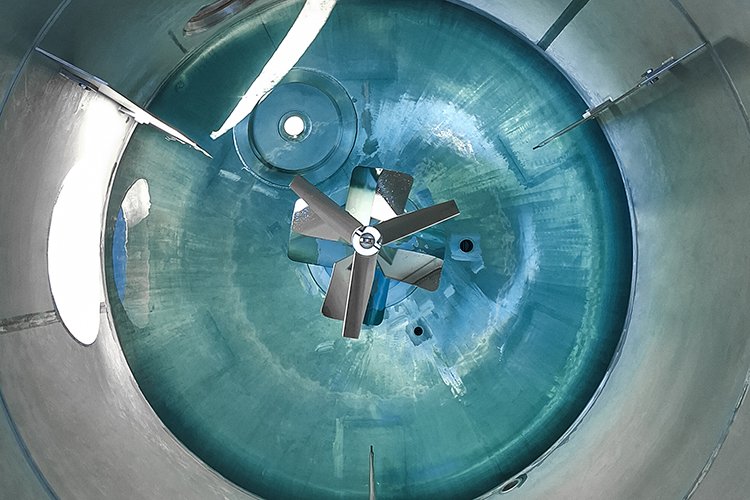
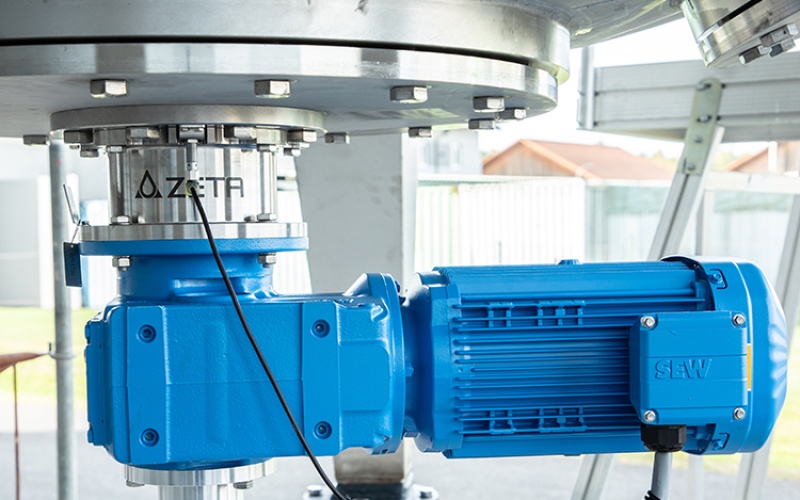
With a new large-scale test setup, Zeta is expanding its capabilities for experimental studies at the TechCenter in Austria. The current focus is on agitator testing and characterization. The setup provides a flexible platform for hydrodynamic characterization, development work, and customer-specific studies in upstream processing.
What mixing times can an agitator achieve, how much power does it transfer to the fluid—and how closely do experimental measurements match calculations and simulation results? These questions are relevant to the design of large-scale upstream systems. Experimental studies complement computational analysis with measured data obtained under defined test conditions.
This is precisely where the new test setup at the Zeta TechCenter comes in.
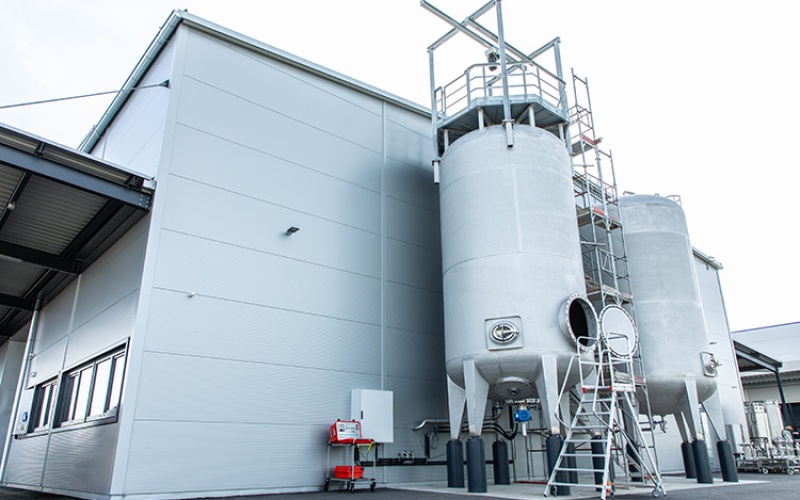
50,000 Liters for Application-Oriented Studies
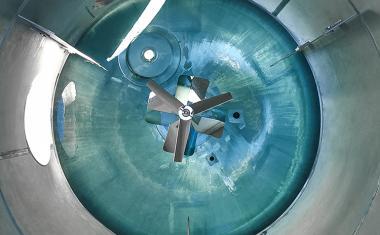
At the heart of the new setup is a 50,000-liter test vessel.
This expands the TechCenter’s large-scale testing capabilities for equipment development and characterization. One current focus is on fermenter and agitator testing. Studies can, for example, examine how an agitator performs under different conditions and the resulting hydrodynamic characteristics. Depending on the experimental setup, studies may address mixing times, torque, and power input. The setup could also support kₗa studies in the future.
Testing Tailored to Development Needs
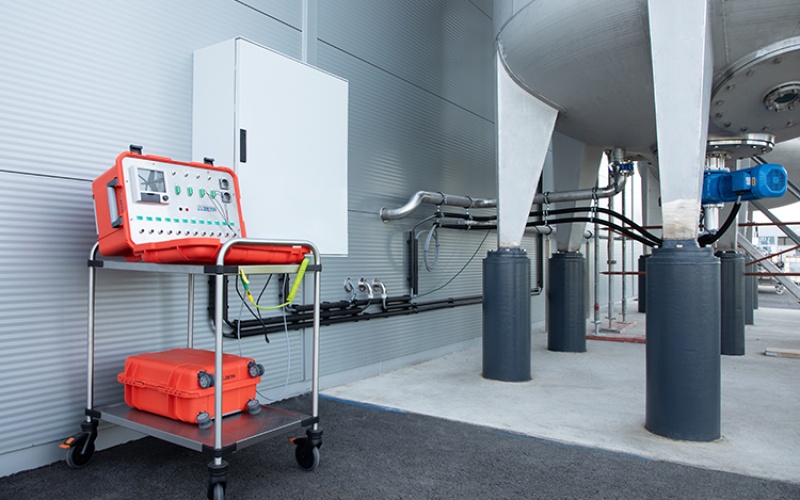
The experimental setup can be adapted to the development question at hand. This allows the infrastructure to support both the continued development of Zeta’s technologies and customer-specific studies and demonstrations. Rather than following a standardized test program, the focus is on targeted investigation of the relevant question.
After all, the questions arising in development and customer projects are rarely identical. While one project may focus on the performance of a particular agitator, another may address mixing times, power input, or hydrodynamic conditions within the vessel.
Bringing Simulation and Experiment Together
Research conducted at the TechCenter illustrates how experiments and simulations complement each other. A study on hydrodynamic stress combined experimental investigations with CFD-based analyses to compare hydrodynamic conditions across different systems.
Agitator studies in glass reactors also provide valuable data for simulation-based development. In a 200-liter glass reactor, for example, mixing times and kLa values for oxygen and carbon dioxide were determined experimentally and compared with CFD results. Following this validation, the simulation model was used to compare two 12,000-liter reactor configurations. This creates a continuous link between experimental investigation, simulation, and industrial-scale application.
Where technically appropriate, calculations, CFD simulations, and experimental studies can offer different perspectives on the same engineering question.
These studies illustrate the TechCenter’s methodological approach. The new 50,000-liter test setup adds another experimental environment for large-scale studies.
More Than a Test Setup
With this investment, Zeta builds on many years of development work at the TechCenter. Over the years, a broad range of research, development, and testing activities has been established there.
The new test setup extends this range into large-scale upstream applications. Its value goes beyond additional testing capacity: the insights gained can inform further development and plant design.
Magnetic Mixing Technology
Zeta magnetic agitators – engineered for reliability, contamination control and performance.
Designed specifically for aseptic processes, our mixing solutions meet the highest GMP standards.


most read

LomaChelateX: Real Mineral Bisglycinates – Join our Webinar
Mineral Bisglycinates are currently attracting a great deal of interest. Superior bioavailability and tolerability are the main benefits.