The Smart Factory Begins in Engineering
Why digital continuity, shared data models, and integrated engineering shape plant performance before operations begin.
Martin Mayer and Matthias Goriupp, ZETA
The pharmaceutical and biotech industries are investing today in facilities that may not go into operation for several years and are then expected to be used for decades. At the same time, it is already clear that these facilities will need to operate in a more digitalized, data-driven, and increasingly automated way in the future. Yet many projects are still developed on the basis of traditional documents, isolated data sets, and separate planning systems. This is where digital continuity becomes essential.
Martin Mayer, Director Digital Solutions at ZETA, and Matthias Goriupp, Director Customized Systems, agree that the necessary technologies already exist. What matters is considering digital requirements early. “When we plan facilities today that will not begin operating until 2031 or later, we need to define now which data will be needed in the future,” says Mayer. “The smart factory does not start in operations; it starts in engineering.”
Shared Data Instead of Digital Silos
A modern skid can be planned, simulated, and tested digitally. Its full value, however, emerges only when it integrates seamlessly into the overall facility. “An intelligent skid alone does not make an intelligent facility,” Mayer emphasizes. Value is created when all systems share a consistent data foundation.
Goriupp sees a key challenge here: suppliers can provide digital information, but its value remains limited without a shared structure. If bioreactors, filtration systems, centrifuges, and other process steps use different data structures, they cannot form an end-to-end digital facility. The industry therefore needs data and information standards - comparable to Bluetooth - so that systems speak the same language.
Digital requirements must therefore be defined at the tender stage. Specifying the engineering environment or data model only after contract award makes implementation more complex and costly.
Economic Value Across the Entire Lifecycle
The cost of disrupted data continuity becomes especially clear in operations. Supplier data often has to be consolidated manually, transferred into systems such as SAP, and updated whenever changes occur. Every duplicate entry adds effort, delays, and potential errors. The goal is simple: create information once and use it throughout engineering, construction, qualification, maintenance, and operations.
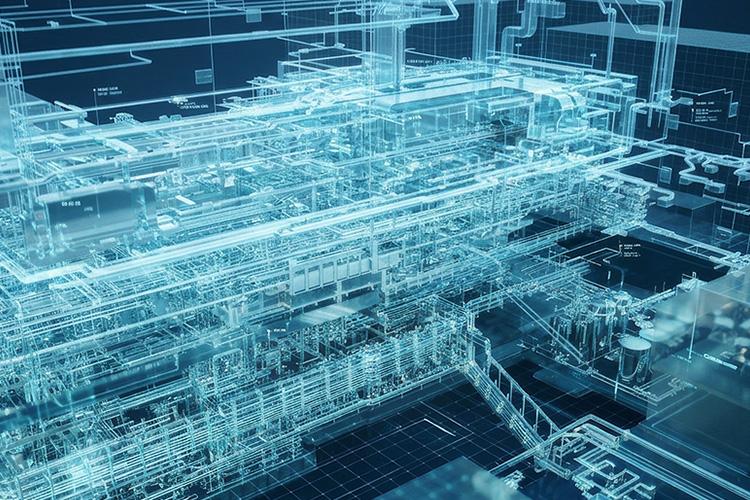
In an integrated environment, a change to a P&ID can automatically flow into electrical schematics, spare-parts lists, and 3D models. This improves documentation, spare-parts management, maintenance planning, and the foundation for future digital applications.

Modular Rather Than Maximally Digital
Mayer and Goriupp do not advocate maximum digitalization at any cost. Projects require different levels of digitalization, and fully digital solutions may be difficult to justify for simple or highly price-driven applications.
Instead, projects need modular digital building blocks selected for their specific requirements. The key is to determine early which information will be needed later and which digital foundations must be established today.
The Smart Factory Begins Long Before Commissioning
The discussion’s central takeaway is that tomorrow’s digitalization takes shape in the early engineering phases, not only once a facility is operational. Plants can be digitalized later, but without standardized data and consistent information models, system discontinuities, manual transfers, and additional error sources are inevitable.
Anyone seeking to operate autonomous or highly connected production facilities in the future must create the necessary data today. The smart factory therefore does not begin with a digital twin or a standalone software solution, but with decisions made long before commissioning.

Martin Mayer
"The smart factory doesn't begin on the shop floor, but with the decisions made in the early engineering phases."
© ZETA

Matthias Goriupp
"Without shared data structures, the value of digital information for operators remains limited."
© ZETA