Bayer Advances its Seed and Crop Protection Pipeline
Bayer is beginning to roll out major Crop Science innovations in key agricultural regions around the world. These blockbuster products are expected to generate peak sales of at least €500 million.
The insecticide Plenexos and the Preceon Smart Corn System are already on the market. In the soybean sector, Vyconic is expected to be launched next year in the US and Canada, while Intacta 5+ is scheduled for the 2027–2028 growing season in Brazil.
“We are delivering on the promises we made and bringing a new generation of game-changing products to farmers. By connecting seed and crop protection innovation we can deliver whole-farm solutions that help growers manage risk, capture yield potential and improve return on investment,” says Rodrigo Santos, member of the Executive Board and Head of the Crop Science Division. “We pursue a very diligent and differentiated strategy for each of our segments, addressing different growth dynamics, farmer needs, and regional and competitive dynamics. Because we have scale, we see having these different business segments together as a significant strategic advantage – one that plays out in what we innovate and how we can serve growers.”
The Preceon Smart Corn System, a digitally supported system based on short-statured corn, is already delivering added value to farmers in Mexico, Italy, Spain, and the U.S. This year, the commercial launch in Argentina will begin. It offers a unique combination of benefits, including better protection against extreme weather, higher seeding density, improved access for standard agricultural machinery throughout the growing season, and a larger root system. These characteristics make it possible to reduce agronomic risks, increase yield potential, and improve profitability. By 2035, Bayer aims to achieve a market penetration of 10.5 million hectares. Preceon also stands out because features of the FieldView digital platform are integrated directly into the system. The platform not only supports sales but also serves as a tool for collaboration between farmers and their agronomic advisors. It helps customers realize the system’s full agronomic and economic potential.
Plenexos, a new insecticide designed to control a broad spectrum of sucking pests, has already been launched in Colombia. Mexico, Brazil, and the U.S. are set to follow. Compared to other products, farmers can use up to 75% less active ingredient for pest control. This also helps protect pollinators, beneficial insects, and other non-target organisms. Plenexos is designed for use on soybeans, cotton, and fruits and vegetables. The product is expected to reach its peak sales potential of EUR 500 million in the mid-2030s.
In the soybean sector, Vyconic will offer the first combination of plant traits with tolerance to five herbicides. It provides farmers with greater flexibility in weed control and helps them better address growing resistance issues. Through its combination with Bayer’s advanced breeding pipeline, Vyconic is being introduced in high-performing varieties that have demonstrated a yield increase of more than 135 kg per hectare. As a result, farmers will be able to benefit from both higher genetic yield potential and greater flexibility in weed management sooner than ever before. Bayer expects strong market acceptance of Vyconic and the subsequent introduction of fifth-generation herbicide tolerance, which is expected to help regain the leadership position in soybean traits in North America by 2032. Intacta 5+ will also offer Brazilian farmers tolerance to five herbicides, as well as new insect protection traits developed specifically for the Brazilian market. In the soybean sector, these and the next generation of herbicide-tolerant traits, together with the latest insect protection traits, are expected to reach a total peak sales potential of more than €3 billion.
Other blockbuster innovations expected by the end of the decade include the fourth generation of a trait for protection against the corn rootworm, as well as the novel herbicide Icafolin, which is expected to have a sales potential of €750 million by the mid-2030s. Together, the ten blockbuster products offer solutions to key challenges in agriculture and are expected to contribute significantly to Bayer’s growth over the coming decade.
Bayer Continues to Advance Its Industry-Leading Innovation Pipeline
In parallel with these major market launches, Bayer is advancing key projects along its research and development pipeline and continuously delivering innovations to farmers. Each year, the company introduces 400 to 500 new hybrids and varieties. This is based on Bayer’s AI-powered precision breeding, which doubles the yield increase rate of each new generation compared to earlier breeding approaches and accelerates the time to market by a factor of three.
The company’s researchers have further developed this breeding approach through genome editing and are applying the technology on a large scale by integrating it early into breeding processes. One example of this is genome-edited soybeans: Higher-yielding soybean varieties can become more prone to lodging or falling over as plant height increases. Using genome editing, Bayer is therefore developing soybeans with improved plant architecture to address this challenge. The combination of innovations such as genome-edited, more upright soybeans and the advanced breeding pipeline is giving rise to new product concepts that are expected to reach the market at the beginning of the coming decade.
As another example of its integrated research and development platform, Bayer is developing plant traits that complement its novel crop protection solutions. In an early stage of research and development, the company is working on its sixth generation of herbicide-tolerant traits, which is also expected to include tolerance to the blockbuster herbicide Icafolin. This is the first time Bayer has simultaneously developed a new herbicide molecule and a corresponding tolerance trait. This creates a holistic weed control system that is unique in the industry.
With its AI-powered research platform CropKey, Bayer is setting itself apart in the field of crop protection. It enables the identification of new modes of action as well as the design of targeted molecules, with efficacy, safety, and sustainability assessed right from the start of the research and development process. This has enabled the company to build a strong pipeline, with more than 15 novel modes of action currently in the research phase. One example is a new broad-spectrum fungicide for soybeans with blockbuster potential, which is being developed using CropKey and has now reached Phase II of the pipeline.
“Whether in seeds, traits or crop protection innovation, AI is becoming a core enabler of Bayer’s innovation model, helping us advance discovery, improve development efficiency and translate biological insights into differentiated products for growers faster,” said Mike Graham, Head of Crop Science R&D. “Our advantage is that our teams work from the same biological insights, enabling us to combine expertise across disciplines and accelerate innovation.”
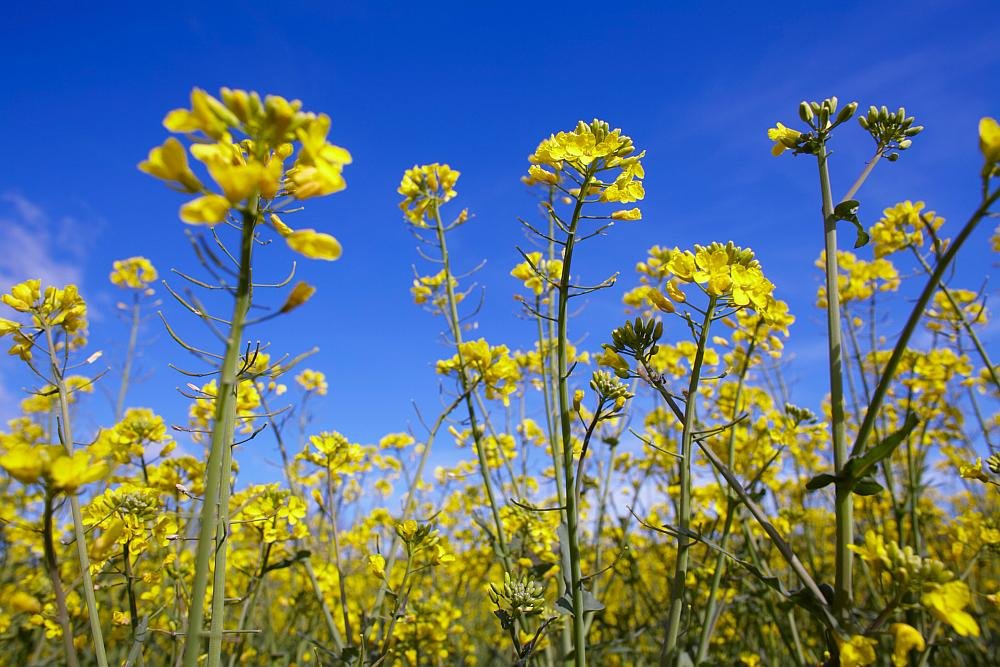
In addition, Bayer is expanding into adjacent growth areas. With its still-young but already leading portfolio of cover crops for biofuels—including camelina and CoverCress, as well as winter rapeseed—the company is helping to meet the growing demand for biodiesel, renewable diesel, and sustainable aviation fuel. By 2040, the volume is expected to nearly triple to about 150 billion liters. At the same time, Bayer is moving forward with its plans to launch hybrid wheat seeds simultaneously in Europe and North America in the early 2030s. By leveraging the benefits of hybridization, the company is tapping into a previously largely untapped market potential in a crop that is grown on more than 220 million hectares worldwide. With hybrid wheat, camelina, winter rapeseed, and CoverCress, Bayer is simultaneously entering four new crop markets.
Bayer on Track to Implement Its Five-Year Program
Bayer’s innovations are made possible by the implementation of the five-year program introduced by the Crop Science 2025 division to increase profitability, growth, and competitiveness. The company is consistently implementing the strategy and achieving the first tangible results.
In terms of cost reduction, Bayer has already made significant progress to date, with savings of nearly €400 million. These contributions support the goal of improving EBITDA before special items by €1 billion and achieving an EBITDA margin before special items in the mid-20 percent range by the end of the decade. As part of these measures, five active ingredients were divested and more than 100 crop protection formulations were discontinued. At the same time, inventory worth €500 million has already been reduced. This supports Bayer’s goal of achieving free operating cash flow of more than €3 billion by 2029.
The goal of the five-year program—to grow above the market average by the end of the decade and generate more than €3.5 billion in additional revenue on a currency-adjusted basis—is supported by both the continuous introduction of innovations and strategic business decisions. Key growth drivers include the annual launch of high-performance hybrids, accelerated technology rollouts, market share gains, and the geographic expansion of proven technologies into markets in Asia and the Europe, Middle East, and Africa (EMEA) region. In crop protection, Bayer is focusing on locally tailored go-to-market initiatives, the reallocation of commercial resources to growth products and regions, and lifecycle management measures, such as the launch of Convintro in the US, Brazil, and Canada.
This progress is supported by the Dynamic Shared Ownership operating model, which enables faster decision-making and clearer lines of responsibility, thereby empowering the company to leverage artificial intelligence on a large scale and translate it into business opportunities. “Our innovation strategy and our Five-Year Framework are built on execution,” said Rodrigo Santos. “We are making progress against the commitments we have made, and are set to lead the industry and bring value to our customers and shareholders by delivering differentiating solutions that growers around the world need.”