Akzonobel Expands Salt Production and Enhances Environmental Footprint
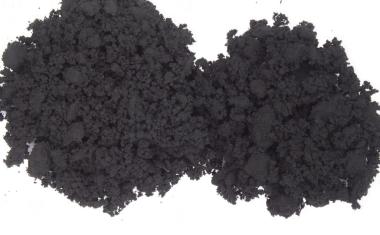
Akzonobel today inaugurates its new salt plant in Delfzijl, the Netherlands. This €25 million investment will officially be opened by Werner Fuhrmann, president of Akzonobel industrial chemicals. The expansion has been combined with the conversion to full scale production of mTA industry salt - also of the other salt plants in Delfzijl. mTA, a complex of iron and meso-Tartrate, is a unique biodegradable anti-caking agent for salt, enhancing the CO2 footprint of the chlorine industry.
Developed by the company over the last years, its business applies the biodegradable mTA as anti-caking agent. mTA is recommended for membrane technology in the chlorine industry. The application of mTA lowers power consumption and improves the operational conditions a.o. by increasing the lifetime of membranes and electrodes. This performance has been proven based on the use of more than five million tons of mTA salt in Akzonobel's own membrane electrolysis plants.
"Within a few years our mTA will be the global standard anti-caking agent, providing top-quality salt", says Werner Fuhrmann, "In membrane electrolysis the current anti-caking agents have distinct adverse effects since deposits on or in the membranes increase power consumption. Applying mTA lowers your maintenance costs, brings you up to five percent reduction on your power bill and a corresponding improvement in the CO2 footprint. The chlorine industry and society at large will benefit from our innovation."
Akzonobel mTA is an entirely biodegradable specialty chemical. It quickly decomposes in soil or water - it's a ‘green' product. And because it helps to save energy, it increases the eco-efficiency of the whole chlorine value chain. Being biodegradable, mTA is not only suitable as anti-caking agent in industry salt but possibly also in various other salt applications, like de-icing salt.
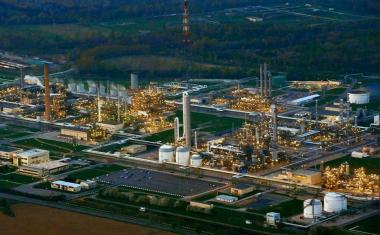
The new salt plant, inaugurated today, adds an annual capacity of more than 300 kt which increases Akzonobel's production capacity in Europe to six million tons of evaporated salt in total. The plant applies mechanical vapor recompression (MVR) technology where in a one step evaporation process the primary fuel is electricity instead of steam.