LyondellBasell Sets Out Sustainability Aims
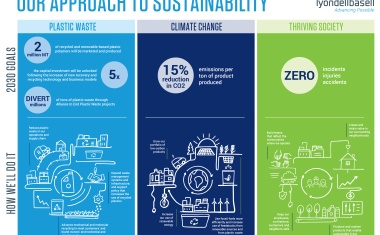
LyondellBasell has pledged to produce and market 2 million t/y of recycled and renewable-based polymers by 2030 as part of a range of new sustainability targets.

LyondellBasell has pledged to produce and market 2 million t/y of recycled and renewable-based polymers by 2030 as part of a range of new sustainability targets.

Chemicals are a critical, but often overlooked, factor of success for a circular economy. 96% of all products on European markets, from food to medical treatments, from buildings to consumer electronics, rely on chemicals, so this shouldn’t come as a surprise. But what does circularity mean for the future of the chemicals industry? Should it embrace circular systems or resist them?

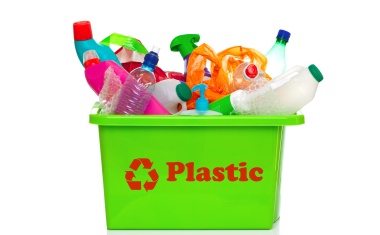
Designed for their performance and durability, synthetic plastics have become indispensable as “materials of every-day use”. However, their characteristic long life span and indiscriminate disposal have led to an acute problem of plastic pollution. In order to address this issue, the European Union is not only trying to adopt a circular system to reuse, repair and recycle plastics (circular economy) but it also aims to produce plastics out of renewable resources (biobased plastics).


“Science to Enable Sustainable Plastics” was the topic of the 8th Chemical Sciences and Society Symposiums, held from November 10-13, 2019, in London.


Plastics manufacturer Sekisui Chemical and the Innovation Network Corporation of Japan (INCJ) have formed a joint venture to verify and commercialize combustible waste-to-ethanol technology.

Ineos has joined forces with Plastic Energy to help promote and employ chemical recycling.


Ten years ago, in March 2007, oxo chemicals producer Oxea was established as a buyout led by private-equity firm Advent International of oxo derivatives and oxo intermediates businesses from Celanese and European Oxo.