Shell and Hyundai Deepen Ties as 20-Year Partnership Gets New Deal
The two companies renew their global cooperation agreement, extending two decades of collaboration on lubricants and clean mobility.


The two companies renew their global cooperation agreement, extending two decades of collaboration on lubricants and clean mobility.
Shell has agreed to sell its Sprng Energy renewables business in India to Aditya Birla Renewables for $1.8 billion, as part of its strategy to streamline and improve returns in its power portfolio.
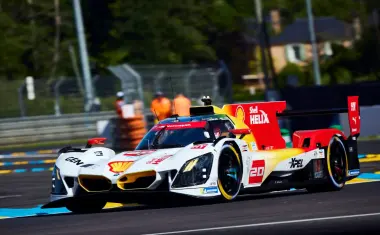
Shell Lubricants and BMW M Motorsport have extended their long-running partnership.
Shell has decided not to restart construction of its Rotterdam biofuels plant after determining the project would not be competitive enough, citing market dynamics, costs, and a focus on other capital priorities.
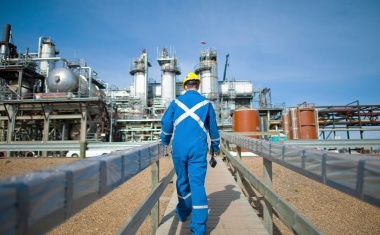
In collaboration with Shell, COAC has implemented the Smart Equipment Passport (SEP), a solution to create digital identities of equipment that can be used to exchange information with internal and external users safely and securely.
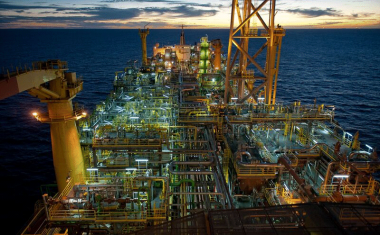
Following its long-term goal of extracting itself from a challenging operating environment in the Niger Delta, Shell agreed to sell its Nigerian onshore subsidiary Shell Petroleum Development Company of Nigeria (SPDC) to Renaissance, a consortium of five companies comprising four exploration and production companies based in Nigeria and an international energy group, for $1.3 billion.
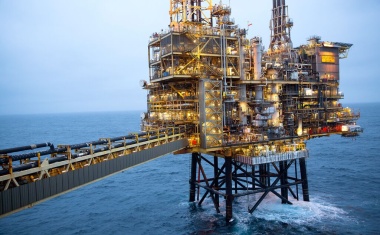
Shell CEO, Wael Sawan, contemplates another headquarters move amidst the introduction of windfall taxes in the UK. Questions about the state of production and energy costs are also of concern.
Shell is reviewing operations in Singapore, with a view to repurposing, selling or decommissioning assets in Bukom and Jurong Island. The energy and chemicals giant will also “high-grade and right-size” its energy and chemicals parks in Europe, which could mean plant closures.
Shell has sealed a definitive agreement to buy Europe’s largest biogas producer, Denmark’s Nature Energy, for €1.9 billion. The move is being seen as another sign of a former oil major’s effort to diversify its portfolio and reduce the dependence on fossil fuels that put it on the energy map.
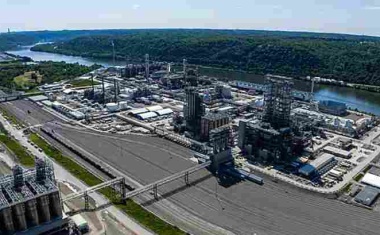
After a long delay, Shell has started up its controversial super-sized US ethane cracker and downstream polyethylene complex at Monaca in western Pennsylvania, close to the Utica and Marcellus shale basins in the heart of the US fracking industry.
LyondellBasell has won contracts for two PP projects, one in China and the other in Vietnam. The value of the contracts was not disclosed.
Shell has signed a non-binding Memorandum of Understanding (MoU) with BASF and Chinese state-owned groups, including chemical producer Sinopec and steel maker Baowu, to explore the feasibility of developing an open-source carbon capture, utilization and storage (CCUS) project in East China.
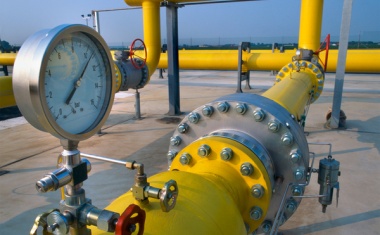
The Shell/ExxonMobil petroleum additives joint venture Infineum has agreed to acquire the Pipeline and Industrial Materials (PIM) business of US company Entegris. The transaction is expected to close in the fourth quarter, subject to regulatory clearance and the usual conditions.
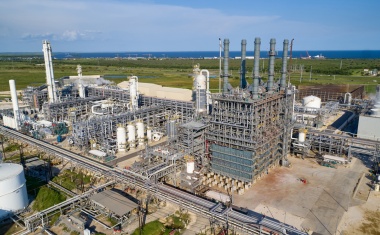
The 1 million t/y ethane cracker built by US-headquartered Bayport Polymers (also known as Baystar), a 50:50 joint venture of Borealis and TotalEnergies, has begun commercial scale production at Total’s refinery in Port Arthur, Texas.
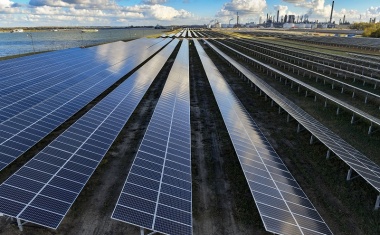
Shell Chemicals has announced it will earmark “billions of euros” from its current capital spending budget to make production assets more sustainable as it works to achieve net zero emissions by 2032.
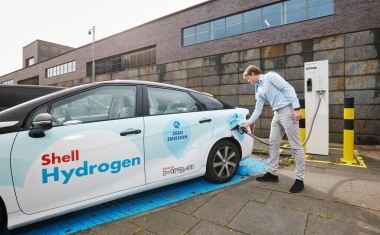
Shell is going ahead with plans to bring Europe’s largest renewable hydrogen plant on stream by 2025.
Energy and petrochemical giants ExxonMobil and Shell have signed a Memorandum of Understanding with CNOOC and the Guangdong Provincial Development & Reform Commission in China to evaluate the potential for a world-scale carbon capture and storage (CCS) project.
The emirate of Qatar has begun signing agreements with US and European energy majors for the country’s planned $30 billion expansion of its North Field, which is believed to harbor the world’s largest natural gas reserves. TotalEnergies is taking the top slot.
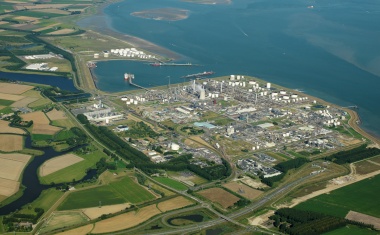
Shell and Dow have started up an experimental unit to electrically heat steam cracker furnaces in the Netherlands.
State-backed Italian energy group Eni has reportedly been tapped by the government of Qatar to lead a consortium of five global energy groups to stem the near $30 billion expansion of the North Field, the world’s largest liquefied natural gas (LNG) project.
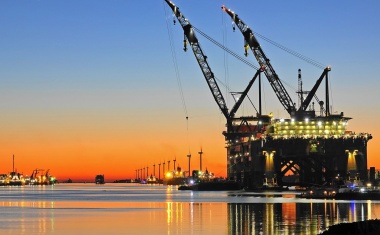
Shell is the first company to sign an agreement to use the HyTransPort hydrogen pipeline in the Netherlands that will run for 32km from Maasvlakte in the Port of Rotterdam to Pernis. Gasunie is laying the pipeline in collaboration with the Port of Rotterdam Authority.
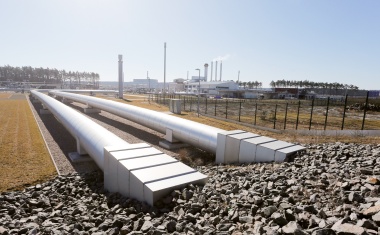
Under pressure from economic sanctions imposed on Russian assets by Europe and the US after Russia’s invasion of Ukraine, Wintershall Dea, the German oil and gas producer owned to 67% by BASF said it will write off its €1.1 billion financing of the Nord Stream 2 natural gas pipeline project and will not pursue any new projects in Russia.
Hot on the heels of BP’s decision to quit its Russian shareholding, Shell and Equinor have announced they too will exit their joint ventures in the country, following its invasion of Ukraine.
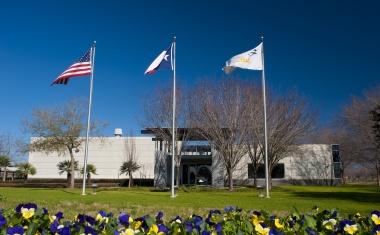
ExxonMobil and SABIC have brought on stream what they tout as the world’s largest ethane cracker. The facility at Portland, Texas, which is operated by the companies’ Gulf Coast Growth Ventures (GCGV), has capacity to produce 1.8 million t/y of ethylene.
Shell has announced plans to scrap its dual share structure and move its headquarters from the Netherlands to the UK. The proposal will also see the energy giant lose its “Royal Dutch” prefix, becoming just Shell. It will, however, retain its listings in London, Amsterdam and New York.
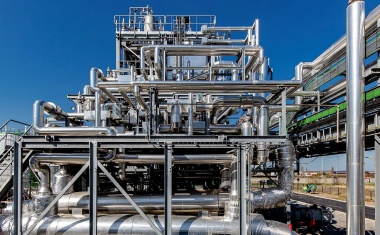
Shell Ventures is partnering BlueAlp Holding to develop, scale and deploy the latter’s chemical recycling technology that converts plastic waste into pyrolysis oil. As part of the agreement, Shell has taken a 21.25% stake in BlueAlp.
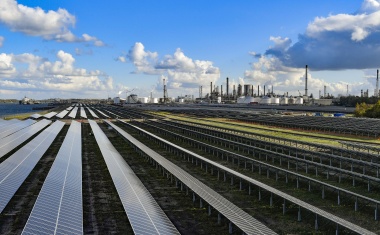
Dow and Shell have secured funding from the Dutch government and are also linking up with two research organizations to accelerate progress in the joint cracker electrification development program that they announced about a year ago. The technology has the potential to significantly reduce CO2 emissions from one of the chemical industry’s most central processes.
Dutch multinational energy and chemicals group Shell will accelerate plans to reduce its greenhouse gas emissions following a Dutch legal ruling late last month.
The EU Commission’s ambitious plan for a European Green Deal, launched shortly before the pandemic struck in early 2020, aims to make the continent the world’s first climate-neutral region by 2050. The goals spelled out in January last year call for reduction of greenhouse gas emissions by at least 50% up to 2030, compared with 1990 levels.
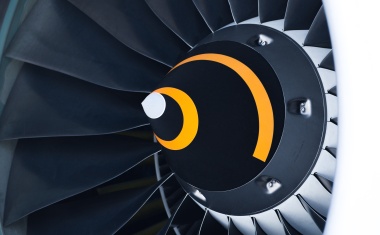
Shell has announced plans to produce sustainable aviation fuels together with UK-based ITM Power at its Rhineland refinery in Cologne-Wesseling, Germany. A new Bio-Power-to-Liquid plant would be the first such commercial plant ever, it said.
Shell has announced plans to invest $4-5 billion annually to grow its chemicals and products business as part of an organizational restructuring that aims to accelerate the Anglo-Dutch group’s target of becoming a net-zero emissions energy business by 2050 or sooner.

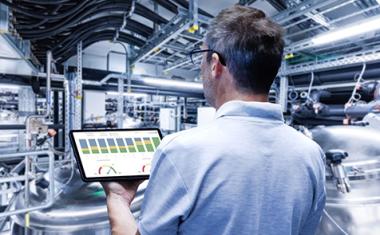
Digital twin systems transform business by accelerating holistic understanding, optimal decision-making, and effective action.
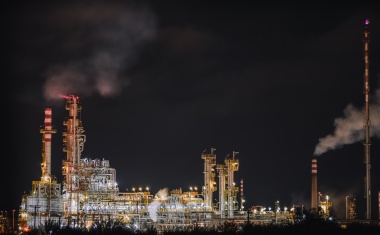
Shell Canada has signed a deal to invest in Varennes Carbon Recycling, the first waste-to-low-carbon fuels plant in Quebec. Shell will take a 40% interest in the plant, which will use technology developed by Canadian clean tech company Enerkem.
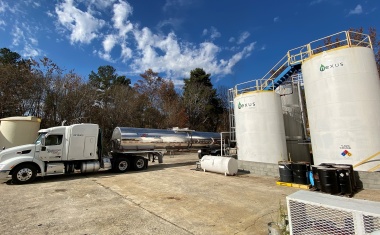
Shell and plastics recycling company Nexus Fuels have entered into a supply agreement for pyrolysis liquid made from plastic waste.
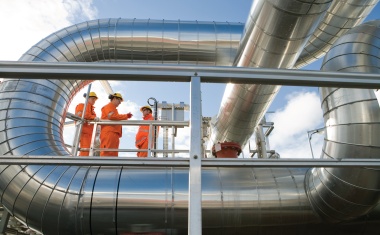
German industrial gases and engineering group Linde has entered into an exclusive collaboration with Shell on ethane-oxidative dehydrogenation (E-ODH) technology for producing ethylene. The catalytic process is an alternative route to ethane steam cracking.