Merck Opens Site for its Semiconductor Business in Taiwan
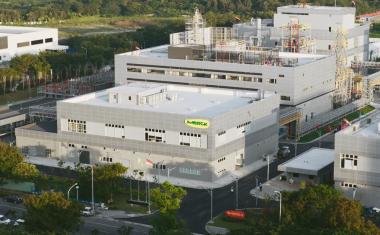
Merck has inaugurated its megasite for semiconductor solutions in Kaohsiung, Taiwan. The Electronics business sector has invested a total of €500 million there in recent years.

Merck has inaugurated its megasite for semiconductor solutions in Kaohsiung, Taiwan. The Electronics business sector has invested a total of €500 million there in recent years.
Fujifilm plans to invest approximately €25 million to install new production facilities for chemical mechanical planarization (CMP) slurries, which are used in advanced semiconductors, as well as enhance existing facilities for photolithography-related materials at its site in Antwerp, Belgium.
Japan’s Shin-Etsu Chemical has made an offer to acquire all of the shares in its affiliate Mimasu Semiconductor Industry for ¥68.0 billion (approximately $430.9 million). Shin-Etsu will raise its stake in Mimasu to 100% from the current 43.87%. The tender offer will begin on June 21, with the aim of closing by the end of Aug. 5.
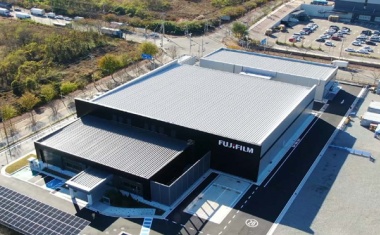
Fujifilm hast completed the construction of a new factory for advanced semiconductor materials in Pyeongtaek City, Korea. The new factory will produce color filter materials for image sensors. The new factory is scheduled to be fully operational by the end of December 2024.
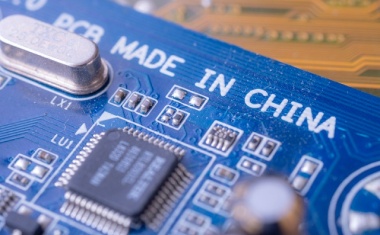
As April winds down and major German chemical companies hold their annual shareholder meetings, questions are being asked whether about the country is tying its trade too closely to with China and repeating the same mistakes it made earlier by becoming dependent on Russian gas.

After years of little or no movement on regulation of per- and poly-fluorinated alkyl substances (PFAS), Europe and the US, separately, are now preparing legislation to contain them.
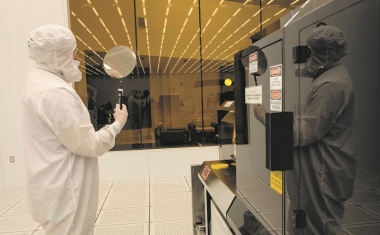
German chemicals, pharmaceuticals and life sciences group Merck and US semiconductors giant Intel have signed a letter of intent to fund a European academic research program that will leverage artificial intelligence (AI) and machine learning technologies to drive innovation.
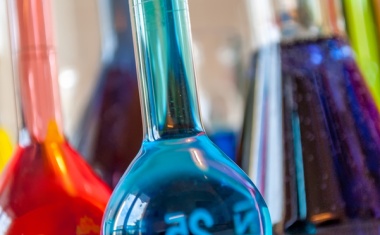
The European Chemicals Agency (ECHA) is moving to advance the petition to restrict the use of poly-fluorinated alkyl substances (PFASs submitted in January by the environmental authorities of Denmark, Germany, the Netherlands, Norway and Sweden.
Across the US and Europe, health and environment NGOs are putting pressure on national authorities to curb contamination from poly-fluorinated alkyl substances (PFAS), the hard-to-decompose “forever chemicals” used to make semiconductors, batteries, aircrafts, cars, medical equipment or coat frying pans and skis.