Slave SUPI4: Faster Data Transfer
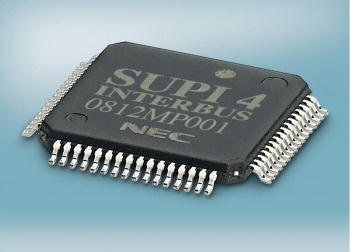
Increased demands and requirements in the automation environment are addressed with this new generation of interface solutions for the Interbus fieldbus system featuring optimized system properties. The SUPI4 slave can be used as ASIC wherever new Interbus devices are developed. The slave as well as the IPMS4 master can be integrated into commercially available FPGA systems as a state-of-the-art VHDL solution. This helps to secure the technological availability of Interbus technology over the long term and in a cost-effective manner.
The register structure was expanded to 64 bytes of input data and 64 bytes of output data, so devices that support the Interbus data width can now be configured. The user-specific transmission rates of up to 16 MBaud allow the fieldbus system to also be used for demanding applications in drive systems. The ability to configure different devices means that the behavior of the I/O modules can be flexibly adapted.
If an error occurs, individual devices can be specifically switched-in and switched-out in a non-reactive way. The integrated single-channel diagnostics feature allows users to perform in-depth error management. Last but not least, fieldbus devices in Profinet networks are supported thanks to the Interbus base profile.