ESILIB: FLTMC Finalist
ESILIB is one of the finalists for the From Lab to Market Challenge.
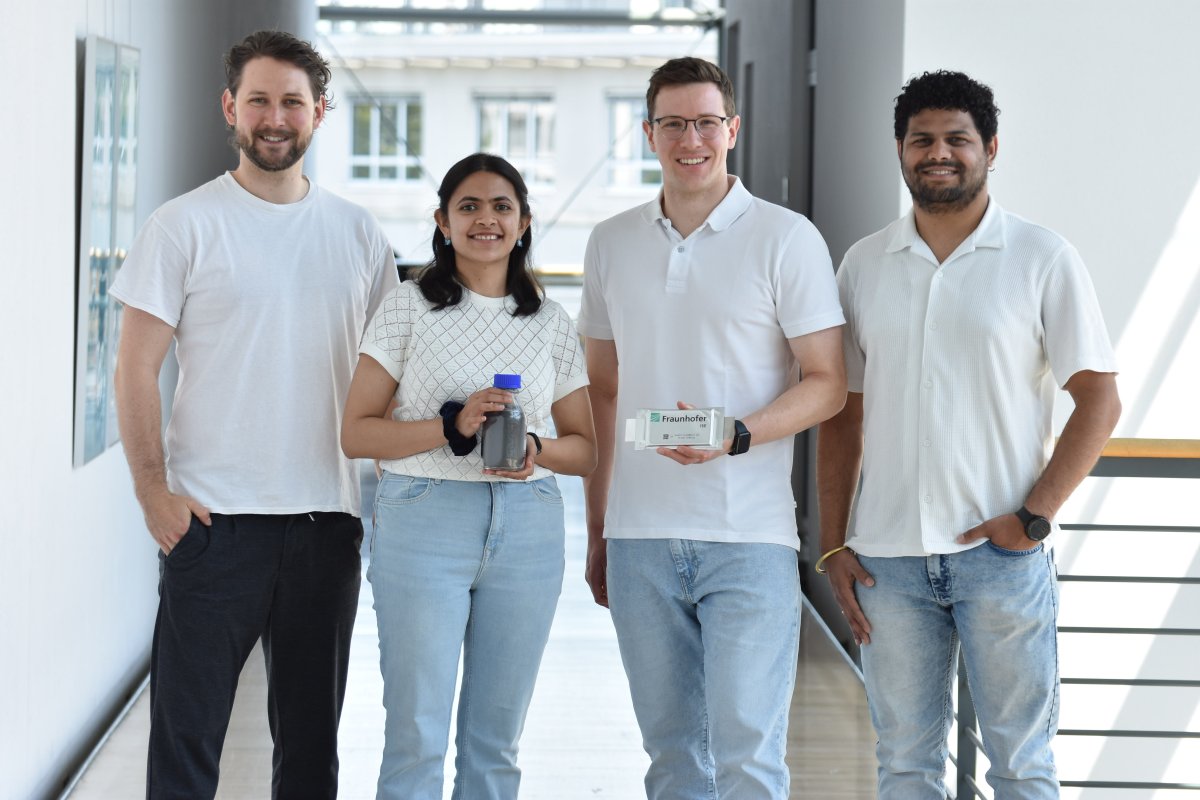
We spoke with Co-Founders Lukas Alexander Dold (CEO), Christian Teske (CTO), Prachiti Ravindra Bedadur (COO), and Chinmay Rajeev Bapat (CCO) about ESILIB (Enhanced Silicon-Carbon-Composites for Lithium-Ion Batteries), one of the finalists in the From Lab to Market Challenge.
CHEManager: What is your technology, and what makes it work?
Lukas Alexander Dold, Christian Teske, Prachiti Ravindra Bedadur, & Chinmay Rajeev Bapat: ESILIB develops a novel silicon-carbon composite (Si/C) anode for Lithium-Ion Batteries with a propietary process. Our architecture accommodates silicon’s massive 280% volume expansion internally, preventing its mechanical failure. We use low-cost metallurgical Si and biomass-based carbon in a water-based process unlike costly gas-phase methods. Our"drop-in" solution for existing cell production boosts energy density by 40% with upto 80% lower CO2 footprint than competing gas-phase methods.
What problem does your technology solve, and what is the business potential?
L. A. Dold, C. Teske, P. R. Bedadur, & C. R. Bapat: Graphite has reached performance limits and carries geopolitical supply risks. We address these gaps with a silicon-based material offering superior energy density and fast charging. A profitable market entry is foreseen with niche applications like power tools and UAVs (SAM: €4.5 bn), scaling to EVs and other applications (TAM: €15 bn, CAGR 30%). With European raw materials and a patented process, we reduce strategic dependency while providing a clear cost-performance advantage over competitors.
What's the next milestone your team is working towards?
L. A. Dold, C. Teske, P. R. Bedadur, & C. R. Bapat: We are bridging the gap from lab (TRL 3) to industrial scale (TRL 6). Our next milestone is producing kilogram-scale batches and validating performance in pouch cells to release a technical data sheet targeting >500 cycles with 80 % capacity retention. With these results and five customer LOIs already in place, we plan to secure first customers and generate revenue rapidly. Further, we plan to scale toward a pilot plant (100 t/a) for the EVs and other high-performance applications.