TSR Innovations – Recycling Rare-earth Magnets for a more Circular European Supply Chain
German start-up TSR Innovations (Tomislav Stolar Recycling Innovations) has developed a long-loop mechanochemical recycling process for rare-earth magnets recovered from electric vehicle motors and production waste.
The technology recovers valuable rare-earth materials and converts them into reusable compounds that can be used in the production of new magnets, supporting a more circular and resilient European supply chain.
For these reasons, the International Sustainable Chemistry Collaborative Centre (ISC3) has chosen TSR Innovations as one of the finalists of the ISC3 Innovation Challenge 2026 and the start-up is featured as the ISC3 Start-up of the Month for October 2026.
A key aspect of the innovation is its use of mechanochemistry, which uses mechanical forces to drive chemical transformations. Unlike many conventional recycling routes, the process operates with low energy and chemical requirements and is designed to process complex waste streams that are often difficult to recycle using existing methods. By recovering valuable rare-earth materials that might otherwise be lost, TSR Innovations helps reduce resource waste and creates a secondary source of critical raw materials for future production.
From a sustainability perspective, the technology offers several advantages. According to the company, it can operate at room temperature and normal pressure. In addition, its modular design could enable deployment closer to collection points or manufacturing sites, reducing transportation needs and strengthening regional circular-economy ecosystems.
The whole success story of the ISC3 Start-up of the Month in October 2026 is currently told by the ISC3 on its website at TSR Innovations (isc3.org).
Three questions for Tomislav Stolar (Founder and CEO of TSR Innovations)
What led you to found TSR Innovations and develop a solution in Sustainable Chemistry?
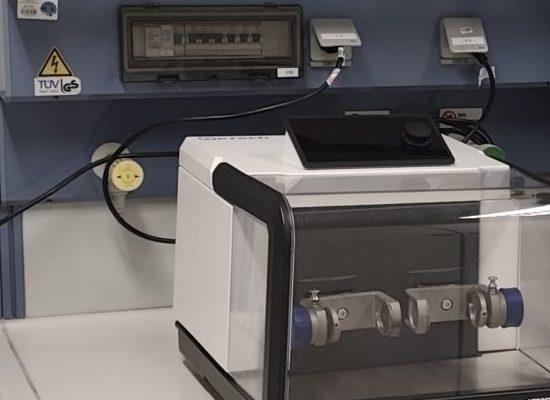
Tomislav Stolar: Mechanochemistry is a branch of chemistry that uses mechanical forces, such as those in ball milling, to drive chemical transformations. Most mechanochemical processes give high yields and run at room temperature and pressure without the need for heating or pressurization. Hence, mechanochemistry is time-, energy-, and reagent-efficient and is highly disruptive to traditional chemical manufacturing and recycling. After decades of extensive community research on mechanochemistry, I believed there was little industry application to show for it. Consequently, I took the initiative to start TSR Innovations and commercialize a mechanochemical recycling process for rare-earth magnets.
What does being chosen as ISC3 Start-up of the Month mean to you?
T. Stolar: Honestly, it means a ton. So far, we have been working in stealth on purpose, but we're now ready to move fast. ISC3 is helping us with that. We are excited about the journey ahead.
What's next up at TSR Innovations?
T. Stolar: We are ready to move from the lab to pilot scale and to significantly expand the core team. In the long term, we want to realize the first European small and modular mechanochemical long-loop recycling plant and help Europe achieve rare earth supply chain independence.
Company