Statement: Customer Centricity is Key
The chemical distribution outlook report by Boston Consulting Group, outlined on the previous pages, presents six key findings that capture the strategic pressures and capability shifts transforming the chemical disgtribution landscape, setting the stage for four imperatives that will help distributors to win amid uncertainty. Madjar Navah, one of the authors of the report, introduced the most significant results of the study at the FECC Annual Meeting in Hamburg, Germany, in mid-September. Among the audience were executives of the largest chemical distribution companies, some of which we asked to share their opinions on the report’s conclusions with us.
Changes in the chemical distribution landscape are largely structural rather than cyclical. This is evident on the supply side, and in many industries and regions, also on the demand side.
As a fully family-owned company, Biesterfeld has the advantage of being able to think strategically in the long term, building a stronger business for the next generation. This enables us to systematically invest in people and skillsets needed to master the future.
We have started our transformation journey two years ago with four clear objectives: to grow faster despite sluggish demand, to put emphasis on customer segmentation and marketing, to become more agile and less hierarchical and to expand into specialties and new geographies. This will require a greater contribution from acquisitions alongside historically strong organic growth. Size, and more specifically the ability to scale will matter especially with respect to investments in IT, AI, and Regulatory & Sustainability. These investments will be inevitable and difficult to manage without achieving a critical size. They also require increased emphasis on back-office process standardization and smart centralization, with clear efficiency improvements. We must preserve our culture of going the extra mile for our customers, a trait rarely found in large corporations. Our business model remains essentially decentralized, with many different local aspects and a large variety of customer segments. The deep understanding of customer needs will increasingly shape our portfolio and service offerings. This includes new products, potentially new suppliers, as well as maintaining strong partnerships with our existing suppliers. We continue to believe that exclusivity is the best approach for marketing and growing true specialties regardless of globally changing supply chains. However, reconfiguring will be necessary for commodity products in our portfolio. Again, this will be handled based on customers’ needs.
Biesterfeld is well-positioned not only to master the uncertainties, but also to capitalize on the opportunities arising from current changes and disruptions.
“We invest in people and skillsets needed to master the future.”
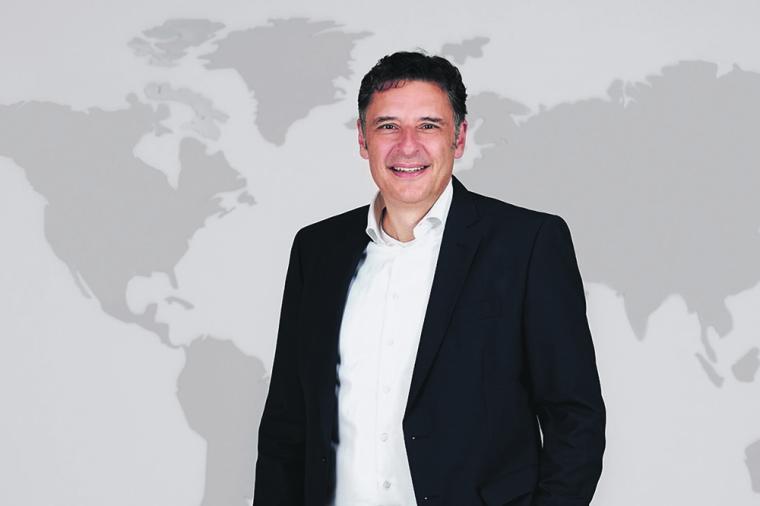
CEO, Biesterfeld