Palki Motors – Pioneering Electric Mobility in Bangladesh
Palki Motors, a groundbreaking start-up from Bangladesh, is the country’s first manufacturer of affordable electric vehicles.
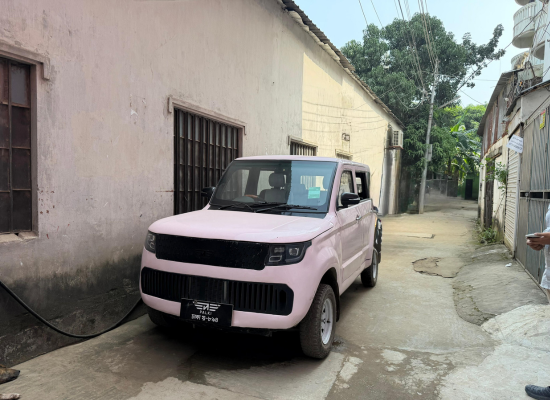
Their cars are designed with circularity in mind: minimal waste, reusable components, and reduced chemical inputs are core principles of their approach.
The company aims not only to reduce Bangladesh’s severe air pollution but also to improve working conditions for drivers. Thanks to small-scale production, Palki Motors can keep costs low, making vehicle ownership accessible to more people. This helps reduce the fixed expenses of professions like taxi drivers, ultimately improving their quality of life. Local manufacturing also eliminates import costs, keeping the vehicles even more affordable.
Palki Motors’ contribution to sustainability – achieved in a context with limited resources and infrastructure – shows that the pursuit of a more sustainable future is a global effort, possible even in environments where it may seem unlikely.
For these reasons, Palki Motors has been chosen as one of the ISC3 Innovation Challenge finalists 2025 and now featured by the International Sustainable Chemistry Collaborative Centre as the ISC3 Start-up of the Month for November 2025.
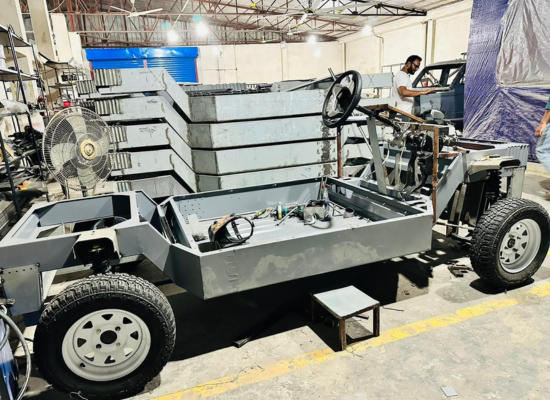
The innovation behind Palki Motors goes far beyond building electric cars; it lies in how the manufacturing is reimagined. On one hand, the company relies on low-capital metal forming techniques. Instead of expensive stamping presses, Palki uses bending and laser cutting to build the car body and chassis. This drastically lowers machinery costs and makes small-scale manufacturing feasible in Global South countries. On the other hand, the team aims to implement an Autonomous Micro-Factory in the future — a modular, AI-driven manufacturing system where robots form metal, weld the chassis, paint, and assemble vehicles.
Traditional EV manufacturing generates significant waste, and many first-world vehicles eventually end up dumped in Global South countries. Meanwhile, recycling and waste management remain extremely challenging in Bangladesh. Palki Motors addresses this through a circular design philosophy: The approach includes the use of minimal scrap metal, modular chassis and reusable body panels. Lithium Iron Phosphate (LFP) batteries that are used, are safer, more stable, and more environmentally friendly than alternatives.
The whole success story of the ISC3 Start-up of the Month in December 2025 is currently told by the ISC3 on its website at Palki Motors (isc3.org).
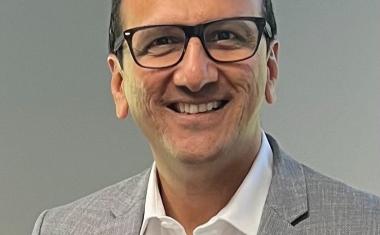
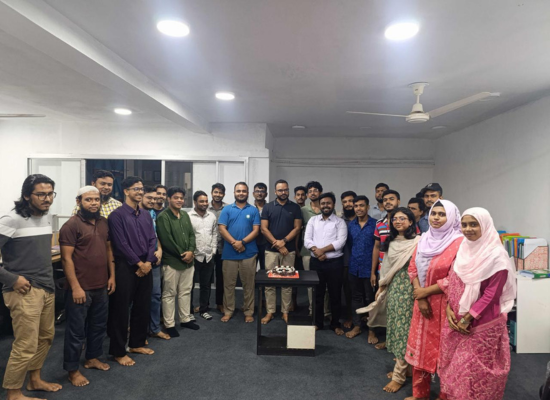
Three questions for Mustafa Al Momin, founder and CEO of Palki Motors:
What led to your solution in Sustainable Chemistry?
Mustafa Al Momin: I started Palki Motors to tackle two challenges at once: Dhaka’s severe air pollution and the struggles of commercial drivers, who work long hours but can’t afford to own their vehicles.
In 2022, during a period of self-reflection, I realized my purpose: to use my background in Electrical Engineering to build electric cars that help people, protect the planet, and allow me to grow. That was the moment Palki Motors truly began.
What does being chosen as ISC3 Innovation Challenge finalist and ISC3 Start-up of the Month mean to you?
M. Al Momin: It means global recognition for our team’s hard work. It validates our mission and boosts confidence among customers, team members, and investors. When we share this news, it will inspire trust and open doors to international opportunities. For us, it’s not just a title — it’s a reminder that the world sees our effort and believes in our vision.
What’s next up at Palki Motors?
M. Al Momin: Our immediate focus is on ensuring quality, securing regulatory approval, and building trust with customers by delivering flawless cars. Looking ahead, our long-term goal is to reach 17,000 cars per year, which involves building our first automated micro-factory and expanding exports to Africa and South Asia.
Company