Have EU’s new TiO2 Classification Plans Hit a Snag?
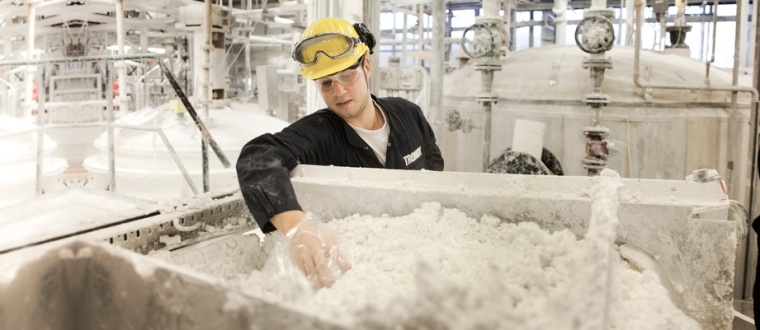
Plans by the European Commission to classify titanium dioxide (TiO2) in inhalable powder form as a category 2 suspected human carcinogen, adopted in mid-September, may have hit a snag.
Reports emerged last week that two member states, Germany and the Czech Republic, have raised objections in the foreseen two-month period after the plans were formally adopted, with several other countries that had never really made peace with the controversial classification now considering whether to add their names.
Under EU rules, this would require calling a working party meeting to extend the deadline to Feb. 4, 2020 from the currently set Dec. 4, 2019. Overriding the Commission’s acceptance of the new rules would require a qualified majority of member states, meaning that 16 of them would have to object.
The TiO2 discussion has been circulating through European institutions for some time. In March this year, the EU member state committee postponed a classification decision after a qualified majority either in favor or opposed could not be found, and it was not taken up again until autumn.
In October, the Commission formally adopted the proposal initially brought forward by France, which cited studies in rats that had developed cancer after inhaling extremely high concentrations of titanium dioxide dust.
During last spring’s deliberations, Germany, Poland and the UK had said they were opposed to restricting the substance in its entirety or in inhalable form as recommended by the European Chemicals Agency in September 2017 but vehemently opposed by the chemical industry.
The Lyon, France-based International Agency for Research on Cancer (IARC), part of the World Health Organization (WHO) also concluded that the evidence supported classification as a possible carcinogen when inhaled.
Taking issue with the rat study’s conclusion on grounds that the research is not transferable to humans. Germany has proposed regulating TiO2 titanium dioxide under occupational health and safety standards that would establish general threshold limit value for powder forms throughout the EU. This is not believed to have found support in other member states, however.
The coatings industry in both Germany and the UK earlier spoke out against ECHA’s proposed warning labels, and the German waste disposal and recycling federation BDE said it feared that labeling TiO2 a possible carcinogen would throw up barriers to waste collection under the country’s” green dot” national collection and recycling scheme.
Germany is one of the largest markets for TiO2, which has many applications, ranging from paints and coatings, printing inks and plastics to cosmetics, food and feedstuffs, textiles, rubber and pharmaceuticals.