GlaxoSmithKline Boss Says New Drugs Can Be Cheaper
The pharmaceutical industry should be able to charge less for new drugs in future by passing on efficiencies in research and development to its customers, according to the chief executive of GlaxoSmithKline.
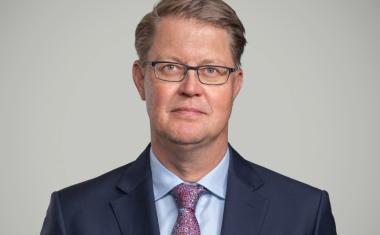
"It's not unrealistic to expect that new innovations ought to be priced at or below, in some cases, the prices that have pre-existed them," Andrew Witty told a conference on healthcare in London.
"We haven't seen that in recent eras of the (pharmaceutical) industry but it is completely normal in other industries."
High prices for new medicines, most notably in cancer care, are a growing challenge for healthcare providers, particularly in austerity-hit Europe where government budgets are under pressure.
Traditionally, drug companies have argued that premium prices are needed to pay for the $1 billion-plus cost of developing a single new medicine.
But Witty said the $1 billion price tag was "one of the great myths of the industry", since it was an average figure that includes money spent on drugs that ultimately fail.
In the case of GSK, a major revamp in the way research is conducted means the rate of return on R&D investment has increased by about 30% in the past three or four years because fewer drugs have flopped in late-stage testing, he said.
"If you stop failing so often you massively reduce the cost of drug development ... it's why we are beginning to be able to price lower," Witty said.
"It's entirely achievable that we can improve the efficiency of the industry and pass that forward in terms of reduced prices."
The average cost of developing a new medicine, including failures, is now $1.1 billion, according to a December study of R&D productivity among the world's 12 top drugmakers by Deloitte and Thomson Reuters.
But the performance of individual companies varies widely. For the most successful company in the group studied, the average cost was just $315 million, while at the other extreme one firm spent $2.8 billion.
Overall, the industry is having more success in bringing new drugs to market, with 39 new drug approvals in the United States last year - a record only beaten in 1996.
In addition to improvements in research, global demand for medicines is increasing and the explosion in the volume of products sold in emerging markets should contribute to lower unit costs, Witty said.
GSK has for some years adopted a strategy of offering lower prices in less-developed markets in a bid to balance volume against price and maximise overall sales.