Evonik to Build Electrolyzer for German Hydrogen Test
At its production site in Herne, Germany, specialty chemicals producer Evonik is investing in a pilot electrolyzer to produce green hydrogen as a feedstock for isophorone diamine (IPDA), a key raw material for wind turbine rotor blades.
The electrolyzer dubbed H2annibel is being erected on the site of the disused Hannibal coal mine that ceased production 50 years ago.
In a three-year research project to run until 2025, Evonik and Siemens Energy will test a new electrolysis technology in industrial practice. The research and infrastructure investment together are receiving funding of €9.3 billion from the German Federal Ministry of Education and Research (BMBF).
Rainer Stahl, manager of Evonik’s Herne site, said the project will make a contribution to reducing CO2 emissions and at the same time safeguard the sustainable supply of hydrogen and oxygen to the company’s production facilities in the mid-term.
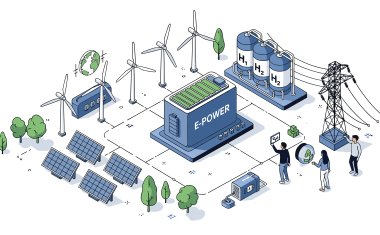
Currently, the hydrogen used by Evonik in Herne is fossil-based. In future, the company plans to make green hydrogen at the German location using a proton exchange membrane (PEM) electrolyzer made by Siemens Energy with rated power of 8 MW. This is planned to run on renewable energy.
In the company’s calculation, green hydrogen from the Herne electrolyzer could supply up to 45% of the hydrogen an 100% of the oxygen required at the site. In the electrolysis process, in which water is split into hydrogen and oxygen with the aid of electricity, using the electrolyzer could avoid 12,000 t of CO2 annually, Evonik believes.
By its own account, the Essen-based chemical producer is “investing massively in green growth “ To reduce its carbon footprint, it plans to invest altogether €700 million in production processes and infrastructure across operations in 2030, and “hydrogen electrolysis in Herne is a key element in that,” said CFO Maike Schuh.
Green hydrogen is the missing piece in the energy transition puzzle, Judith Pirscher, state secretary at BMBF, noted. By funding the H2annibal project, she said the German government is backing research into innovative technologies under real conditions, thereby speeding up the transfer from science to industry and supporting the ramp-up of the country’s hydrogen economy.
Author: Dede Williams, Freelance Journalist