Bioweg to Build Europe's Largest Bacterial Cellulose Plant
Bioweg, backed by €35 million in funding, will build Europe's largest bacterial cellulose plant in Elsdorf, Germany—producing 10,000 tonnes/year of biodegradable, microplastic-free material by 2028.
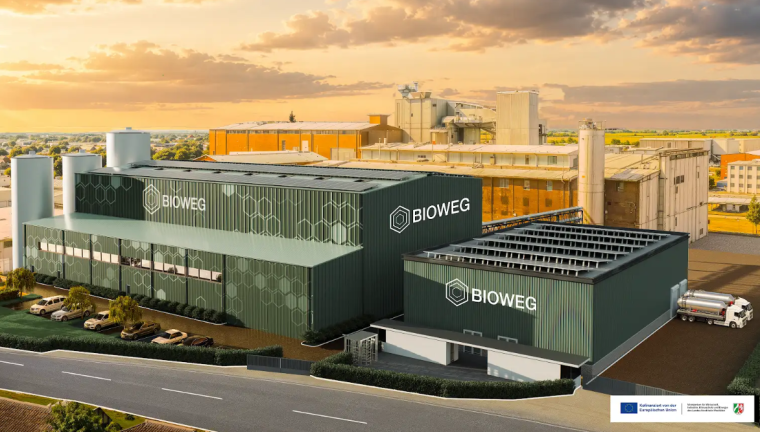
Bioweg, a German deeptech company that produces biodegradable bacterial cellulose as a replacement for fossil-based polymers and intentionally added microplastics, will begin construction of a bacterial cellulose production plant in the fourth quarter of 2026. The company describes it as Europe's largest facility of its kind.
The plant will be built in Elsdorf, North Rhine-Westphalia, and is designed to produce up to 10,000 tons a year. First commercial volumes are expected in 2028. Europe currently imports most of its bacterial cellulose, according to the company.
The project follows a 2023 EU restriction, adopted under REACh, on intentionally added synthetic polymer microparticles. The restriction is being phased in through the end of the decade and affects products including fertilizer and seed coatings, cosmetics, and detergents. Manufacturers seeking alternatives need materials that match the performance of synthetic polymers at industrial scale, a requirement bacterial cellulose can meet if sufficient production capacity exists in Europe.
Bioweg has allocated approximately 60% of its total funding, which stands at €35 million, to the Elsdorf site.
Since announcing a €16 million Series A round led by Axeleo Capital in September 2025, Bioweg has secured an additional €14 million. That includes €2 million in equity from new investor Rabo Ventures, extending the Series A to €18 million; €10.3 million in non-dilutive EU funding through the "Produktives.NRW" grant competition under the EFRE/JTF Program for North Rhine-Westphalia 2021–2027; and €2 million from other sources. Total funding now stands at €35 million.
The company says the plant's economics are tied to its location. Built within one of Germany's largest sugar industrial complexes, the facility will use molasses and other side streams as fermentation feedstock, sourced on-site. Bioweg says this approach will reduce logistics emissions, lower operating costs, and secure supply.
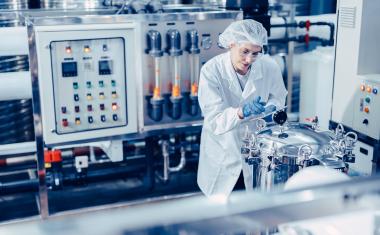
The plant is designed to be fully automated, an approach Bioweg says draws on the sugar industry's experience operating profitably on thin margins through automation and robotics. The company's pilot site in Quakenbrück will remain operational during construction. It is being upgraded to increase capacity from around 100 tonnes a year to at least 200, and will supply commercial sales batches through 2027 and 2028 until the Elsdorf plant comes online. Bioweg says the pilot site is also serving as the automation blueprint for the larger facility.
Prateek Mahalwar, Co-founder & CEO, Bioweg said: "Financing a First-of-a-Kind plant is the hardest step in industrial biotechnology, and it is the step we are now taking, with the German government and the EU sharing the risk of building. Food and agricultural side streams will always be available locally in Europe, and Elsdorf is where we'll turn them into high-performance, biodegradable ingredients at industrial scale. Our customers reformulate when the performance holds, and the cost works, and this plant is built to deliver both at the volumes they need."
Katrien Swerts, Executive Director, Rabo Ventures, said: “Bioweg has reached the point where proven technology and commercial demand can translate into industrial-scale impact. Its ingredients offer manufacturers a high-performance, biodegradable alternative to fossil-based polymers and intentionally added microplastics, while the Elsdorf facility provides the capacity needed to serve customers at scale. This combination of market need, compelling economics and a clear path to industrialisation makes this the right moment for us to invest. The investment also reflects W&R's Clean Energy strategy of selectively supporting technologies and infrastructure that accelerate the transition to a more sustainable and circular economy while delivering long-term value for clients and society.”