

Beyond Open Innovation: How to Make Pharma–Biotech Collab Work at Scale
Pharma companies increasingly use structured open-innovation platforms to access breakthrough science faster. Bayer Co.Lab exemplifies this: a global network of life science incubators giving start-ups labs, infrastructure, and pharma proximity to speed the path to clinic. CHEManager's Christene Smith spoke with Ruth Shah, Head of Bayer Co.Lab Berlin, about how the model works, its edge in a competitive incubator landscape, and how it delivers value for start-ups and pharma alike.
Interview with Ruth Shah, Head of Bayer Co.Lab Berlin, Bayer

Pharma companies increasingly use structured open-innovation platforms to access breakthrough science faster. Bayer Co.Lab exemplifies this: a global network of life science incubators giving start-ups labs, infrastructure, and pharma proximity to speed the path to clinic. CHEManager‘s Christene Smith spoke with Ruth Shah, Head of Bayer Co.Lab Berlin, about how the model works, its edge in a competitive incubator landscape, and how it delivers value for start-ups and pharma alike.
CHEManager: What needs to change in how large companies engage with early-stage innovators to make collaborations faster, more effective and genuinely founder-centric?
Ruth Shah: The first shift has to be one of mindset before mechanism. For open innovation to truly work, large companies need to approach early-stage innovators not as acquisition targets or option pools, but as partners who are building something of real, independent value. That means removing the friction that founders feel the moment they engage with a corporate.
Continue with login
No account yet?
Register now for free and get full access to all exclusive articles from chemanager-online.com. With our newsletter we regularly send you top news from the chemistry industry as well as the latest e-issue.
Register







most read
CHEManager International Media Kit
Compelling solutions through strategic partnerships
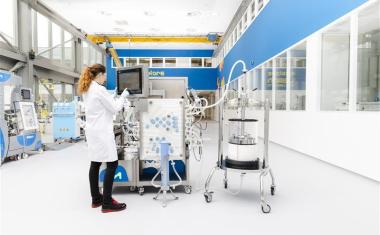
Merck Acquires Chromatography Business from JSR Life Sciences
Merck to acquire the chromatography business of JSR Life Sciences, a leading provider of CDMO services, preclinical and translational clinical research, and bioprocessing solutions.

Ratcliffe: Chemical Industry in Europe at a Tipping Point
Ineos CEO Ineos calls on European politicians to save the chemical industry.

Orion Announced Plans to Shut Down Carbon Black Plants
Carbon black manufacturer Orion Engineered Carbons plans to rationalize production lines in North and South America and EMEA.

Dow to Shut Down Three Upstream European Assets
Building on the April 2025 announcement, Dow will take actions across its three operating segments to support European profitability, resulting in the closure of sites in Germany and the UK.