Ashaya: Increasing the Value of Waste & Creating Social Impact
India-based start-up Ashaya focuses on increasing the value of waste and turns this waste into high-quality materials and products that are more recyclable.
Metalized multi-layered plastic packaging (MLP) is hard to recycle and mostly ends up in landfills. Through innovative mechanical and chemical recycling processes Ashaya turns this waste into high-quality materials and products that are more recyclable. Ashaya started first with recycled sunglasses and created a new brand “Without” for this premium product. Offering a premium product allows them to then fairly redistribute that value to supply chain stakeholders, particularly the poorest: waste pickers.
For this contribution to sustainable chemistry, the International Sustainable Chemistry Collaborative Centre (ISC3) has awarded Ashaya as one of the best start-up solutions in the frame of the ISC3 Sustainable Chemistry Club. At the same time ISC3 has chosen Ashaya as the ISC3 Start-up of the Month for May 2023.
The start-up is currently working on post-consumer metalized multi-layered plastic packaging (MLP), such as chips packets, for example. MLP is the least recycled type of plastic waste, and generally ends up in landfills. On one hand, it is a low-value, high-volume, composite waste (up to 5-6 different types of materials) that is considered economically and technically “impossible” to recycle. On the other hand, for waste pickers it is easy to recognize it, because it is metallized.
The start-up team applies chemical and mechanical processes to recycle this waste into high-quality materials and products that are more recyclable. Their process can handle almost all types of contaminants and almost all types of plastic waste without significantly impacting the final product.
Ashaya does not focus on maximizing profit, but on creating a sustainable business – offering a premium product to be able to pay better salaries, treat people well, create the right incentives and at the same time sustain the business and be able to compete on the market. Long term goal of Ashaya are B2B materials, which will be truly circular and following the cradle-to-cradle principles.
The whole success story of the ISC3 start-up of the month in May 2023 is currently told by the ISC3 on its website at https://isc3.org/page/start-up-ashaya
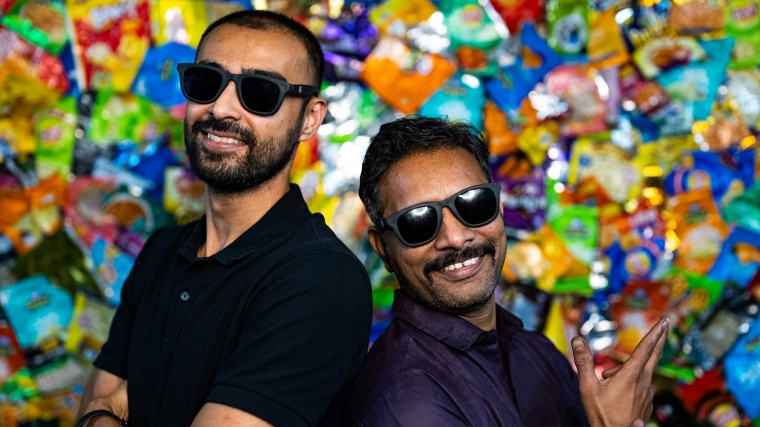
Three questions for Ashaya founder Anish Malpani:
What led to your solution in Sustainable Chemistry?
Anish Malpani: When I was working in a corporate in the finance sector in the USA “making rich people richer” I realized that something is missing. I realized that I have a lot of privilege. Poverty is a man-made construct, a gross ignorance of justice. Poverty also isn’t just a lack of cash, it is multidimensional: it is a lack of access to healthcare, education, a decent standard of living, equal opportunity, and dignity. So, I wanted to do something better and give more people the opportunities I had. My learning journey about social impact of businesses brought me back to India, where I started with Ashaya.
What does being chosen as ISC3 Start-up of the Month mean to you?
A. Malpani: We at Ashaya are so honoured to be recognized by ISC3 as the Start-up of the Month! The recognition gives extra validation to the underlying technology we are trying to develop, especially because its coming from science-centric organization like ISC3. We are grateful for ISC3's support and are excited to have them by our side as we continue to go down the long road ahead.
What’s next up at Ashaya?
A. Malpani: Currently, Ashaya is looking to raise a round of funds to take their technology from the lab to the first recycling plan. Their long-term vision is to create decentralized “material cradles” or recycling centres at the sub-district level across India that process all types of municipal solid waste, formalize and incorporate the informal sector, and are financially sustainable, mini-manufacturing units.
Company