All-female Team Wins Nobel Prize in Chemistry
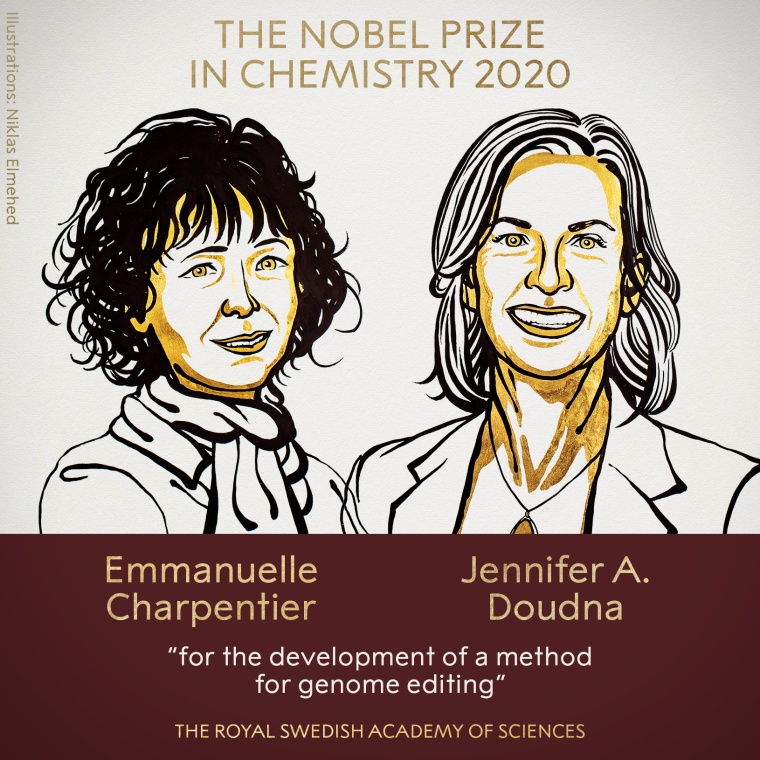
An all-female team comprised of Emmanuelle Charpentier from the Max Planck Unit for the Science of Pathogens, Berlin, Germany, and Jennifer A. Doudna from the University of California in Berkeley, USA, has won the 2020 Nobel Prize in Chemistry awarded by the Royal Swedish Academy of Sciences.
The pair, who received the honor for their discovery of the CRISPR/Cas9 genetic scissors, a method of gene editing to change the DNA of animals, plants and microorganisms with extremely high precision, are only the sixth and seventh women to win the coveted prize. The first was Marie Curie and later her daughter Irène Jolio-Curie, who won it together with her husband, Frédéric Jolio-Curie.
Charpentier’s study of the harmful Streptococcus pyogenes bacteria was the kickstarter for the German-American research project. In the course of her work, the Max Planck scientist discovered a previously unknown molecule, tracrRNA, and proved that it is part of bacteria’s ancient immune system that disarms viruses by cleaving their DNA. In 2011, Charpentier teamed up with Jennifer Doudna, an experienced biochemist with vast knowledge of RNA.
Together the two succeeded in recreating the bacteria’s genetic scissors in a test tube and simplifying the molecular components to make them easier to use, subsequently also reprogramming the hypothetical scissors. In their natural form, the scissors recognize DNA from viruses, but Charpentier and Doudna proved that they could be controlled so that they can cut any DNA molecule at a predetermined site.
The structure of the CRISPR/Cas9 genetic scissors combines the concepts Clustered Regularly Spaced Short Palindromic Response and the Crisper-associated system of genes for enzymes that can cut DNA. This genetic tool “has not only revolutionized basic science, but also resulted in innovative crops and will lead to ground-breaking new medical treatments,” Claes Gustafsson, chair of the Nobel Committee for Chemistry, declared in announcing the winners.
Discovery of the genetic tool has been of considerable value to the biochemical and biopharma industries as well as academia. With it, plant researchers, for example, have been able to develop crops that withstand mold, pests and drought, thereby helping to formulate new protection systems. The gene editing method is also used in clinical trials for new cancer therapies as well as in finding cures for hereditary diseases not that far in the future, as the Nobel committee noted.
Author: Dede Williams, Freelance Journalist