Turning Insights into Action
Azelis has spent the past decade building a strong digital foundation that connects data, people and processes across its global network.
Interview with Dennis Hublitz, Group Director of Digital Transformation & Commercial Excellence, and Matthias Hofmann, Group Director of Innovation & Technology, Azelis
From customer and supplier portals to AI-assisted tools, the company is turning insights into action. As part of the CHEManager-Series about Digitalization Strategies of renowned companies from the Chemicals and Pharmaceuticals business Dennis Hublitz, Group Director of Digital Transformation & Commercial Excellence, and Matthias Hofmann, Group Director of Innovation & Technology explain in an interview with Stefan Guertzgen how digital transformation is helping Azelis enhance customer experience, accelerate innovation and support sustainable growth.
CHEManager: How is digitalization impacting Azelis’ business approach in specialty chemical distribution?
Dennis Hublitz: Digitalization has shifted from being an enabler to becoming a true accelerator of our business. Over the past decade, we have built the necessary data foundation and integrated dozens of businesses worldwide. This has included unifying a range of ERP, CRM and BI systems into a single cloud environment, supported by a central Product Information Management (PIM) layer. This ‘single source of truth’ now spans 62,000 customers and 2,800 principal relationships, enabling us to deliver the right product to the right customer at the right time.
In 2024, we strengthened our digital backbone with four ‘digital north star’ programs. Since their introduction, these have provided clear direction, created value for our customers, enhanced connectivity with our principals, fostered technical differentiation and innovation, and improved both commercial and operational efficiency. Early results include faster time-to-market, greater cross-portfolio selling, and increased process efficiency. In short, digitalization has helped us become an insights-driven, faster and more agile chemical solutions and services provider.
How do you approach data and information handling to create value for your business?
Matthias Hofmann: Our most vital asset is a strong and well-organized data foundation. Over a ten-year journey, we have developed a harmonized taxonomy, a globally adopted governance model and a cyber-secure framework. This allows us to capitalize on data at every stage of our value chain. At the core is consolidated master data within our Product Information Management (PIM) system, complemented by a customized machine-learning extractor that can ingest both structured and unstructured documents in seconds. We process a wide range of datasets, from internal sources such as visit reports, application testing and formulation development, to semi-public information on chemistries, applications and end-products.
This clean, connected data unlocks multiple value streams. For example, it provides commercial insights into our markets, enabling us to prioritize sales funnels, make cross-selling recommendations and even suggest formulations, helping our sales teams to serve customers more effectively. It also accelerates regulatory processes in an environment where requirements for chemical substances and end-market compliance are continually evolving. Here, we are piloting generative AI tools in regulatory services to reduce dossier preparation times. Finally, it supports sustainability by enriching our product data with carbon data, biodegradability details and other information relevant to circularity, which will empower our customers to make informed, sustainable sourcing decisions.
"Digitalization has evolved from an enabler to a real accelerator of our business."
Can you give examples of how digitalization is changing the way of interacting with business partners?
D. Hublitz: We work across the whole value chain, engaging with customers on one side and principals on the other, both of which are essential to delivering a complete service. Each interaction along this value chain is enriched by digitalization.
Our principals provide the products we distribute, but our role is far more than that. We constantly scan the market, gathering insights on trends, regulations, and product performance. These findings help guide market-driven chemical development and ensure existing solutions are positioned effectively. With digital tools, we can dig much deeper into market analysis and share what we learn almost instantly through our principal portal, which we continue to roll out across our network.
On the market side, we use digitalization to track dynamics in real time, even picking up early signals from consumer conversations on social media. If we see a sudden shift in sentiment around an ingredient or application, our marketing teams can respond quickly with targeted campaigns to support sales teams and capture opportunities early.
This intelligence feeds directly into the customer journey, which we enhance through data-rich touchpoints. Many customers now come to us well prepared, having researched products and solutions online. Our customer portal meets this expectation, offering 24/7 access to market insights, product ideas, formulation solutions, sample requests, and order placement. While Azelis remains a people-centric business built on strong relationships, our customers increasingly value the same smooth, self-service they enjoy as consumers.
How is your laboratory work and technical positioning impacted by increasing digitalization?
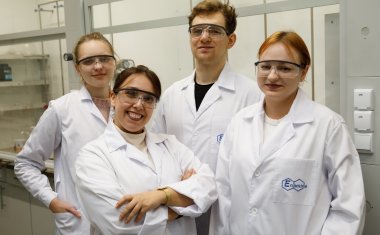
M. Hofmann: Our network of more than 70 application and formulating laboratories now functions as a single, virtual innovation grid. Every formulation, rheology curve and stability test is stored in a shared database that can be searched across regions – of course, all this is governed by a strict intellectual property policy, which protects the proprietary information of our valued customers and principals. In 2024 alone, we created nearly 5,000 new formulations and logged over 6,500 technical interactions.
Digitalization is shaping this work in three key ways. First, our application chemists now run data-rich experiments, capturing complete datasets that are stored in a retrievable pool accessible to our entire technical team. These datasets can also feed into future AI-supported formulation development. We began exploring this advanced approach in our Life Science laboratories.
Second, we have developed a global Technology Management System, integrated into our CRM, that links directly into the digital customer journey. Live across all 70+ labs, this cloud-based platform standardizes data capture and allows, for example, a chemist in Shanghai to build on a formulation created in Paris. Early results show shorter project lead times and more effective knowledge transfer across borders and time zones. It means our sales force can draw on international expert teams with digitally empowered communities of practice, sharing best practices and avoiding duplication of work.
Third, our digital-ready laboratory footprint continues to expand. In 2024, we opened two new Food & Nutrition application labs in Brazil and Thailand, both immediately connected to our digital backbone. In the UK, our Technology & Innovation Hub was completely redesigned to house connected labs for Personal Care, Home Care and Industrial Cleaning, Food & Nutrition, and Pharma, all serving global needs. This shows that our model scales effectively across geographies and market segments. As a customer-focused distributor, our decentralized network of business units is strengthened by digitally connected laboratories that serve as a global knowledge backbone.
“Our most important asset is an extensive and well-structured database.”
How is the Azelis organization adjusting to the impact of increasing digitalization?
D. Hublitz: In today’s more technical and digital environment, we have refreshed our purpose and values to reflect the importance of digital agility and knowledge sharing. These are now clear expectations across every role in the business. Our goal is to be ‘one agile Azelis’, combining local customer intimacy with a global mindset and a strong digital backbone.
Like many organizations, we face the usual change management challenges as new tools and systems reshape our work. Training and coaching are crucial. Beginning with onboarding, whether someone is new to the company or moving into a new role, refresher sessions based on identified needs and systematic training on both existing tools and new digital upgrades follow. Just like any other IT investment, training is treated as a budgeted priority for performance improvement.
So, is it working? Definitely. Our internal continuous improvement program is supported across the organization, which speaks volumes. It’s fair to say that our teams have embraced digitalization of the work environment.
Looking ahead, which emerging trends or technologies could redefine the way you innovate, and how is Azelis getting ready?
M. Hofmann: At Azelis, we see innovation as the commercial success of technical differentiation. That means it’s not just about new ideas but about scaling proven solutions that deliver value. Digitalization plays a vital role in helping us roll out powerful chemical innovations more efficiently.
Looking ahead, our digital backbone has been built to be AI-ready from the start, so we’re well-positioned to take advantage of the next wave of technology. At the moment, we’re exploring generative AI through two tracks. One involves off-the-shelf models already embedded in our existing sales, finance and regulatory platforms. The other focuses on more custom solutions. We’ve already seen encouraging results in areas like lab automation and regulatory support, where AI tools are being developed to act as co-pilots or assistants in creating dossiers.
We’re taking a broad approach to emerging technology, combining internal pilots, external partnerships and targeted M&A. Our ambition is to keep moving ‘Forever Forward’, using each shift in technology to deepen customer insights, accelerate laboratory output and support more sustainable growth.
Azelis is well-positioned to keep raising the bar with a strong digital foundation, disciplined data practices, and a lab-focused, customer-centric innovation model. Our digital strategy supports best-in-class service for customers and principals and meets the performance and sustainability expectations that investors and other stakeholders have from a world-class distributor. We look forward to building on that as the reference in the industry.
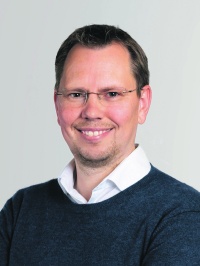
Dennis Hublitz
Dennis Hublitz is Group Director of Digital Transformation & Commercial Excellence at Azelis, with more than 15 years of leadership experience in sales and business management. He has held senior global and regional roles in the specialty chemicals industry, driving innovation, digital strategies and commercial excellence. Dennis holds a diploma in process engineering and an MBA in general management.

Matthias Hofmann
Matthias Hofmann is Group Director of Innovation & Technology at Azelis. He has extensive leadership experience spanning technology, commercial, and general management with various responsibilities for business units and stand-alone businesses in the chemical industry. Matthias holds a PhD in Physical Chemistry from the University of Heidelberg and is passionate about driving growth through innovation.