Expert Statement: Tom Wilson, Pfizer
The evolution of the CDMO sector is propelled by rising manufacturing standards, the advent of groundbreaking therapies, and a shift towards personalized medicine.


The evolution of the CDMO sector is propelled by rising manufacturing standards, the advent of groundbreaking therapies, and a shift towards personalized medicine.

The evolution of the CDMO sector is propelled by rising manufacturing standards, the advent of groundbreaking therapies, and a shift towards personalized medicine.

The evolution of the CDMO sector is propelled by rising manufacturing standards, the advent of groundbreaking therapies, and a shift towards personalized medicine.

The evolution of the CDMO sector is propelled by rising manufacturing standards, the advent of groundbreaking therapies, and a shift towards personalized medicine.

The evolution of the CDMO sector is propelled by rising manufacturing standards, the advent of groundbreaking therapies, and a shift towards personalized medicine.

The evolution of the CDMO sector is propelled by rising manufacturing standards, the advent of groundbreaking therapies, and a shift towards personalized medicine.

The evolution of the CDMO sector is propelled by rising manufacturing standards, the advent of groundbreaking therapies, and a shift towards personalized medicine.

The evolution of the CDMO sector is propelled by rising manufacturing standards, the advent of groundbreaking therapies, and a shift towards personalized medicine.
The evolution of the CDMO sector is propelled by rising manufacturing standards, the advent of groundbreaking therapies, and a shift towards personalized medicine.

The evolution of the CDMO sector is propelled by rising manufacturing standards, the advent of groundbreaking therapies, and a shift towards personalized medicine.

The evolution of the CDMO sector is propelled by rising manufacturing standards, the advent of groundbreaking therapies, and a shift towards personalized medicine.

The evolution of the CDMO sector is propelled by rising manufacturing standards, the advent of groundbreaking therapies, and a shift towards personalized medicine.

The evolution of the CDMO sector is propelled by rising manufacturing standards, the advent of groundbreaking therapies, and a shift towards personalized medicine.

In this interview, Charlie Tan, CEO of the Global Impact Coalition (GIC), explains the initiative’s scope and describes some key activities.

Technological developments in the pharmaceutical and biotech industry are reflected in increased funding, higher R&D productivity and more product launches. However, the general conditions remain challenging. Incremental change won’t be enough to deliver the results that the market and patients demand, warn industry experts.
Matthias Hofmann, Group Innovation & Technology Management Director at Azelis, provides an in-depth insight into the company’s innovation activities and the underlying market trends.

Anna Bertona, Group CEO at Azelis, looks back on her first six month in this role and gives an insight into her plans for the company's development.

IMCD Industrial Solutions surveyed top customers around the globe on their insights into eight key topics deemed pertinent to sustainability in industrial sectors. This article highlights some of the most important results.

The 2023 chemical distribution survey shows recent trends and evolving principals’ expectations.

The Serbian Elixir Group continues to focus clearly on expansion and sustainability.

In the rapidly evolving industry of contract development and manufacturing organizations (CDMOs), a well-defined pricing strategy is essential to drive growth and profitability. To stay ahead and participate in the expansion of the market, CDMOs need to transition to a structured value-based pricing approach that considers customer value, complexity, and specific needs.

With more than 80% of all chemical products manufactured using catalytic processes, catalysts are the number one value generator in the chemical industry.

The concept of a circular economy, where materials are recycled and reused, is becoming increasingly important in consumer packaging, driven by regulatory requirements and customer interest.

When developing an inhaled powder formulation, the drug particles’ properties are critical to successful delivery to the deep lung. The aerodynamic diameter is the key parameter, as it represents how well the particle flies in an air stream.

When manufacturing specialty edible fats, ensuring that the product has the desired properties – such as a stable shelf life, optimal melting behavior, and texture – is essential.

Many life science companies generate large swathes of data.
The demand for medicines is increasing rapidly and R&D pipelines have doubled over the last decade.

With their triumphant advance, biosimilars are also setting in motion the usual market mechanisms. Biopharma interest groups warn against the automatic substitution of originator drugs.

The pharmaceutical market is undergoing a profound transformation, driven by innovation among biologics and advanced therapies (ATs). This shift is not only redefining the treatment landscape but also presenting new opportunities and challenges related to the drug development and manufacturing value chain.

Contract development and manufacturing organizations (CDMOs) are a crucial part of the life sciences industry. Strangely, despite its current prominence, the CDMO industry is a relatively young one. There have been significant developments over its short lifespan, and it is likely that we see even more growth in the years to come.

In its latest European Chemicals Pulse Check, Deloitte surveyed senior executives in the European chemical industry and industry associations about their views on current market challenges, trends and opportunities.

China’s chemical industry originally focused primarily on basic chemicals, in line with the domestic needs of a developing economy and the lower technology requirements for the production of these materials. By now, China dominates the global market for many such chemicals – for example, the country accounts for about 55% of the global capacity for acetic acid, about 50% of the global carbon black capacity and about 45% of the global capacity for titanium dioxide. For many such commodity chemicals, China started out as a net importer, then built up domestic capacity and ended up being a major exporter.
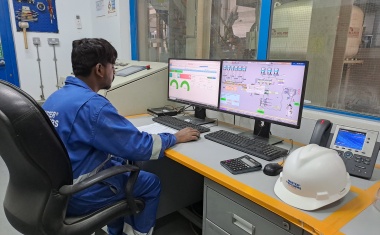
Achieving sustainability targets and productivity improvements are primary levers that make operations teams successful. At MBCC Group, one of the leading construction chemicals players, Wayne Towell, Vice President of Operations has been driving various initiatives to track, monitor and enhance productivity of their plants across the globe.

As a global specialty chemicals company, Altana develops innovative technologies, solutions, and products with a clear customer focus. The company aims to strengthen and expand this position in the long term. The topic of digital transformation plays a key role.

As a global specialty chemicals company, Altana develops innovative technologies, solutions, and products with a clear customer focus. The company aims to strengthen and expand this position in the long term. The topic of digital transformation plays a key role.