Maintaining and Effectively Using Critical Knowledge
Strengthening performance and securing know-how are core tasks for every organization - process standardization helps
Author: Fernando Cruzado and Joachim Krohn, Efeso Consulting

In the context of demographic change, the loss of skilled workers - and therefore of expertise - is impacting the performance of operations functions across the entire chemical industry.
In a market study conducted by EFESO , managers in the industry rated this issue as important (53%) or even very important (25%). In view of this assessment, further results of the survey are noteworthy: only a third of managers state that their company has established systems with which it records and retains important knowledge and experience.
According to the industry leaders surveyed, management is the most important authority in tackling the loss of know-how. This starts with creating an environment in which everyone in the company understands the value of their work. This is supported by standardized work processes that give employees the opportunity to think critically and creatively. In addition, more and more work processes are being digitalized, freeing up resources that can be used for improvements.
Performance-oriented, optimally standardized work processes are actually indispensable for companies today - and if they are used correctly, they are "not a barrier to creativity," says Lanny Duvall, COO of Solvay. "We don't want employees to spend time thinking about standard operations and maintenance. We want them to focus on improving the process. Standardized work processes are the foundation, and digitalization is the enabler to activate creativity in the organization."
Recruiting and retaining employees
Against the backdrop of demographic change, automation offers an opportunity to find suitable talent for a shift work environment. On the one hand, because it can significantly reduce costs; on the other, because it can create more interesting work content. However, automation must be implemented in close coordination with the operators and mechanics: "Automation allows us to reallocate resources. If we reduce capacity in one area, we expand it in another. However, this does not stand in the way of recruiting or retaining employees - it is currently a good time for engineers and machine/plant operators to enter the industry professionally."
Of course, it's not just about recruitment, but also about retaining existing employees in the competitive labor market. "The question of how much institutional knowledge can be lost when employees leave is a huge concern for me," says Chad Anderson, CTO and Head of Manufacturing at Indorama Industries' Indovinya division. "We do our best to make sure that doesn't happen - and if we can't keep people, we try to retain their knowledge."
Using digital technologies and sharing expertise
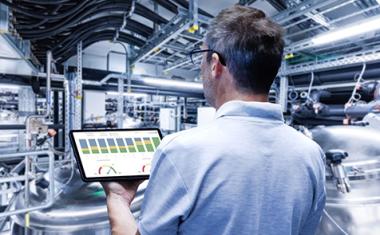
The ability to properly integrate technologies, methods and people plays an important role in this context. J. Bryan Kitchen, CEO of Ascent Industries, gives an example: "We had three different plants, three different locations and few standards due to acquisitions. We knew that in the short term it was important to retain the existing talent and institutional knowledge. But to remain competitive in our respective markets in the long term, we needed to standardize, simplify and improve everything we do." The company decided to achieve this through digitalization. "Many of the standard operating procedures, quality processes, qualification measures and compliance documentation were still on paper," says Kitchen, describing the initial situation. "We were not in the 21st century." At the same time, he emphasizes that digitalization is not synonymous with staff cuts. "We have actually expanded our personnel capacities in a time of declining market developments. Our employees know that our digitalization process supports them and they are embracing it."
These practical examples underline how essential it is for the industry to ensure the continuity of critical knowledge and experience. At the same time, companies have already recognized the opportunities that this presents and are taking appropriate measures. For example, some companies are using AI-based chatbots in selected areas (e.g. quality management) to access existing expertise within the organization and thus find better solutions more quickly. Gaining direct access to collected company knowledge - regardless of language and with an understanding of the context - will open up significant opportunities.
Overall, it is clear that preserving know-how and ensuring operational continuity in the chemical industry is inextricably linked to a combination of future-oriented management, consistent standardization and targeted digitalization. In this way, companies not only strengthen their cost structure and competitiveness, but also create an environment in which talented employees want to stay and develop further.
Real Results, Together
With around 1,000 employees at 35 locations worldwide, EFESO Management Consultants is the leading international operations consultancy for the manufacturing industry. Together with its clients, EFESO sets standards for performance, resilience and productivity and enables a significant increase in value along the entire value chain.

Fernando Cruzado
EFESO

Joachim Krohn
EFESO