

From Emission to Ingredient: Drop‑In CO₂ Chemistry
Viridi turns captured CO₂ into high‑performance ingredients via a drop‑in solid catalyst. It cuts carbon footprint while working seamlessly in existing production lines.
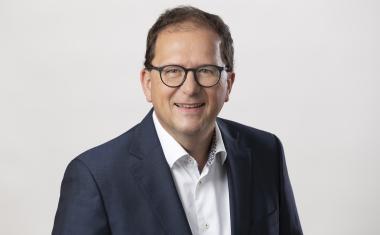
Interview with Daniel Stewart, Viridi

Founded by Daniel Stewart and Robert Raja as a spin-out from the University of Southampton, Viridi was established to transform how essential products are made. Building on Stewart’s doctoral work and Raja’s long-standing research in catalysis, they developed a solid-catalyst technology that can turn underused resources, including captured CO2, into high-value ingredients.
What started as an academic concept soon evolved into a scalable, commercial technology that helps manufacturers reduce reliance on fossil and land-intensive oleochemical feedstocks by utilising waste CO2 to produce key ingredients behind products for personal care, cosmetics and home care. Designed as a true drop-in solution, the catalyst integrates into existing production lines without the need for costly redesigns. It’s a practical way to help companies cut their carbon footprint and move towards circular manufacturing using the infrastructure they already have.
The name Viridi comes from the Latin viridis, meaning green, reflecting the company’s focus on enabling more sustainable ways of making everyday products using captured carbon dioxide as a raw material. The ambition is simple but far-reaching: to help modernise a legacy industry and support the shift towards next-generation essentials made with recycled carbon.
CHEManager: Can you explain the core innovation in simple terms for our readers?
Daniel Stewart: At Viridi, our core innovation is a solid catalyst that allows manufacturers to transform captured CO2 into the essential ingredients that underpin so many everyday products, from surfactants to coatings and foams. In simple terms, it transforms a widely available input into something highly valuable and performance ready. What’s important is that our catalyst is designed to work as a drop-in within existing industrial infrastructure. Manufacturers don’t have to rebuild plants or overhaul their systems; they can use our technology to replace fossil-based carbon sources with captured carbon directly. The result is a scalable solution that makes sustainable production both achievable and commercially practical.
What specific industry problem does your solution address, and why is it urgent now?
Continue with login
No account yet?
Register now for free and get full access to all exclusive articles from chemanager-online.com. With our newsletter we regularly send you top news from the chemistry industry as well as the latest e-issue.
RegisterCompany
ViridiCO2 Ltd.University Road
SO17 1BJ Southampton, Hampshire
UK




most read

ECA Foundation Aims to Become Largest Pharma Association for GMP/GDP Compliance
The ECA Foundation, one of the most important not-for-profit organizations for regulatory expertise in the pharmaceutical industry, aims to become the largest independent GMP/GDP organization in the world.

Pharma 4.0 – the Key Enabler for Successful Digital Transformation in Pharma
Part 1: Building a Business Case for Pharma 4.0

Pharma 4.0—the Key Enabler for Successful Digital Transformation in Pharma
Part 3: Seven Theses for successful Digitalization in Pharma
Relocation of Chemicals Production Footprint in Full Swing
A new Horváth study based on interviews with CxOs of Europe’s top chemical corporations reveals: The majority of board members expects no or only weak growth for the current year.

Q1 2025 Chemical Industry: Diverging Trends
The first quarter of 2025 highlights a continued divergence between the European and US chemical industries.