ETB Global – Enabling Bio-Plastic and Bio-Rubber for Life and Industry
Dutch start-up ETB Global has developed a patented one-step catalytic process that converts bioethanol directly into butadiene in a single reactor. With this innovation, the company aims to make the production of plastics, rubber, and other commodity chemicals more sustainable.
The process operates at lower temperatures than conventional methods and results in more than three times lower CO2 emissions. It uses roughly one-third of the energy while achieving high selectivity toward butadiene. Because the resulting butadiene is chemically identical to its fossil-based counterpart, it can be used immediately as a drop-in replacement in existing rubber and plastics manufacturing. In addition, by-products such as bio-hydrogen and ethylene can be separated and used in other industrial applications.
For these reasons, ETB Global has been chosen as one of the ISC3 Innovation Challenge finalists 2025 and is featured by the International Sustainable Chemistry Collaborative Centre as the ISC3 Start-up of the Month for February 2026.
Today, over 95% of global butadiene production is fossil-based, as it is mainly derived as a by-product of petroleum steam cracking. Most alternative approaches rely on a two-step process: ethanol is first converted into acetaldehyde, which is then reacted with additional ethanol to form butadiene. This requires two reactors, two catalyst systems, and more complex operations. In contrast, ETB’s catalyst enables these reactions to occur in a coordinated sequence without isolating intermediates, significantly simplifying the process.
The innovation focuses on the raw-material production stage, converting renewable bioethanol into a chemical building block. Bioethanol is an abundant and accessible feedstock, produced from corn or other plant materials, with relatively predictable pricing. The drop-in solution means that downstream manufacturers do not need to change formulations, customers do not need to adjust purchasing specifications, and end-of-life recycling pathways remain unchanged. Together, these features allow sustainability benefits to cascade through the entire value chain.
Beyond environmental benefits, ETB’s technology improves supply security by enabling on-purpose butadiene production independent of steam cracker operations at lower capital intensity. Socially, ETB’s projects support job retention in industrial regions undergoing economic transition.
The whole success story of the ISC3 Start-up of the Month in February 2026 is currently told by the ISC3 on its website at ETB Global (isc3.org).
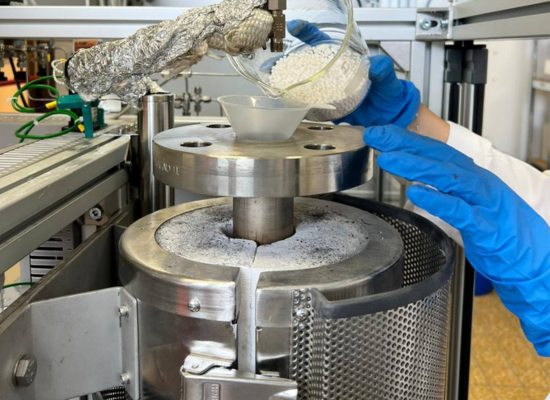
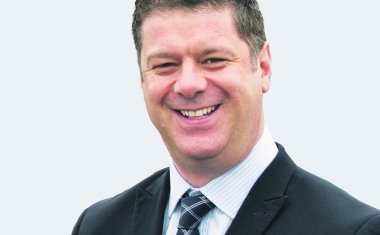
Three questions for Noah Vladimir Hirsch Trembolovski (Co-founder & CEO of ETB Global):
What led to your solution in Sustainable Chemistry?
Noah Vladimir Hirsch Trembolovski: Our solution began by revisiting a forgotten route in ethanol chemistry. The challenge had never been the science, but the catalysts. By improving catalysis, we made the one-step conversion viable again. When the 2013 data confirmed its potential, we saw a real path to industrial relevance and economic feasibility.
What does being chosen as ISC3 Innovation Challenge finalist and ISC3 Start-up of the Month mean to you?
N. V. H. Trembolovski: Being recognized by ISC3 is meaningful validation from an organization with genuine expertise in Sustainable Chemistry. They see that decarbonizing core chemicals like butadiene is vital for systemic change. The recognition also connects us with a global community of researchers, entrepreneurs, and policymakers working on similar challenges. In deep-tech chemistry, these networks matter: the problems are too large for any single organization to solve alone.
What’s next up at ETB Global?
N. V. H. Trembolovski: Following validation, we plan to build our first commercial brownfield plant in the 10–20 kilotons per year (kta) range. This facility will generate revenue and operational data while demonstrating the technology at commercial scale. That will pave the way for a 100 kta flagship facility and global licensing. The long-term vision is straightforward: enable bio-based butadiene production wherever ethanol is available − from cost‑efficient U.S. corn ethanol to Brazil’s low‑carbon sugarcane and Asia’s growing demand. We want to be the technology partner that makes this transition possible worldwide.
Company