Arxada Expands at Visp to Continue Supplying DSM
Swiss specialty chemicals company Arxada said it will invest 20 million Swiss francs to expand production at its Visp site following the extension of a long-term supply partnership with DSM.

Swiss specialty chemicals company Arxada said it will invest 20 million Swiss francs to expand production at its Visp site following the extension of a long-term supply partnership with DSM.

Rentschler Biopharma has appointed Mark Caswell as Vice President and Site Head. He joined Rentschler in July 2022 and is managing all operations at the company’s US facilities in Milford, MA.

W. R. Grace is expanding its fine chemicals contract development and manufacturing facility in South Haven, Michigan, USA. The project is scheduled for completion in January 2024.

Fujifilm is preparing to invest $1.6 billion to ramp up the cell culture manufacturing services of its CDMO subsidiary Fujifilm Diosynth Biotechnologies.

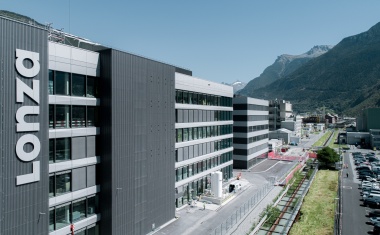
Swiss CDMO Lonza plans to build a large-scale commercial fill & finish facility in Stein. The new facility, to be located on the same campus as Lonza’s existing clinical drug product capabilities, will cost roughly 500 million Swiss francs and should be completed in 2026.
South Korean CDMO SK Pharmteco (SKTP) said it will spend $35 million on the initial phase of a planned expansion at the Dublin, Ireland, API site the conglomerate acquired from Bristol Myers Squibb in 2017. Prior to that, SK had been a BMS supplier for around a decade.

Major API supplier Olon is establishing a €10 million central R&D hub at its headquarters site in Roadano, near Milan. The Italian company said the facility paves the way for a further major expansion and diversification of its expertise in active pharmaceutical ingredients supplied to the CDMO and generics markets.

EureKING, a new special purpose acquisition company (SPAC) steered by former European biopharma executives, launched itself on May 9 and in a subsequent listing on the Paris-based Euronext stock exchange raised €150 million to buy up small European CDMOs that make biologics, cell and gene therapies or live biotherapeutics.

Interview with Giovanna Libralon, Senior Director Commercial Development Small Molecules at Lonza.

Symeres, a Dutch CDMO and contract research organization, has acquired Organix, a US-based specialized organic chemistry services producer that focuses on lipids. The two firms are highly complementary and the combination unlocks significant strategic value, said Symeres, which generates nearly 50% of its revenues in the US.

Asahi Kasei Medical, through a US subsidiary, has agreed to buy biologics CDMO Bionova Scientific for an undisclosed sum. Located in Fremont, California, Bionova provides process development services to biopharmaceutical companies, especially those developing next-generation antibody-based drugs.

Germany’s Merck has signed a definitive agreement to acquire Exelead, a US biopharmaceutical CDMO, for around $780 million in cash. The Indianapolis, Indiana-based company specializes in complex injectable formulations, including Lipid Nanoparticle (LNP)-based drug delivery technology, which is key to mRNA therapeutics and vaccines for indications such as Covid-19.

French CDMO GTP Bioways, a specialist in biotherapies and nanotherapies, is investing €12 million in two new biopharmaceutical production lines at its site in Toulouse. The first line will be dedicated to production using microbial systems (bacteria and yeast), while the second is designed for the culture of mammalian cells at a scale of 10 l.

Avid Bioservices, a biologics-oriented CDMO based in the US state of California, is building a new plant in Costa Mesa, California, as part of a plan to expand its cell and gene therapy portfolio. The purpose-built facility, to be located five miles from its current base in Tustin, California, will be dedicated to viral vector development and CGMP manufacturing.

Germany’s Merck has opened its second production facility for viral vectors at Carlsbad, California, a move the company said significantly expands its global CDMO footprint. The new €100 million plant will more than double the company’s existing capacity to support large-scale commercial and industrial manufacturing for viral gene therapy.

Successfully managing the drug substance manufacturing of Antibody-Drug Conjugates (ADCs) requires a sophisticated understanding of the technological development process and access to a range of large- and small-molecule manufacturing assets.

Yposkesi, a French CDMO specializing in cell and gene therapies, has started building a second commercial bioproduction facility, known as project SKY. The plant is being designed to be cGMP- compliant with both European and US regulations. Operations are expected to start in 2023.

The CPhI executive post-pandemic pharma survey, produced by Informa Markets as part of the CPhI Pharma 2021 Report, predicts that pandemic supply chain issues have further cemented a push for repatriated manufacturing globally. The findings suggest that over the next 5 years, governments and companies will gradually look to reduce complexity and increase regional self-reliance.

Recent studies show that contract manufacturers for the pharmaceutical industry, so-called CDMOs (contract development and manufacturing organizations), have so far been little involved in the production of vaccines. This is changing with the outbreak of the Covid-19 pandemic.

US-based CDMO Regis Technologies has completed a major expansion of its laboratory facilities for development of active pharmaceutical ingredients (APIs) at its site in Morton Grove, Illinois. The project, kicked off two years ago, doubles the company’s capacity to take on new development projects.

Contract manufacturer Aenova has put a third, high-performance tablet press including integrated automatic in-process control into operation at its site in Regensburg, Germany, to expand its production capacity of highly potent oncology drugs.

Swiss CDMO Lonza said it intends to unload two of its capsule production sites, at Ploermel, France, and Edinburgh, Scotland, for an undisclosed sum to London-based CDMO NextPharma. The proposed deal is subject to regulatory approval. According to reports, most of the affected employees are expected to transfer to the new owner.

Sean Diver, president of DCAT speaks about the pharmaceutical industry’s role during the Covid-19 pandemic, trends in drug manufacturing, and key issues for the EU pharmaceutical industry.

The coronavirus crisis caused by the Covid-19 pandemic has uncovered problems that have been smoldering beneath the surface of the pharmaceutical industry — including CMOs/CDMOs and CROs — and need to be addressed. That supply chains are vulnerable to disruption when major development, production and transportation hubs are blocked or shut down has become painfully obvious.

So far, the pharmaceutical industry — including CMOs/CDMOs and CROs — has responded well to the outbreak of the Covid-19 pandemic. However, the coronavirus crisis has uncovered problems that have been smoldering beneath the surface and need to be addressed. That supply chains are vulnerable to disruption when major development, production and transportation hubs are blocked or shut down has become painfully obvious.

So far, the pharmaceutical industry — including CMOs/CDMOs and CROs — has responded well to the outbreak of the Covid-19 pandemic. However, the coronavirus crisis has uncovered problems that have been smoldering beneath the surface and need to be addressed. That supply chains are vulnerable to disruption when major development, production and transportation hubs are blocked or shut down has become painfully obvious.

So far, the pharmaceutical industry — including CMOs/CDMOs and CROs — has responded well to the outbreak of the Covid-19 pandemic. However, the coronavirus crisis has uncovered problems that have been smoldering beneath the surface and need to be addressed. That supply chains are vulnerable to disruption when major development, production and transportation hubs are blocked or shut down has become painfully obvious.

So far, the pharmaceutical industry — including CMOs/CDMOs and CROs — has responded well to the outbreak of the Covid-19 pandemic. However, the coronavirus crisis has uncovered problems that have been smoldering beneath the surface and need to be addressed. That supply chains are vulnerable to disruption when major development, production and transportation hubs are blocked or shut down has become painfully obvious.

So far, the pharmaceutical industry — including CMOs/CDMOs and CROs — has responded well to the outbreak of the Covid-19 pandemic. However, the coronavirus crisis has uncovered problems that have been smoldering beneath the surface and need to be addressed. That supply chains are vulnerable to disruption when major development, production and transportation hubs are blocked or shut down has become painfully obvious.

So far, the pharmaceutical industry — including CMOs/CDMOs and CROs — has responded well to the outbreak of the Covid-19 pandemic. However, the coronavirus crisis has uncovered problems that have been smoldering beneath the surface and need to be addressed. That supply chains are vulnerable to disruption when major development, production and transportation hubs are blocked or shut down has become painfully obvious.

So far, the pharmaceutical industry — including CMOs/CDMOs and CROs — has responded well to the outbreak of the Covid-19 pandemic. However, the coronavirus crisis has uncovered problems that have been smoldering beneath the surface and need to be addressed. That supply chains are vulnerable to disruption when major development, production and transportation hubs are blocked or shut down has become painfully obvious.

So far, the pharmaceutical industry — including CMOs/CDMOs and CROs — has responded well to the outbreak of the Covid-19 pandemic. However, the coronavirus crisis has uncovered problems that have been smoldering beneath the surface and need to be addressed. That supply chains are vulnerable to disruption when major development, production and transportation hubs are blocked or shut down has become painfully obvious.

So far, the pharmaceutical industry — including CMOs/CDMOs and CROs — has responded well to the outbreak of the Covid-19 pandemic. However, the coronavirus crisis has uncovered problems that have been smoldering beneath the surface and need to be addressed. That supply chains are vulnerable to disruption when major development, production and transportation hubs are blocked or shut down has become painfully obvious.

So far, the pharmaceutical industry — including CMOs/CDMOs and CROs — has responded well to the outbreak of the Covid-19 pandemic. However, the coronavirus crisis has uncovered problems that have been smoldering beneath the surface and need to be addressed. That supply chains are vulnerable to disruption when major development, production and transportation hubs are blocked or shut down has become painfully obvious.

So far, the pharmaceutical industry — including CMOs/CDMOs and CROs — has responded well to the outbreak of the Covid-19 pandemic. However, the coronavirus crisis has uncovered problems that have been smoldering beneath the surface and need to be addressed. That supply chains are vulnerable to disruption when major development, production and transportation hubs are blocked or shut down has become painfully obvious.