Opportunities and Limits of Sustainability
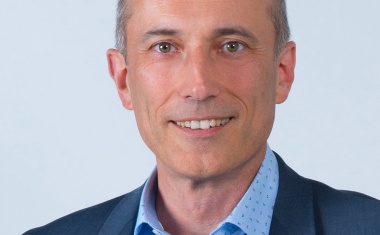
The Pharmaceutical industry must prioritize sustainability. Jürgen Roos, Chief Scientific Officer (CSO) of Siegfried, explains opportunities and limits of sustainability.


The Pharmaceutical industry must prioritize sustainability. Jürgen Roos, Chief Scientific Officer (CSO) of Siegfried, explains opportunities and limits of sustainability.
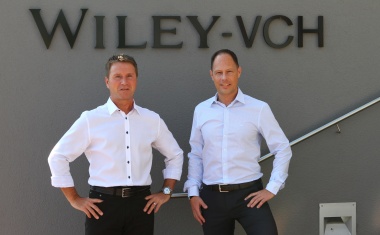
There are only a few chemical and pharmaceutical companies that look back at a history of 150 years. Certainly, many companies claim such a long legacy, but if you only count those that have been operating and thriving under the same name for a century and a half, the number boils down significantly.

Climate change, energy crisis, the call for a more environmentally compatible production method and socially responsible action do not stop at the pharmaceutical and biotech industries. Sustainability is becoming a central competitive and reputation factor and carries a high economic value. This need not be to the industry´s disadvantage. It helps companies to make processes more efficient, reduces energy consumption and keeps costs in check. But is the pharmaceutical industry already doing enough in this regard?

The Fill & Finish of biologic drugs is expensive and poses special technological challenges for CDMOs. At the German site in Hameln, Siegfried has successfully proven these capabilities over the past two years by producing Covid-19 vaccines and a significant number of clinical batches for several biological companies. By investing in its competencies, capacities and flexibility, the company intends to further expand this demanding but promising business area.
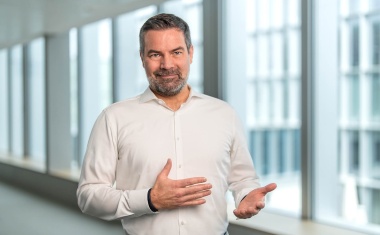
The CDMO (contract development and manufacturing organizations) business has a bright future, of that Siegfried CEO Wolfgang Wienand is certain. The economic advantages alone speak for this compared to in-house production by the pharmaceutical companies themselves. Although Siegfried has already reached sufficient critical size within its industry, he sees the company continuing on its growth path. The goal is to take over an even larger share of the value chain from pharmaceutical companies in the future.

Biopharma companies are facing funding challenges in 2023 as interest rates rise and investors are becoming more risk adverse. There is hope on the horizon, say some analysts, while others project a prolonged slump due to inflation and global instability. Established pharmaceutical companies are often seen as safer investments, with larger developers expected to perform well in 2023, especially if litigation threats against drugs like Zantac disappear. However, concerns about revenue gaps continue for big companies like GSK and Sanofi, and their strategy and leadership will be closely monitored in the coming months.
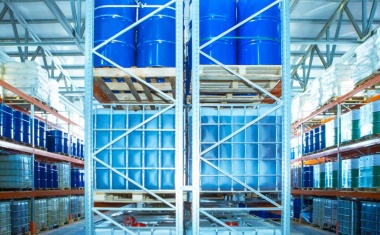
The Chinese chemical distribution market is very likely the largest in the world. To be successful in this competitive market, foreign distributors in particular need to consider some important aspects.

Interview with Annegret Vester, Chief Sustainability Officer (CSO), CHT Germany

For its annual report "Value Creation in Chemicals 2022 – Building Resilience as the Crisis Unfolds," the strategy consultancy Boston Consulting Group examined the performance of leading international chemical companies between 2017 and 2021. The results show that the chemical industry, even in difficult times, has outperformed other sectors.

Sustainable manufacturing is one of the most common demands industries, such as the pharmaceutical, chemical, and biotechnological industries, are faced with today.
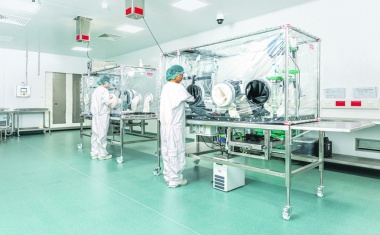
Clear incentive for drug manufacturers to equip their production facilities with the capacity to process highly potent active pharmaceutical ingredients (HPAPIs). HPAPIs now account for 25% of all drugs produced globally, with some analysts projecting that it will reach a value of $40 billion by 2027.
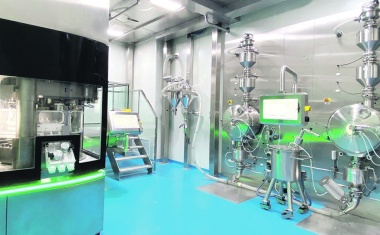
In this interview, Jinling Chen, head of WuXi STA’s drug product business, and Jamie Andrews, site head of WuXi STA’s Couvet facility, explain the company’s strategy and the goals of the European expansion.
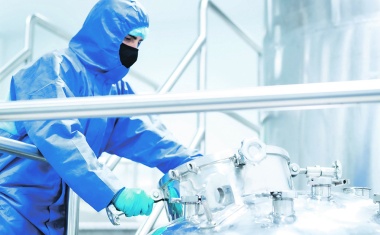
Actylis, leading global manufacturer and sourcing expert of critical raw materials and performance ingredients for the life sciences and specialty chemicals markets, made its debut in September 2022. The new CDMO was created from US-based fine and specialty chemicals distributor Aceto. Gilles Cottier, CEO of Actylis, has played a tremendous role in Aceto’s transformation into the new Actylis brand. Ralf Kempf and Michael Reubold asked Cottier about the reasons for creating the new brand identity, the challenges of combining so many companies, and Actylis' strategy going forward.
Historically, China’s chemical industry has mainly been located in coastal provinces, with Shandong as the biggest and Jiangsu as the second biggest province by chemical sales, while the coastal regions of Hebei, Tianjin, Zhejiang, Liaoning and Guangdong are also among the top ten producers of chemicals.

2021 was historic for chemical M&As, it was a record-breaking year in terms of total value of deals. Therefore, it was expected that 2022 would only build upon this. However, the combination of high interest rates, supply chain bottlenecks and geopolitical instability saw both the number and value of deals take a significant hit throughout 2022.

Companies in the materials industry – including chemical companies – are seeing a revolution that is likely to drive a new wave of growth. To succeed, however, they will need to rethink their value chains, expand manufacturing in the region, and take advantage of digitally powered approaches to innovation.

In 2021, the new patent law came into force in China. It represents a significant strengthening of protection against patent infringements.
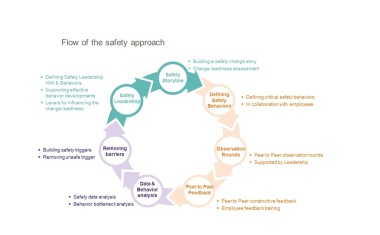
Every chemical company has safety rules, analysis tools, dashboards and a keen awareness of safety processes.

The 2022 edition of the IMD World Competitiveness Yearbook, compiled by the International Institute for Management Development (IMD), is published at a moment of tremendous turmoil.

The current crisis, exacerbated by the economic downturn and war in Ukraine, can be an opportunity to reduce dependence on fossil feedstocks and explore sustainable alternatives.
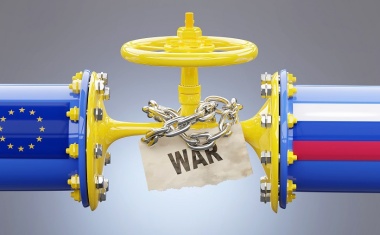
The European Commission proposed last month an emergency intervention in Europe’s energy markets to address recent dramatic price rises as the EU faces the effects of a severe mismatch between energy demand and supply. What is in the proposal?

Every year, the chemical industry sees hundreds of mergers and acquisitions (M&A). Traditional M&A drivers, such as consolidation and portfolio extension, are still important. But many transactions also show that the nature of M&A is evolving, as chemical companies look for ways to contend with ongoing volatility and move to a more sustainable future.
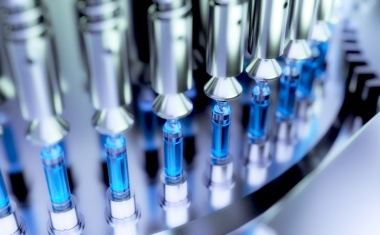
The increasing complexity in drug development and the highly competitive industry landscape are creating a dramatic shift in how pharmaceutical and biotech companies plan for and execute drug development and production.

Many chemical executives say their companies have made significant progress in their digitalization efforts in the last two years – and they are even more excited about it now.

Many chemical executives say their companies have made significant progress in their digitalization efforts in the last two years – and they are even more excited about it now.

The chemicals industry is one of the world’s largest industrial sectors, worth €3,471 billion in 2020. It includes producers of industrial chemicals, polymers, pesticides, food and feed additives, and cosmetics, and is growing rapidly. By some estimates it will reach almost $22,000 billion by 2060.
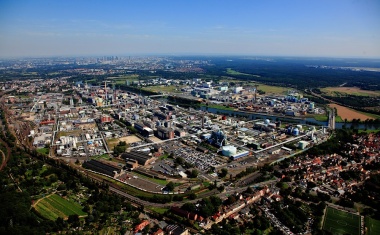
Chemical parks are locations of intensive value creation. They are a driver for sustainable development with a high economic, ecological and social impact.
Japan continues to be one of the largest pharmaceutical markets in the world, making up approximately 7% of the global share. Historically, Japan has been viewed as insular compared to other developed markets such as Europe or the US, with foreign companies reporting high barriers to entry.

The primary goal for any manufacturing or process organization is to produce a profit and return on net asset (RONA) to shareholders and other stakeholders. Safety and environmental performance are secondary goals – not secondary in importance, but no manufacturing plant was ever built with the sole and explicit purpose of being safe and environmentally responsible.

Management pays a lot of attention to new ideas and cutting-edge technologies, but most of their resources are consumed by mature legacy technologies that are often not actively and rigorously managed. A visual matrix can help teams understand which technologies offer the greatest long-term potential for businesses.
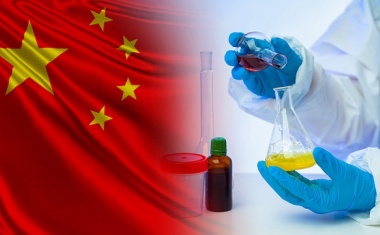
One of China’s key objectives of the current 14th Five-Year Plan is to reduce the dependency on imports. At least partly, this is a reaction to rising political tensions with the USA.
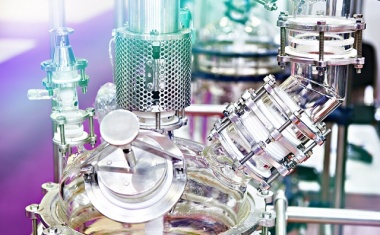
Biomanufacturing for both traditional biologics and new modalities, such as cell and gene therapies, continues to be an active area of investment for CDMOs/CMOS. Some of the major investments by the larger CMDOs/CMOs are outlined in this article.

The EU Green Deal sets a high bar for reducing greenhouse gas (GHG) emissions, and its impact will be felt across industries. But the chemical sector’s unique nature means that it will be more deeply affected than other industries – and more deeply involved in making net zero a reality, as well.

For its annual report "Value Creation in Chemicals 2021 – Ten Years of Steady Growth – and a Few Superstars," the strategy consultancy Boston Consulting Group examined the performance of leading international chemical companies from 2011 to 2020. The long-term perspective shows that the industry has mastered serious market downturns with astonishing confidence.
In March 2022, Mercator by Citco published a report that provides direct insights into the practice and dynamics of Global Entity Portfolio Management (GEPM) within the pharmaceuticals sector – based on real-life data – when these businesses have been at the epicenter of one of the most significant global disrupters in modern times.