Zuripacks – Pioneering Sustainable Plant-Based Packaging
Kenyan start-up Zuripacks produces durable yet biodegradable packaging materials from banana pseudostems − an abundant agricultural by-product that is typically discarded.
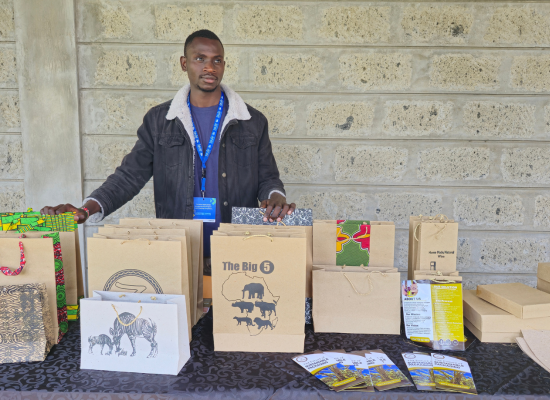
By converting this locally available biomass into tree-free paper and moulded packaging, the Start-up offers a practical alternative to conventional plastic packaging, particularly in underserved regions of Africa where waste management infrastructure is often limited. Beyond environmental benefits, Zuripacks generates strong social value by creating jobs and providing training opportunities for women and youth.
For these reasons, Zuripacks has been chosen as one of the African Climate Innovation Challenge (ACIC) Winners 2025 and is featured by the International Sustainable Chemistry Collaborative Centre (ISC3) as the ISC3 start-up of the Month for March 2026.
The production process begins with mechanical fibre extraction from banana pseudostems, followed by controlled pulping and sheet-forming to create tree-free paper that is then moulded and pressed into packaging products. To reduce environmental and health impacts, the team prioritises low-toxicity additives such as wood ash and cassava starch, alongside water-efficient methods and continuous process optimisation. Fibre structures and processing conditions are engineered to deliver strength, durability, and functional performance comparable to conventional packaging.
By sourcing pseudostems from smallholder banana farmers, the company also creates additional income streams at farm level, supporting more inclusive and resilient local economies.
The whole success story of the ISC3 Start-up of the Month in March 2026 is currently told by the ISC3 on its website at Zuripacks (isc3.org).
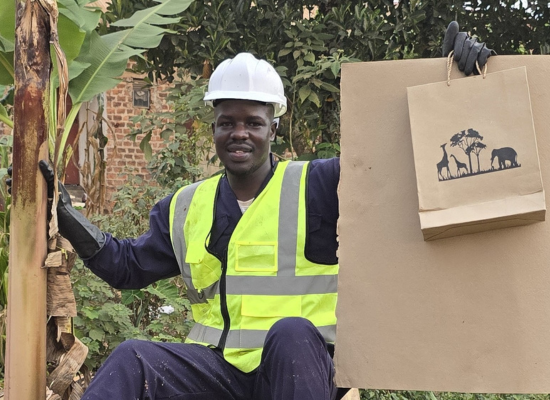
Three questions for Oliver Omondi (Co-founder & CEO of Zuripacks):
What led to your solution in Sustainable Chemistry?
Oliver Omondi: I grew up in an underserved community with limited waste management infrastructure. At the same time, I observed that in rural Kenya, large amounts of banana pseudostems were discarded as agricultural waste after harvest, despite being rich in natural fibres. Through research and experimentation, I discovered that these could be transformed into strong, biodegradable paper-like material and moulded into packaging materials.
What does being chosen as ISC3 Innovation Challenge finalist and ISC3 Start-up of the Month mean to you?
O. Omondi: It’s a tremendous honour and milestone for our start-up. It validates our work against plastic pollution and for circular, sustainable packaging. Also, it helps us connect with global network, potential partners and investors to scale our impact. Most importantly, it inspires us to keep innovating and proving that Sustainable Chemistry can deliver real environmental and social change.
What’s next up at Zuripacks?
O. Omondi: The future plans for Zuripacks focus on scaling impact, expanding product lines and strengthening sustainability across our operations. We aim to increase production capacity and optimise processes to serve more businesses with high-quality, biodegradable packaging alternatives. We also seek to strengthen market presence and partnerships.
Company