

Traceless, a Game-Changing Biomaterial
In this interview, Christene Smith sits down with Anne Lamp, the CEO & Co-Founder of Traceless Materials, to delve into the groundbreaking world of natural biopolymer materials.
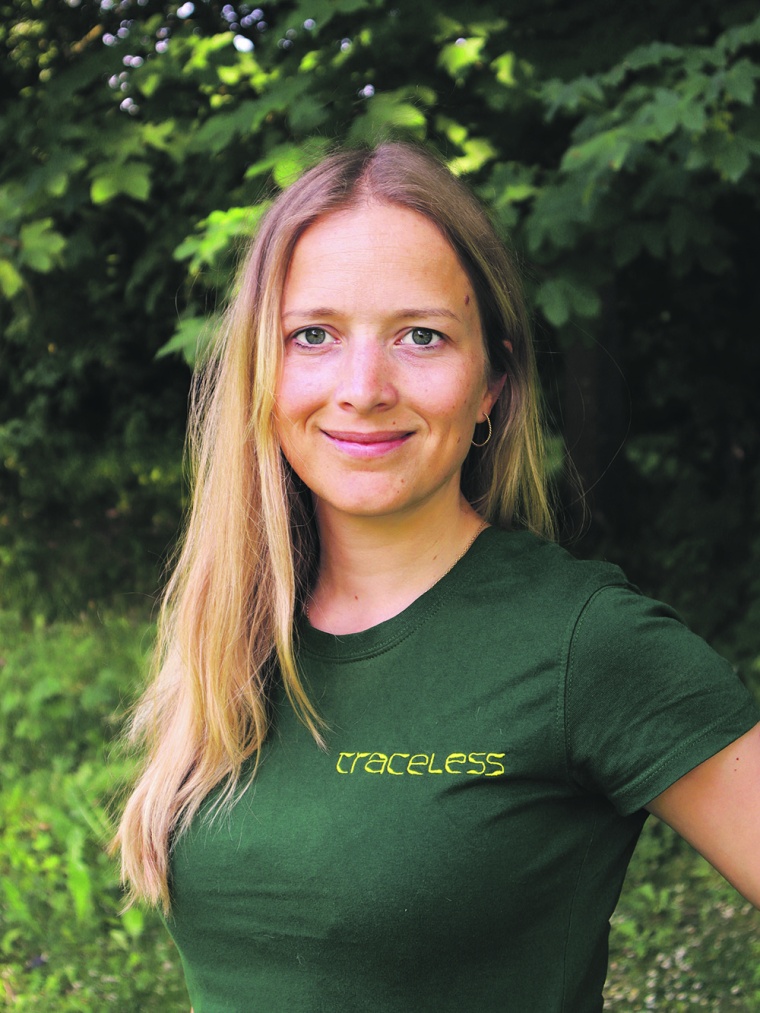
Developed as a natural, plant-based plastic alternative, the Traceless material aims to tackle the environmental impact of plastics head-on. Join us as we explore the challenges faced in making industrial production fit for the future and uncover the potential of this pioneering biobased company.
CHEManager: What inspired you to start Traceless Materials, and what was the initial problem you aimed to address?
Anne Lamp: The inspiration behind the development of Traceless came from witnessing the alarming environmental impact of conventional plastics. Already during my studies as a process engineer, I was involved with the concept of circular economy, and volunteered with the “Cradle to Cradle” NGO. My initial goal was to create a material that is truly biocircular, one that is 100% plant-based, naturally compostable, and free of harmful substances. I aimed to provide a solution to the growing plastic waste problem and contribute to a cleaner, greener future.
Can you share a bit about your journey from the early experiments to the founding of the company?
A. Lamp: The idea for the technology arose during my PhD in process engineering in the field of biorefinery, which was focused on the valorization of biomass side streams. I discovered that residues of agricultural grain processing, like brewery or starch production side streams (which occur globally in high volumes), can be used to produce a plastic-like material.
“Although we are still in the scale-up phase
and full market entry is still ahead of us,
the reception of Traceless in the market
has been overwhelmingly positive.”
The first samples of Traceless materials were born. With a vision to bring this idea to scale, I filed a patent and founded the company together with my co-founder. We established a pilot plant, refined the production process, and started the development of product applications.
What were the key challenges you faced during the development of Traceless and the establishment of the company?
A. Lamp: Developing a new material and establishing a company around a novel technology came with several challenges. Scaling up the technology from lab scale to pilot scale and achieving price competitiveness with conventional plastics are significant hurdles. We are working relentlessly to optimize the production process and material properties, optimizing our materials for a wide range of processing technologies and product applications. Securing funding and building partnerships were also crucial steps.
How has Traceless been received in the market so far?
A. Lamp: Although we are still in the scale-up phase and full market entry is still ahead of us, the reception of Traceless in the market has been overwhelmingly positive. Collaborations with pioneering brand owners like Otto, Lufthansa and C&A allow us to showcase the potential of our product through pilot projects. We successfully launched our first in-store market pilot product with fashion retailer C&A: together, we developed an injection-molded hook made of Traceless material. Besides the brand owners, the interest from partners from the plastic converting industry has also been remarkable, and we are actively exploring partnerships to expand the applications of our material further.
Where do you see application potential for your material — can it replace all plastics?
A. Lamp: The plastics industry has played a crucial role in advancing high-performance applications for decades, and we recognize its continued significance in those areas. To now make these products truly circular, we must establish reuse, ecodesign, and closed material loops. For applications where reusable solutions are not sustainable and technical recycling is not feasible, we see biomaterials like Traceless offering a compelling alternative. We specifically focus on single-use packaging and products with low to medium requirements, as well as “hidden” plastics in adhesives and paper coatings, which can easily end up in the environment.
What are the next steps for your company? Are there any upcoming plans for scaling production or exploring new applications for the material?
A. Lamp: Our ambitious goal is to produce one million tons of Traceless material by 2030. To achieve this, we will first build a large-scale demonstration production plant with an output of several thousand tons of material per year, taking us one step closer to industrial-scale production. Recently, we received a €5 million grant for this step from the German Federal Ministry for the Environment. And of course, we’re growing our team! Many passionate experts from process engineering, chemistry, plastics engineering, environmental and material sciences have joined our team already, and we’re constantly looking for more talented people.
Continue with login
No account yet?
Register now for free and get full access to all exclusive articles from chemanager-online.com. With our newsletter we regularly send you top news from the chemistry industry as well as the latest e-issue.
Register



most read
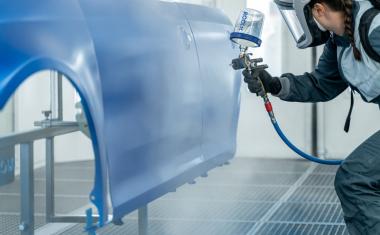
BASF Sells Majority Stake in Coatings Business
BASF sells a majority stake in its coatings business to the investor Carlyle.
CHEManager International Media Kit
Compelling solutions through strategic partnerships
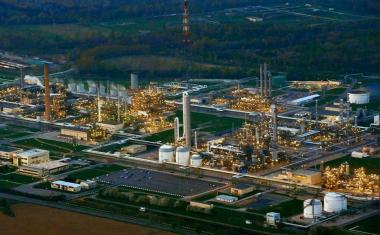
Dow to Shut Down Three Upstream European Assets
Building on the April 2025 announcement, Dow will take actions across its three operating segments to support European profitability, resulting in the closure of sites in Germany and the UK.

VCI Welcomes US-EU Customs Deal
The German Chemical Industry Association (VCI) welcomes the fact that Ursula von der Leyen, President of the European Commission, and US President Donald Trump have averted the danger of a trade war for the time being.