Thyssenkrupp Uhde Builds Low-Emission Polyester Plant
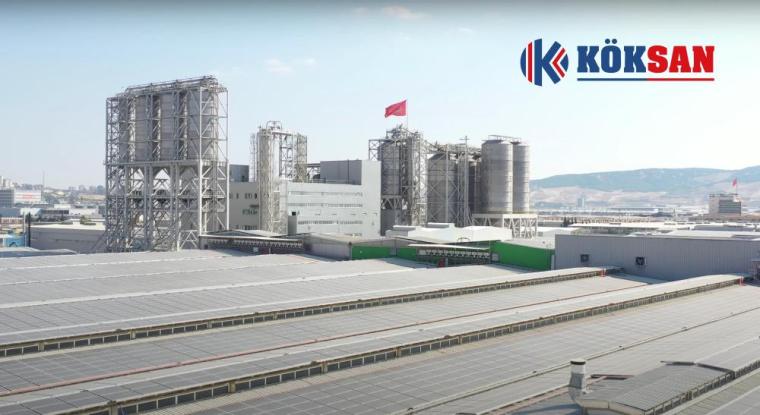
Thyssenkrupp Uhde subsidiary Uhde Inventa-Fischer has signed a contract with Turkish packaging manufacturer Köksan for the supply of a PET production plant. The plant will be built in Yumurtalık, Türkiye.
The new production line will have a capacity of 324,000 tons of PET pellets per year and is suitable for all types of packaging applications as well as for the production of bulk continuous filament (BCF). The plant will be located in Yumurtalık, Türkiye. Completion and commissioning are planned for 2028.
The plant will use Uhde Inventa-Fischer's patented Melt-To-Resin (MTR) process, which enables a significant reduction in energy consumption. Thyssenkrupp Uhde's scope of services includes the license, basic and detailed engineering, as well as the supply of all major plant components. In addition, Köksan's operating personnel will be trained by Thyssenkrupp Uhde's technology and operations specialists. Köksan intends to further strengthen its market position with this investment. The various PET pellets produced will be supplied to local markets as well as to countries in the Middle East, America, Europe, and Africa.
Nadja Håkansson, Member of the Executive Board / COO of Thyssenkrupp Decarbon Technologies & CEO of Thyssenkrupp Uhde: "We are very proud that Köksan has chosen us to build another state-of-the-art PET plant. Our well-proven MTR process demonstrates that our technologies deliver economic and environmental advantages at the same time, combining reduced energy consumption and higher yield with lower CAPEX and OPEX."
M. Murat Kökoğlu, CEO of Köksan: "We are very happy to announce this project together with Uhde Inventa-Fischer, as already the first and second production line in Gaziantep deliver excellent performance and product quality continuously."
Economic and Environmental Benefits
The process developed by Thyssenkrupp Uhde is a continuous polycondensation process that eliminates the solid-phase post-condensation steps in the production of PET pellets. This results in considerable energy savings, reduced investment costs, lower operating and maintenance costs and a higher raw material yield compared to conventional technologies. The MTR technology meets today's sustainability requirements by reducing the CO₂ footprint in terms of fuel and electrical energy by up to 30%. The process is based on 2-reactor technology, using the patented Espree and Discage reactors to achieve the desired high melt viscosities.