

In this interview, industry experts explain why cell line development timelines are governed by biology—and how the focus is shifting from time compression to smarter optimization, better early data, and more confident clone decisions.
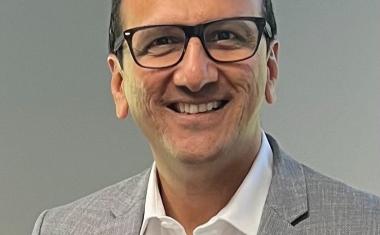
Interview with Tom Kelly, Johnson & Johnson, and Xiaoyan Tang, Merck (MSD)
Cell line development timelines remain tightly governed by biology, even as new tools improve how efficiently teams work within those limits. While automation and digitalization are now embedded in many CLD workflows, expectations of dramatic time compression are giving way to a more realistic focus on optimization: generating better data earlier, making more confident clone‑selection decisions, and reducing rework and downstream risk. These themes were highlighted at a recent virtual CLD event, where Tom Kelly of Johnson & Johnson, representing BioPhorum, outlined industry‑wide constraints and opportunities for timeline optimization, and Xiaoyan Tang of Merck & Co. (MSD) shared practical experience showing how structured, automated platforms can improve predictability and decision quality.
CHEManager International: Automation is often described as the key to significantly shortening cell line development timelines. How much impact is it really having?
Tom Kelly: Automation is certainly being adopted more widely across the industry, but it’s important to be realistic about what it can and can’t do. What we’re seeing is that automation isn’t really shortening CLD timelines in a fundamental way. The biggest driver is still the doubling time of the cells. Whether someone is doing that work manually or using automated systems, you can’t make the cells grow faster.
Its biggest impact is on workload rather than absolute timelines. Automation reduces the amount of hands‑on work scientists are doing. It allows people to oversee more experiments and potentially work on more than one project at the same time. It can also support quicker decision‑making, often within the same day. But it’s not typically saving days, weeks, or certainly not months in CLD itself.
Continue with login
No account yet?
Register now for free and get full access to all exclusive articles from chemanager-online.com. With our newsletter we regularly send you top news from the chemistry industry as well as the latest e-issue.
Register



most read
Novo Nordisk to Cut 9,000 Jobs Globally in Major Restructuring
Novo Nordisk announced a global workforce reduction of approximately 9,000 positions to streamline operations and reinvest DKK 8 billion (€1 billion) in growth opportunities for diabetes and obesity treatments.
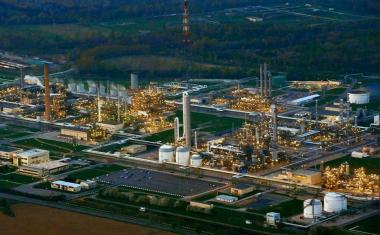
Dow to Shut Down Three Upstream European Assets
Building on the April 2025 announcement, Dow will take actions across its three operating segments to support European profitability, resulting in the closure of sites in Germany and the UK.

VCI Welcomes US-EU Customs Deal
The German Chemical Industry Association (VCI) welcomes the fact that Ursula von der Leyen, President of the European Commission, and US President Donald Trump have averted the danger of a trade war for the time being.
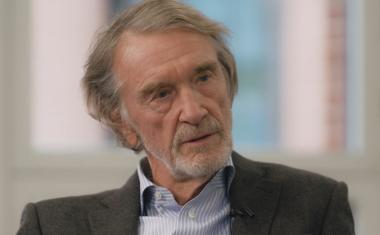
Ratcliffe: Chemical Industry in Europe at a Tipping Point
Ineos CEO Ineos calls on European politicians to save the chemical industry.
Merck Acquires Chromatography Business from JSR Life Sciences
Merck to acquire the chromatography business of JSR Life Sciences, a leading provider of CDMO services, preclinical and translational clinical research, and bioprocessing solutions.