Shale Gas Presents Opportunity for Europe
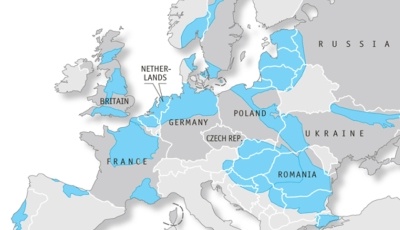
European investments in shale gas exploration and development are taking place at a crawl, the European Chemical Industry Council (Cefic) says. Developing shale gas has the potential to strengthen industry's competitiveness and create jobs in Europe, according to a position paper recently released by Cefic. The paper concludes that European policymakers must accelerate the responsible exploration and production of indigenous shale gas. The shale gas revolution in the U.S. is having an impact on the European chemical and manufacturing industries, the paper notes, as the availability of energy and feedstock from shale gas is creating a significant competitive advantage for the U.S. industry. Other world regions are also primed to ride the shale gas wave, while Europe is delaying the development of shale gas despite having significant potential shale gas resources. Cefic urges European authorities to speed up the responsible exploration and production of indigenous shale gas.
Cefic Industrial Policy Director Jose Mosquera said: "Shale gas could be a game changer for Europe in terms of chemical industry competitiveness, putting us on a more level playing field with other regions. It would also tackle greenhouse gas emission reduction targets in a cost-effective manner, reduce energy dependence and help fill intermittent gaps often left by renewable energy."
Shale Gas Use in Chemicals Sector
Shale gas is a naturally occurring hydrocarbon gas mixture that is trapped in shale rock formations. Two existing techniques, hydraulic fracturing - often referred to as "fracking" - and horizontal drilling, have opened the taps on a once unrecoverable resource.
In Europe technically recoverable resources are estimated at 16 trillion cubic metres (tcm), compared to 47 tcm in the U.S. The chemicals sector can use "dry" gas, consisting mainly of methane, as an energy source, while "wet" shale gas - consisting of methane plus "Natural Gas Liquids", composed mainly of ethane, propane, and butane - primarily as a petrochemical feedstock.
To ensure that Europe does not lose this opportunity to strengthen its industrial competitiveness and maintain and generate growth and jobs, this can be done by avoiding the creation of unnecessary regulatory barriers, giving appropriate attention to human health and the environment, and providing the public with solid facts on the economic benefits of shale gas.
Mosquera added: "Delaying the development of shale gas in Europe will increase dependence on gas and oil imports, reduce inward investment, and - over time - lead to less jobs and a weakened manufacturing base. It would really put Europe's real economy in a more precarious spot."