Praxair Agrees Gases Supply Deal with Celanese

US industrial gases group Praxair, currently in the midst of merging with German rival Linde, has signed a 15-year agreement with chemical producer Celanese for the supply of industrial gases on the US Gulf Coast. As part of the deal, Praxair will invest more than $300 million to build the relevant plants and extend its pipeline network.
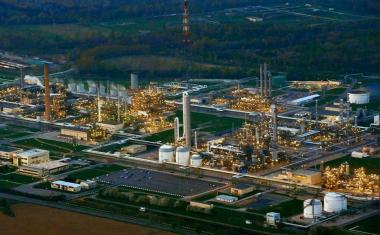
A new carbon monoxide and hydrogen plant will be built as well as an additional air separation unit on Praxair’s nitrogen and oxygen pipeline network. The company will also expand its hydrogen pipeline network so it can supply other new customers along the Gulf Coast. The new facilities and pipeline assets will begin operating in 2020. The gases group said it continues to evaluate sites for the proposed plants and supporting infrastructure.
Together with the previously announced expansion project at Geismar, Louisiana, that will start up in the second half of 2018, Praxair’s carbon monoxide capacity along the US Gulf Coast will more than double. Carbon monoxide is used in the production of a range of specialty chemicals, including polyurethanes.
The increased demand for industrial gases in the region has resulted from the development of low-cost shale gas in the US, which has spurred huge investment in new petrochemical plants.