Mastering Modified Release: The Pellet-Based Approach
How pellet-based systems can de-risk development and scale-up of robust modified-release formulations across the product lifecycle.
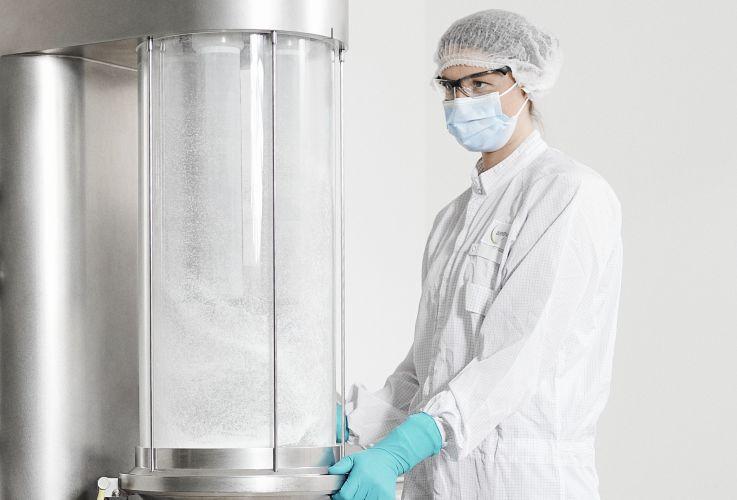
Modified-release (MR) oral dosage forms are a core strategy for optimizing pharmacokinetics, enhancing patient adherence, and differentiating products in competitive markets. There are various ways to design modified-release profiles – including matrix tablets, coated tablets, and multiparticulate systems – but pellet-based formulations stand out as a particularly versatile and patient-centric option. They enable flexible dosing, combination products, fine-tuning of release kinetics, and suitability for special populations, while still meeting stringent quality and regulatory expectations.
At the same time, pellet-based MR systems are technologically demanding. Their performance is highly sensitive to coating quality, process parameters, and scale-up choices. Ensuring that a laboratory concept translates into a robust commercial process requires a solid understanding of fluidized bed coating, critical process parameters, and the interactions between formulation and process design.
This whitepaper from Aenova focuses on layering-based fluidized bed coating (bottom-spray and Wurster processes) as a platform technology for modified-release pellets. Drawing on practical experience at Aenova’s Marburg site, it provides an in-depth look at how to develop, optimize, and industrialize pellet-based MR formulations under GMP conditions – from early development batches through commercial-scale manufacturing.
A central element of the paper is a real-world technology transfer: sustained-release pellets originally manufactured in a pan coater are transferred to fluidized bed coating. This case study illustrates how parameters such as spray rate, inlet air temperature, product temperature, atomization air, and inlet air humidity are closely interlinked. The white paper shows how apparently minor adjustments can lead to significant changes in coating morphology and performance.
Scanning electron microscopy (SEM) images and dissolution profiles are used to demonstrate the impact of suboptimal parameter settings. Examples include porous, non-uniform coating films and deviations from the targeted release profile. Building on these data, the paper outlines a systematic approach to process optimization, including adjustment of the solids content of the coating suspension, refinement of spray conditions, and control of the thermal and moisture balance in the fluidized bed.

Beyond the technical details, the whitepaper also reflects on organizational and strategic aspects that are highly relevant for outsourcing decision makers:
- How an integrated site with development, analytical services, and commercial manufacturing under one roof can reduce risk and timeline in tech transfer.
- How early alignment on critical quality attributes (CQAs) and critical process parameters (CPPs) supports smoother scale-up and regulatory interactions.
- How robust process design contributes to supply reliability and life-cycle management options for MR products.
For scientists, formulation and process development teams, as well as for those responsible for outsourcing and CDMO selection, this whitepaper offers both a concise synopsis of the pellet-based MR approach and concrete, data-driven examples from industrial practice. It is intended to support more informed decisions on when and how to use pellet-based systems, and what to consider when transferring or scaling such products to commercial manufacturing.