Linde Wins Russian Gas Contract from Gazprom
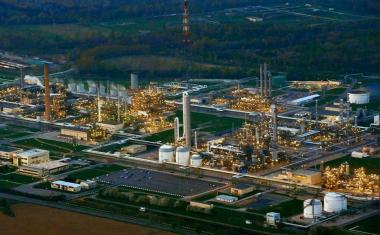
German gases group Linde has been chosen by Russia’s Gazprom to license its cryogenic gas separation technology for the Amur Gas Processing Plant to be built in the far east of the country. When completed, the Amur facility will be one of the world’s largest gas processing plants with an annual capacity of up to 49 billion cubic meters.
The plant, which will be built in five phases ending in 2024, is part of Gazprom’s project to supply Russian gas to China via the Power of Siberia pipeline from fields in eastern Siberia.
Late last month, Linde and Gazprom’s general contractor NIPIgas signed an engineering and supply contract covering all five construction phases. Linde will engineer and supply units for ethane and natural gas liquids (NGL) extraction and nitrogen rejection, as well as for helium purification, liquefaction and storage.
Engineering work has started on phase one which comprises units for ethane and NGL extraction (propane, butane, pentane, hexane) and nitrogen rejection, as well as one for helium production.
Gazprom and Linde have also recently signed a cooperation agreement for existing and future natural gas-related projects. The collaboration covers process technologies, engineering and services for the treatment and liquefaction of natural gas, as well as local equipment production in Russia. The agreement also covers investment in helium production and operation.