Ineos Warns Europe Against "Industrial Self-Destruction"
Ineos calls on the European Commission to step up its trade defense measures before the end of the year, provide the necessary resources and act decisively to stop the deindustrialization of Europe.
Ineos has initiated or filed ten anti-dumping proceedings with the European Commission. According to the British chemical company, this unusual step is necessary to protect sites, employees and long-term investments as well as thousands of customers, suppliers and contractors who depend on a strong European chemical industry.
Background: The European chemical sector, the foundation of the modern manufacturing industry, is currently being overwhelmed by a tidal wave of cheap imports from Asia, the Middle East and the USA. They are presenting European manufacturers with major challenges, as they are struggling with the world's highest energy prices and rising one-sidedCO2 levies.
According to CEFIC, the European Chemical Industry Council, imports of chemicals from China rose by 8.3% in the first half of 2025. The result: Europe is flooded with products that have a large carbon footprint, but for which only a fraction of our energy costs are spent and for which no CO2 levies are payable. To make matters worse, the recent trade agreement between the EU and the US exacerbates the trade imbalance, as Europe is giving up what little protection it had against dumping products.
Ineos' ten complaints concern strategically important products such as PVC, MEG, BDO, PTA, ABS polyethylene glycols, butyl acetate and polyolefins. They are of central importance to the European automotive, defense, electronics, construction, packaging and pharmaceutical industries.
These products are manufactured at 15 Ineos sites and secure more than 5,000 direct skilled jobs. The products are an indispensable component of medical devices, medicines, residential buildings, means of transportation and infrastructure. Without them, the European production base would grind to a halt.
Ineos is supporting its customers with a growing number of anti-dumping applications, for example for PET, as unfair imports affect not only chemical producers but entire value chains - from raw materials and packaging to food and consumer goods. Many European manufacturers are now forced to apply for trade defense measures for products further down the chain in order to survive.
The growing number of anti-dumping and trade defense investigations in Brussels shows how big the problem is, as entire industries are now struggling to maintain production in Europe. Brussels has too many applications, too few staff and reacts too slowly.
Steve Harrington, CEO of Ineos Styrolution, said: " This is industrial self-destruction! While the USA and China protect their industries, Europe allows unfair ABS imports from South Korea and Taiwan. This endangers six ABS plants and 1,000 jobs in Europe. The Commission's own data shows that the damage is up to 67%, yet Brussels is proposing anti-dumping duties of only 3.7%, which is completely ineffective. If Europe does not act decisively, we are finished," said Harrington.
According to an analysis by the European Commission, European ABS producers make losses as a direct result of unfair import prices, which account for two thirds (67%) of their regular profits. In contrast, the 3.7% anti-dumping duty proposed by Brussels is the duty that would be imposed on these imports to restore fair competition. In the case of ABS, the duty is far too low to compensate for the 67% damage caused. This allows foreign suppliers to continue selling at artificially low prices that European manufacturers simply cannot compete with. In short, the Commission recognizes the extent of the damage but refuses to take meaningful remedial action.
With energy costs three to four times higher than in Asia or the US, and rising CO2 taxes that only exist in Europe, chemical producers are forced to close their plants while foreign competitors can dump high-emission products into the EU market unhindered.
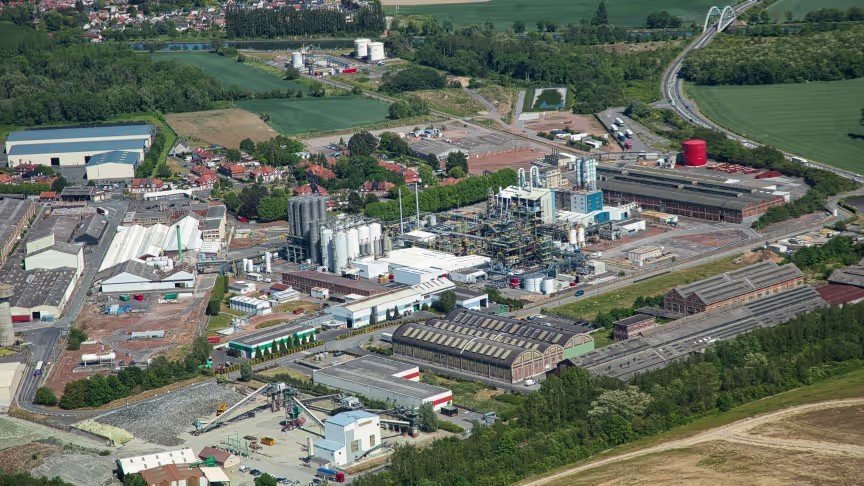
Ineos Styrolution announced in mid-November that it would permanently shut down its polystyrene (PS) production in Wingles, France. The move is part of a broader effort to adapt to changing market dynamics and ensure the long-term competitiveness of the company's European operations. Production for European PS customers will be consolidated at the company's more modern site in Antwerp, Belgium. The closure of PS production will have no impact on ABS production at the Wingles site.
The company did not disclose the number of jobs affected, but stated that all personnel adjustments will be made in full compliance with local regulations and that the consultation process with the Ineos Styrolution France works council has already been initiated.
Andrew Brown, CEO of Ineos Enterprises, warned with regard to butanediol (BDO): "BDO is essential for medicines and medical devices, yet Europe is allowing its production to be destroyed by unfair trade. This is not resilience, this is recklessness."
Ineos is calling on the European Commission to strengthen its trade defence measures before the end of the year, provide the necessary resources and act decisively to stop the deindustrialization of Europe.
Ineos Group Director Tom Crotty added: "Europe talks about autonomy, resilience and the Green Deal. But in the face of obvious product dumping practices, it is showing weakness. Sites are closing, CO2-intensive imports are increasing and politicians are still asleep. If Europe doesn't wake up very quickly, it will not only lose its chemical industry, but also the basis of its entire manufacturing sector."