Hyosung to Build PDH/PP Unit in Vietnam
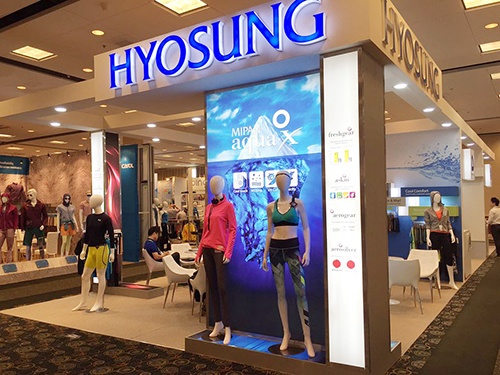
South Korean conglomerate Hyosung has signed a Memorandum of Understanding (MoU) with the Vietnamese government to invest a total of $1.2 billion in a propane dehydrogenation (PDH) and PP complex near Ho Chi Minh City in southern Vietnam.
Located at the Cai Mep Industrial Zone in the district of Tan Thanh district, Ba Ria-Vung Tau province, the complex will comprise a PDH unit, two PP plants, an LPG storage tank and a warehouse for both LPG and petrochemical products.
The project will be built in two stages. In the first phase, Hyosung will spend $133 million to build the LPG tank and $336 million on the first PP plant. In a second phase, investments of $496 million and $226 million will be made in the PDH plant and second PP line, respectively. However, Hyosung told local media the size of the investments and the schedule could change.
The South Korean group has not disclosed capacity details for the PDH and PP facilities, nor revealed a timescale for the overall project, which is aimed at increasing its share for PP in markets with promising potential such as Vietnam, China and others in southeast Asia.
Hyosung also plans to spend around $122 million on building a third PP plant in South Korea. This facility will have a capacity of 200,000 t/y. The group currently produces around 380,000 t/y at two existing plants in Ulsan.