Cancer Vaccines Get Their First Real Win
The first personalized mRNA cancer therapy to beat the standard of care is now headed for regulators.
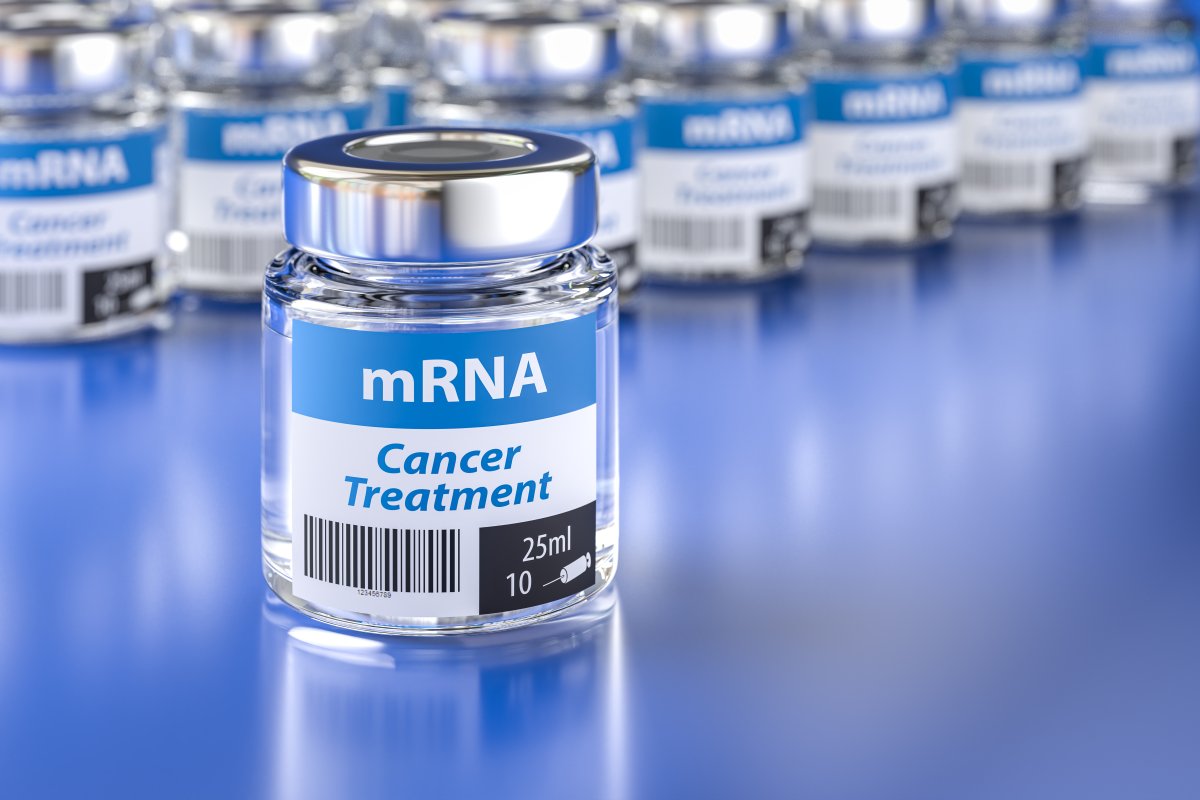
Merck & Co. and Moderna announced encouraging results from a large clinical trial testing a new, personalized cancer treatment for melanoma, a serious form of skin cancer. The treatment, called intismeran, is made individually for each patient using their own tumor's DNA. It's designed to teach the immune system to recognize and attack cancer cells unique to that person.
In the trial, patients who had melanoma surgically removed were given intismeran together with an existing immunotherapy drug called Keytruda. Compared to patients who received Keytruda alone, those who got both treatments were less likely to have their cancer come back or spread.
This result matters beyond melanoma. It's the first time a personalized cancer treatment built from a patient's own tumor has succeeded in a trial this large, and the first time any mRNA-based cancer treatment has cleared this bar. It's also the first therapy shown to outperform Keytruda alone in this setting, which had been the standard of care for years.
What This Means for Industry
For years, personalized cancer treatments and mRNA-based therapies were seen as promising but unproven, years away from real clinical validation. This result changes that. It's the strongest evidence yet that building a treatment from a patient's own tumor isn't just a compelling idea, but a workable one that can beat existing standards of care.
That has ripple effects. Other companies racing to develop similar personalized or mRNA-based cancer treatments now have a real proof point to point to, both for their own research and for investors and regulators weighing how seriously to take this approach. It also raises the bar for companies with older-style cancer treatments, who may now face pressure to show their drugs can keep pace with this new generation of personalized medicine. And because Keytruda has long been one of the best-selling and most trusted cancer drugs, showing that anything can outperform it, even alongside it, not in place of it, is itself notable for how the broader cancer-treatment market may shift.
“By intervening earlier in the course of disease, when many cancers are considered most treatable, the goal of adjuvant therapy given after surgery is to increase the possibility of cure for more patients,” said Dean Y. Li, President, Merck & Co. Research Laboratories. “These first Phase 3 findings for intismeran in combination with Keytruda as adjuvant therapy reinforce the promise of a more personalized approach to cancer treatment.”
“These Phase 3 findings represent a pivotal moment for the field of cancer research. For many years, the idea of creating an mRNA treatment designed specifically for an individual patient's cancer was aspirational. We are now helping turn that vision into a reality,” said Stéphane Bancel, CEO of Moderna. “Together with Merck, we have started to demonstrate the transformative potential of this technology to address critical unmet needs in the adjuvant melanoma setting. We are deeply grateful to the patients, investigators and study teams whose contributions make this progress possible.”