Brazilian Way of Life
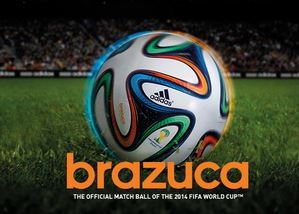
The official match ball of the 2014 FIFA World Cup was unveiled on December 3th in Rio de Janeiro. The name "Brazuca" was chosen back in September 2012 following a public vote in Brazil involving 1 million football fans; the name "Brazuca" is an informal local term which means "Brazilian" and describes national pride in the Brazilian lifestyle. The new 2014 World Cup Ball features the same unique panel design but a different print design as the ball used at the FIFA U-20 tournament 2013 in Turkey.
The ball for the 2014 World Cup is mainly white with different colors. The colors and ribbon design of the ball panels symbolize the traditional multi-colored wish bracelets worn in the country, in addition to reflecting the vibrancy and fun associated with soccer in Brazil. One version that is mainly white with green and gold applications will be only used in the final of the 2014 World Cup.
The ball features a completely new design with only six panels and a new surface. The most noticeable fact about the 2014 World Cup Ball is the flight speed, which seems to be much higher than with the current ball generation. Also, unlike the last Adidas World Cup balls, the Brazuca seems to flutter less, even if the shot is very fast. But sometimes the ball takes a strange flight curve as was found when Brazuca went through a thorough testing process over a two and a half year period involving more than 600 of the world's top players and 30 teams in 10 countries across three continents.
This makes Brazuca the most tested ball ever by Adidas. Clubs involved in testing included AC Milan, Bayern Munich, Palmeiras and Fluminese. Players involved in the process included global football stars Leo Messi, Iker Casillas, Bastian Schweinsteiger and Zinedine Zidane.