Bayer Confirms 2015 Start for Commercial-Scale CO2 to Polyols Unit
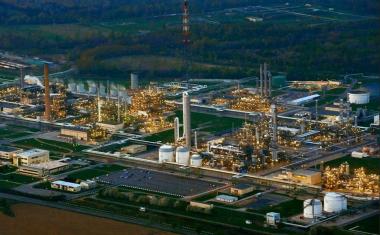
Bayer MaterialScience has confirmed 2015 as the start-up date for commercial scale production facility of polyether of polycarbonate polyols made from CO2 feedstock. The new plant at Dormagen, Germany, will have capacity for "several thousand tonnes" of polyols.
Output will not be sufficient to accommodate market demand, but CEO Patrick Thomas said the Bayer group may opt to license its patented technology rather than to become an exclusive producer. Along with bedding, the CO2-derived polyols could be used to produce thermoplastic polyurethanes and later coatings or fibers, he added.
In early 2011, BMS began producing test quantities of the PU foam precursors at Leverkusen, Germany, with an eye to developing foam with properties equivalent to those of conventional grades. The test project known as Dream Reaction and later Dream Production was supported financially by the German federal ministry for research and development, BMBF, and included input from research partners such as RWTH Aachen University, which developed the catalyst. CO2 was sourced from a nearby power plant owned by German energy utility RWE.
The use of carbon dioxide as a feedstock not only benefits the environment, said the BMS chief. CO2 also will replace some of the fossil raw material traditionally used exclusively. The company also expects the new process to have economic advantages, as the waste streams can be obtained for free.