BASF, Linde and ThyssenKrupp in CO2-to-Syngas Research Project
Three German industrial giants, BASF, Linde and ThyssenKrupp, are teaming up to commercialize technology to produce synthesis gas from CO2 emissions. A three-year joint project that started on July 1 has received a grant of €9.2 million from the German Federal Ministry of Education and Research (BMBF).
BASF is coordinating the project and together with its subsidiary hte is carrying out the experimental research activities on gas decomposition and catalyst development for syngas. Linde and ThyssenKrupp Uhde will have engineering responsibility, while two other ThyssenKrupp group companies will handle carbon conditioning and testing for the steel industry. Scientific partners are VDEh-Betriebsforschungsinstitut in Duesseldorf, Germany, and the Technical University at Dortmund, Germany.
The project will be developed in two stages. In the first, an "innovative high-temperature technology" will process natural gas to produce hydrogen and carbon, which BASF said produces "very little" CO2 compared to other processes. In a second step, hydrogen will be reacted with large volumes of carbon dioxide sourced in part from industrial production facilities to produce syngas as a raw material for chemical production.
In an additional catalytic step, carbon dioxide will be combined with the hydrogen to produce syngas. In the high-temperature process, the chemical group said its "innovative" reactor design will ensure that the large amounts of waste heat generated are immediately recycled into the process. In hydrogen production alone, BASF expects CO2 emissions to be about 50% lower than in current standard processes, said Peter Schuhmacher, president of process research and chemical engineering at the Ludwigshafen group.
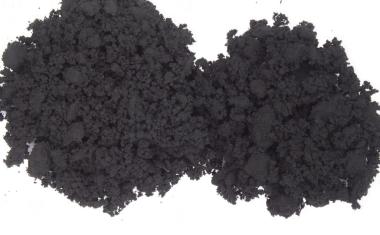
Schuhmacher said the project's approach offers "several advantages" over other methods. In the first place, natural gas is "plentiful," and has a "more favorable content of hydrogen and carbon than biomass. What's more, natural gas composition is achieved thermally without addition of oxygen or water, thus enabling production of a solid carbon that could substitute for hard coal in the coke and steel industries.